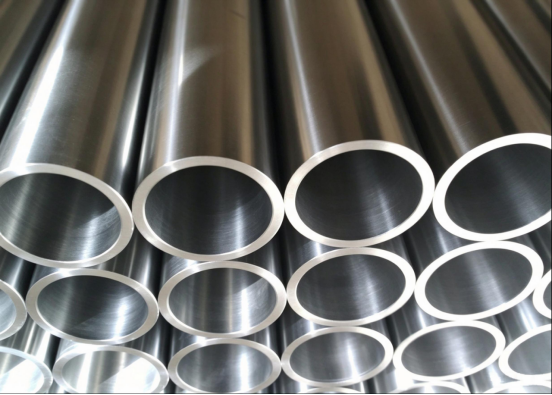
N08810 (Incoloy 800H) Nickel-Based Alloy Tubing
Product Overview: N08810 (Incoloy 800H) Nickel-Based Alloy Tubing
N08810 (Incoloy 800H) is a nickel-iron-chromium (Ni-Fe-Cr) austenitic heat-resistant alloy specifically designed for high-temperature creep applications. Its core design strategy involves precisely controlling carbon content (0.05%–0.10%) and grain size (ASTM No. 5 or coarser); by sacrificing some room-temperature strength, the material achieves superior high-temperature creep-rupture strength—a characteristic that fundamentally distinguishes it from the standard 800 alloy.
As a primary engineering material for high-temperature, pressure-bearing applications, 800H is widely used in extreme environments requiring long-term structural integrity under high temperatures, high pressures, and complex atmospheres—such as petrochemical cracking, hydrogen production reforming furnaces, nuclear power heat exchangers, and high-temperature heat treatment processes.
N08810 (Incoloy 800H) Nickel-Based Alloy Tubing: Key Technical Specifications
Material Grade Cross-Reference
| Region/Standard |
Grade/Designation |
| USA(UNS/ASTM) |
N08810 / Incoloy 800H |
| China(GB) |
NS1102,1Cr20Ni32AlTi |
| UK(BS) |
NA15 (H) |
| France(AFNOR) |
Z8NC33-21 |
Applicable Standards (by Product Form)
| Product Form |
ASTM Standard |
ASME Standard |
GB |
| Seamless/Welded Pipe |
ASTM B407 |
ASME SB-407 |
GB/T 2882 / NB/T 47019 |
| Plate/Strip |
ASTM B408 |
ASME SB-408 |
GB/T 30059 |
| Bar/Profile |
ASTM B409 |
ASME SB-409 |
GB/T 15008 |
| Forgings |
ASTM B564 |
ASME SB-564 |
NB/T 47028 |
Specification Range
| Product Form |
Size Range |
Remarks |
| Seamless Pipe |
OD φ6–508 mm;Wall Thickness 0.5–65 mm |
ot extrusion + cold drawing/cold rolling process |
| Welded Pipe |
OD φ19.05–1219 mm; Wall Thickness 0.5–25 mm |
Suitable for non-creep-dominant service conditions |
| Sheet/Thin Plate |
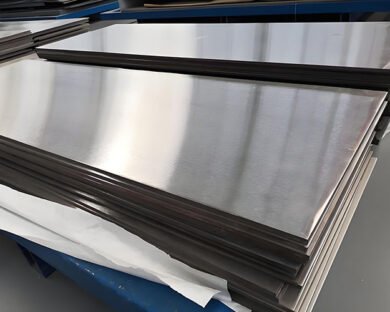
Thickness 0.1–4.75 mm; Width 1219/1500 mm |
Cold-rolled condition |
| Plate/Heavy Plate |
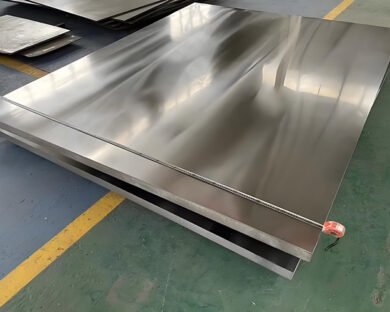
Thickness 5–60 mm; Width up to 2440 mm |
Hot-rolled condition |
| Bar |
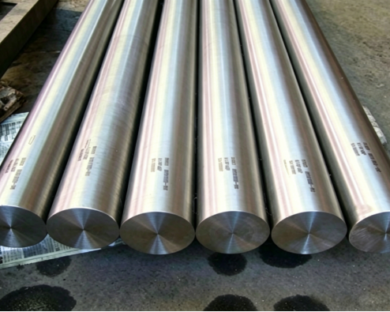
Diameter φ8–280 mm |
—— |
| Forgings |
Customized per drawings |
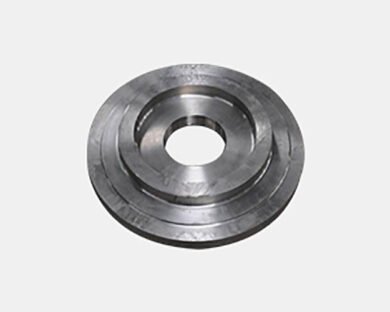
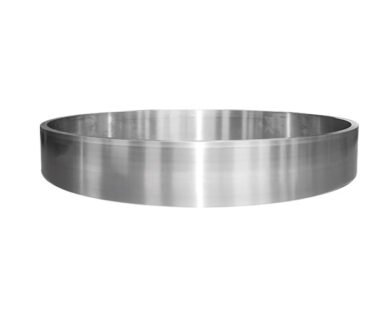
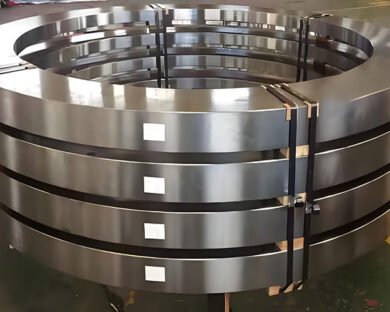
Rings, discs, flanges, etc. |
Surface Condition
- Pickled and Passivated: Scale removal followed by passivation; uniform silvery-white finish with enhanced corrosion resistance.
- Bright Annealed: Solution annealed in a protective atmosphere; bright surface finish.
- Polished: Mechanically polished; suitable for applications requiring a high-quality surface finish.
- Machined/Ground: Customized upon request.
- Surface Quality Guarantee: Free from peeling, oxide inclusions, and cracks.
Chemical Composition and Mechanical Properties of N08810 (Incoloy 800H) Nickel-Based Alloy Tubing
Chemical Composition
| Element |
Standard Range(%) |
Function/Description |
| Ni |
30.0 ~ 35.0 |
Stabilizes austenitic structure; basis for corrosion resistance |
| Cr |
19.0 ~ 23.0 |
Key element for oxidation and carburization resistance |
| Fe |
Balance(≥39.5) |
Matrix element; cost optimization |
| C |
0.05 ~ 0.10 |
Critical for creep strength; forms carbides to pin grain boundaries |
| Al |
0.15 ~ 0.60 |
Assists oxidation resistance; precipitation strengthening |
| Ti |
0.15 ~ 0.60 |
Assists oxidation resistance; precipitation strengthening |
| Al+Ti |
0.30 ~ 1.20 |
Total content control limit |
| Mn |
≤ 1.50 |
Impurity control |
| Si |
≤ 1.00 |
Impurity control |
| Cu |
≤ 0.75 |
Impurity control |
| S |
≤ 0.015 |
Impurity control |
| P |
≤ 0.030 |
Impurity control |
Key Differentiators — Material Traceability Essentials:
Carbon content is the primary indicator distinguishing 800 from 800H: For 800H, carbon content must be strictly controlled between 0.05% and 0.10% (standard 800 does not specify a minimum limit).
Heat treatment process is a decisive verification factor: Finished products must undergo solution treatment at 1120–1180°C, achieving a grain size of ASTM No. 5 or coarser.
Mechanical Properties (Room Temperature, Solution-Treated State – Minimum Values)
| Property Indicator |
Value |
| Tensile Strength (Rm) |
≥ 520 MPa |
| Yield Strength (Rp0.2) |
≥ 210 MPa |
| Elongation (A) |
≥ 30% |
| Brinell Hardness (HB) |
≤ 192 |
Applicable Operating Conditions and Industries for N08810 (Incoloy 800H) Nickel-Based Alloy Tubing
| Industry |
Typical applications |
Key requirements |
Product forms |
| Petrochemical |
Ethylene cracking furnace radiant tubes/convection section tubes, reformer furnace tubes, ammonia synthesis reforming units, steam-methane reformers, catalytic reforming units, hydroprocessing equipment. |
Carburization resistance, high-temperature oxidation resistance, long-term creep strength. |
Seamless tubing (primary recommendation)—welded tubing is avoided due to uneven grain coarsening in the weld zone, leading to high scatter in creep life. |
| Nuclear |
Nuclear reactor heat exchangers, steam generator tubes, high-temperature gas-cooled reactor heat exchange components. |
Resistance to stress corrosion cracking (excellent performance in chloride environments and high-temperature, high-pressure water). |
Seamless tubing, plate/sheet. |
| Thermal Power / Concentrated Solar Power |
Ultra-supercritical thermal power superheater and reheater tube sections, waste incineration superheaters, CSP solar receiver tube bundles, hydrogen production reformer piping. |
Ability to withstand long-term high temperatures and thermal cycling. |
Seamless tubing. |
| Heat Treatment Industrial Furnaces |
Radiant tubes, muffle furnace tubes, furnace rolls, material baskets, heat-resistant tooling, continuous annealing furnaces. |
Ability to withstand repeated heating and cooling, carburizing atmospheres, and creep-fatigue caused by the coupling of thermal cycling and static loads. |
Seamless tubing, plate/sheet. |
| Chemical Processing Equipment |
High-temperature reactor internals, high-temperature flue gas piping, heat exchangers for nitric acid media. |
Resistance to chloride-ion stress corrosion; resistance to oxidation and mildly carburizing atmospheres. |
Tubing, plate/sheet. |
Comparison of full-lifecycle costs between N08810 (Incoloy 800H) nickel-based alloy tubing and other common industrial metals
Material Cost Comparison
| Material |
Reference Price |
Relative Cost |
| SS 316 Stainless Steel |
Lower |
Baseline(1x) |
| Incoloy 800H |
Moderate |
Approx.3~5x |
| Inconel 600 |
Higher |
Approx.6~8x |
| Inconel 625 |
Higher |
Approx.8~12x |
Life-Cycle Cost (LCC) Analysis
| Comparison Dimension |
SS 304/316 |
Incoloy 800H |
Inconel 600/625 |
| Initial Material Cost |
Low |
Moderate |
High |
| Manufacturing Cost |
Low |
Moderate to High |
High |
| High-Temperature Creep Life |
Short (rapid degradation >650°C) |
Long (100,000-hour range) |
Extremely Long |
| Oxidation/Carburization Resistance |
Poor (failure >700°C) |
Excellent |
Excellent |
| Maintenance/Replacement Frequency |
High(2–5 years) |
Low(10–20+ years) |
Low |
| Life-Cycle Cost High (frequent replacement) |
High(frequent replacement) |
Optimal |
Relatively High |
| Upper Temperature Limit |
~600℃ |
~950℃ |
~1000℃+ |
Key Conclusion: Under high-temperature, pressure-bearing conditions (600–950°C), although the initial procurement cost of 800H is 3–5 times that of stainless steel, its high-temperature creep life (in the 100,000-hour range) and extremely low maintenance/replacement frequency result in a life-cycle cost that is significantly superior to that of ordinary stainless steel. Compared to Inconel 600/625, 800H offers comparable high-temperature performance at a lower material cost, making it the most cost-effective bridge material between ordinary stainless steel and expensive nickel-based alloys.
Key Advantages of N08810 (Incoloy 800H) Nickel-Based Alloy Tubing
- Excellent high-temperature creep resistance: At working temperatures ranging from 540°C to 980°C, the coarse-grained structure can effectively inhibit grain boundary sliding and slow down the formation of creep deformation. Its 700°C / 100,000-hour endurance strength is approximately 75 MPa, and it remains around 40 MPa when raised to 800°C.
- Outstanding oxidation resistance and anti-carburization ability: With a chromium content of 19.0%–23.0%, the surface can easily form a dense chromium oxide protective film, which can well resist the erosion of oxidation, sulfidation and carburizing media.
- Wide temperature range applicability: Suitable for long-term operating conditions within the range of 600°C–950°C; its performance and cost are between standard austenitic stainless steel and high-priced nickel-based alloys (such as Alloy 600), making it an ideal transitional substitute material.
- Good processing and welding performance: In the solutionized state, it has good plasticity and toughness, supporting conventional welding processes such as TIG and MIG.
N08810 (Incoloy 800H) Nickel-Based Alloy Tubing Manufacturing and Processing
Manufacturing Process (Seamless Pipe/Tube)
Hot Extrusion → Cold Drawing/Cold Rolling → Solution Annealing (1120–1180°C) → Rapid Cooling (Water Quenching) → Straightening → Cutting to Length → Surface Treatment → Inspection → Packaging & Shipment
Dimensions and Supply Forms
Standard Stock Specifications:
| Product Type |
Thickness/Diameter Range |
Width/Length |
Remarks |
| Sheet |
0.1~4.75mm |
Width 1219/1500 mm |
Cold-rolled |
| Plate |
5~60mm |
Width up to 2440 mm |
Hot-rolled |
| Seamless Pipe |
ODφ6~508mm |
Wall Thickness0.5~65mm |
Length up to 22 m |
| Bar |
φ8~280mm |
—— |
—— |
Delivery Condition:
Hot-rolled (R): Hot-worked state
Cold-rolled (Y): Cold-worked state
Recrystallization Annealed (M): Default delivery state; optimal ductility, suitable for bending and welding
Surface Finish:
Pickled & Passivated — Standard delivery state
Machined Bright Finish — High precision requirements
Ground Finish — Pre-treatment for weld bevels
Customization Capabilities:
Precision cutting/blanking
Waterjet, laser, and plasma cutting
Beveling
Precision processing (bending, rolling, drilling, etc.)
Small-batch samples available
Quality Assurance and Company Advantages
In accordance with ASTM B407/ASME SB-407 and GB/T 2882 standards, the following tests are performed on each batch of products prior to shipment:
| Test Item |
Test Method |
Applicable Standard |
| Chemical Composition |
Spectroscopic Analysis / Wet Chemical Analysis |
ASTM E354 |
| Room-Temperature Mechanical Properties |
Tensile Test |
ASTM E8/E8M |
| Hardness Test |
Brinell / Rockwell |
ASTM E10/E18 |
| Grain Size |
Metallographic Method (Critical Item; must be ≥ ASTM No. 5) |
ASTM E112 |
| Hydrostatic Test |
Hydrostatic Pressure Test |
ASTM B407 |
| Non-Destructive Testing (NDT) |
Eddy Current Testing (ECT) |
ASTM B163 |
| Dimensional Accuracy |
OD Tolerance ±0.10 mm; Wall Thickness Deviation ≤ ±10% |
—— |
| Surface Quality |
Visual Inspection |
ASTM B407 |
- Comprehensive Product Range
We offer a full range of Incoloy 800H (UNS N08810) products:
Seamless pipe/tube (φ6–508mm) — ASTM B407/ASME SB-407
Welded pipe (φ19–1219mm) — ASTM B514
Plate/Strip (0.1–60mm) — ASTM B408/ASME SB-408
Bar/Profile (φ8–280mm) — ASTM B409/ASME SB-409
Forgings (flanges, rings, custom shapes) — ASTM B564/ASME SB-564
- Customized Processing Services
Cut-to-size: On-demand cutting with flexible minimum dimensions
Precision cutting: Waterjet, laser, plasma, and saw cutting
Beveling: Preparation for welding
Bending/Rolling: Cold and hot bending
Machining: Turning, milling, drilling, tapping, etc.
Surface treatment: Pickling & passivation, polishing, and grinding
- Small-Batch & Sample Support
Small-batch orders and samples available to meet R&D validation, spare parts, and pilot production needs
Custom processing for non-standard dimensions and complex shapes
- Technical Support
Material selection consultation and application-specific recommendations
Welding process guidance (TIG process; filler metal selection: ERNiCr-3)
Heat treatment process specifications
FAQ
Q1: Why must 800H piping be seamless? Are welded pipes unsuitable?
A: For high-temperature creep applications, the seamless cold-drawn or cold-rolled process is the only choice. Welded pipes exhibit uneven grain coarsening in the weld zone, leading to significant scatter in creep life; consequently, the weld area becomes a preferential site for failure under high-temperature, pressure-bearing conditions. Therefore, seamless pipes must be used for applications where creep is the dominant factor, such as ethylene cracking furnace tubes and superheater tubes.
Q2: What is the maximum service temperature for 800H?
A: The long-term service temperature range is 600–950°C. Oxidation resistance declines significantly above 980°C. Under ASME codes, 800H is typically used in high-temperature environments exceeding 593°C (1100°F).
Q3: What precautions are needed when welding 800H?
Preferred process: TIG welding (with continuous argon backing/purging on the root side)
Matching consumables: ERNiCr-3 (filler wire), ENiCrFe-3 (electrode)
Key controls: Use low heat input and narrow-bead welding techniques; maintain interpass temperature below 100°C; thoroughly clean the weld groove before welding.
Q4: Can 800H undergo cold working?
A: Yes, but special attention is required:
800H exhibits extreme work-hardening characteristics; cold deformation rapidly increases strength and hardness.
A “small deformation + intermediate annealing” strategy must be adopted: limit deformation to 10%–20% per pass.
If forming forces rise significantly or cracking tendencies appear, intermediate solution annealing (1100–1175°C, water quench) is required to fully soften the material.
Q5: In what condition is 800H supplied?
A: The standard delivery condition is solution-annealed (recrystallization annealed). Solution treatment is performed at 1120–1180°C, followed by rapid cooling (water quenching). In this state, the material possesses optimal ductility, facilitating subsequent processing such as bending and welding.
Q6: Can 800H replace Inconel 600? A: In high-temperature oxidation or mild carburization environments (600–950°C), 800H can serve as a lower-cost alternative to Inconel 600. However, Inconel 600 retains irreplaceable advantages in extreme conditions involving highly corrosive media (such as strong acids or high chloride ion concentrations) or temperatures exceeding 980°C. It is recommended to evaluate material selection based on specific operating conditions.