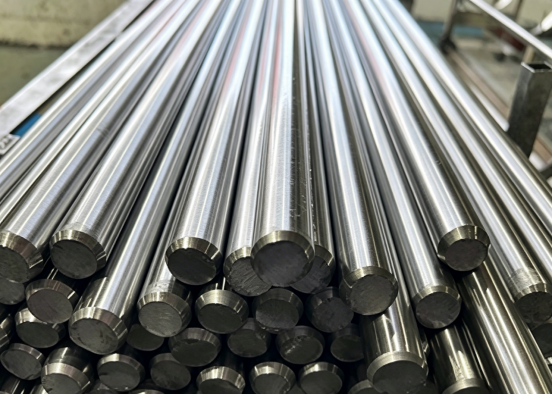
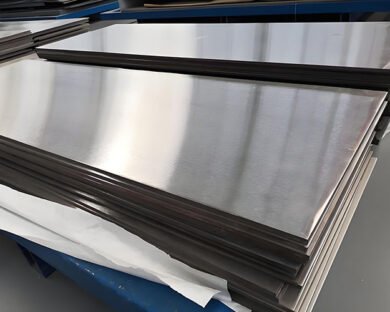
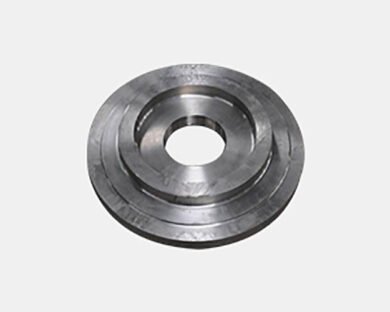
Nickel-based alloy Inconel 600 bar material – Resistance to high-stress corrosion cracking
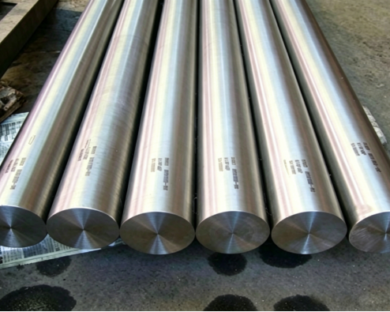
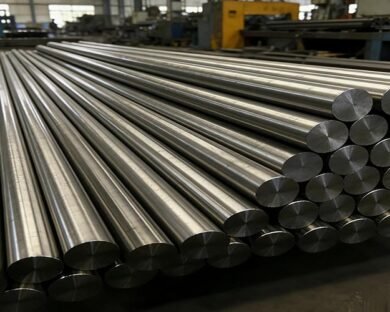
Introduction to the material and performance characteristics of Inconel 600 bar stock
Inconel 600 is a classic nickel-chromium-iron-based solid solution strengthened alloy. With its balanced properties, particularly its outstanding resistance to chloride stress corrosion cracking, excellent high-temperature oxidation resistance, and tolerance to strong alkalis, it offers an excellent balance of performance and cost in harsh working conditions. Outstanding high-temperature stability: At a continuous working temperature of up to 1150°C, its surface quickly forms a dense and highly adhesive Cr₂O₃ protective film, thereby providing excellent oxidation resistance and carburization resistance.
The maximum applicable working conditions and industries of Inconel 600 bar stock:
The long-term use temperature limit of Inconel 600 is approximately 1095℃.
- Corrosion resistance features: Neutral weakly corrosive environment (freshwater, steam) Resistance to chloride ion stress corrosion cracking (SCC).
- Nuclear industry: Used for manufacturing core components of nuclear reactor pressure vessels, steam generator heat transfer tubes, control rod drive mechanisms, etc.
- Chemical processing industry: Can be used to produce equipment such as vinyl chloride (VCM), chlorine-based titanium dioxide (chlorinator), caustic soda (soda ash) evaporators, etc.
- Aerospace: Used for manufacturing components of jet engines, such as supplementary combustion parts of turbojet engines.
The processing procedure and supply status of Inconel 600 bar materials.
The main methods of melting and casting are through vacuum induction melting (VIM) + protective atmosphere electroslag remelting (ESR) + vacuum arc remelting (VAR).
The forging methods are generally hot forging (mainly) and cold forging. Hot forging is the mainstream method, carried out at high temperatures (above the recrystallization temperature), which can effectively eliminate internal stress and refine grain size; cold forging is suitable for thin-walled parts or small components, and through cold hardening to increase strength. For large-sized products, such as plates and bars, precision forging technology is often used, through multiple forging processes and reasonable forging ratios, to ensure the internal structure of the bars is dense and the performance is uniform.
Temperature control: The heating temperature for hot forging is usually 1110 – 1140℃. Throughout the forging process, it is necessary to ensure that the alloy temperature is not lower than the final forging temperature (about 950℃). If the temperature is too low, the material is prone to cracking.
The heat treatment method for Inconel 600 bars:
Solution treatment is the core heat treatment process of Inconel 600, aiming to obtain a balanced performance supersaturated solid solution. The heat treatment system varies depending on the product form.
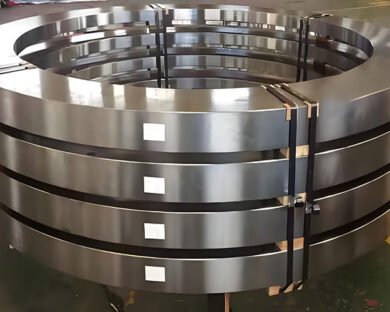
- Bars and ring parts: The core standard heat treatment system for inspection and supply is 1010℃ ± 10℃, followed by air cooling after holding.
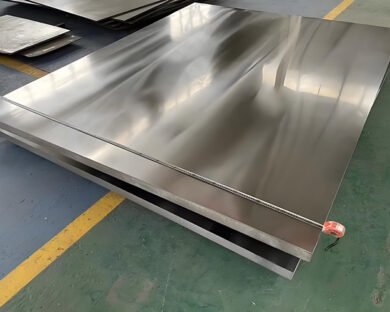
Other forms: There are clear specifications for different forms of heat treatment processes: plates are 1010 – 1050℃ (3 – 5mm/mm), air cooled; wire rods are 1065℃ ± 10℃, air cooled.
- Annealing and stress relief: Solution treatment is sometimes also called “annealing”. In addition, for processed or welded parts, stress relief annealing is required to eliminate residual stress and improve machinability. For example, large or complex welded structural components should be annealed at 870℃ for 1 hour after fusion welding to eliminate stress.
- Supply form: For forged and heat-treated bars, they can be directly supplied in the forging state, or after surface processing such as grinding or turning, delivered for shipment.
How should Inconel 600 bar materials be selected in different application environments?
One of the characteristics of Inconel 600 is its extremely wide temperature tolerance range, which can be used from extremely low temperatures to over 1000°C.
The environment in which it performs its best is hot water, steam, and marine environments containing chloride ions, as well as the primary loop water of nuclear reactors; secondly, it is used in furnace heaters and gas turbine combustion chambers; environments where it can perform well include steam generators in nuclear power plants, boiling water reactor cooling circuits, molten NaOH, KOH, dry Cl₂, and HCl gases (without moisture). ; The favorable environments include acetic acid (vinegar acid), formic acid (antacid), stearic acid, oleic acid, and rosin acid.
The applicable scenarios for stress include static load, fatigue load, impact load, and creep resistance.
At the same time, there are also some situations where Inconel 600 bar materials are not recommended:
Any concentration and temperature of hydrochloric acid (especially at higher temperatures), sulfuric acid, high-temperature concentrated nitric acid, reducing acid, alternating oxidation-reduction atmosphere, and high-temperature atmospheres containing sulfur.
Chemical composition of Inconel 600 bar:
| Nickel (Ni) |
Chromium (Cr) |
Iron (Fe) |
Carbon (C) |
| ≥ 72% |
14.0 – 17.0% |
6.0 – 10.0% |
≤ 0.15% |
Mechanical properties of Inconel 600 bar at typical room temperature (annealed state):
| Tensile strength (Rm) |
Yield strength (Rp0.2) |
Elongation (A5) |
Hardness (HB) |
| 550 – 690 MPa |
205 – 345 MPa |
30 – 55% |
120 – 290 |