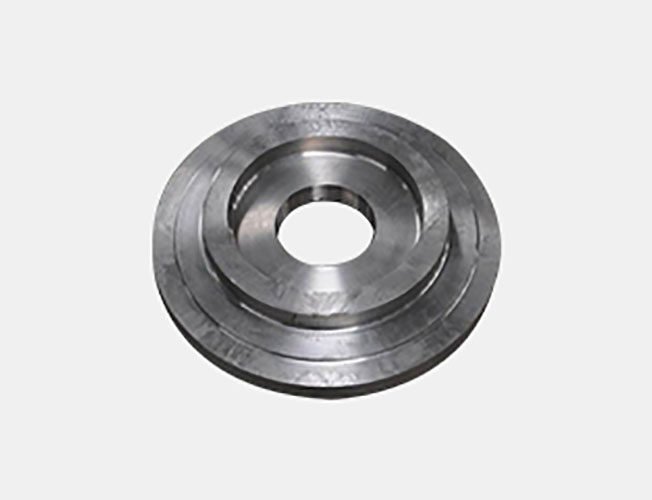
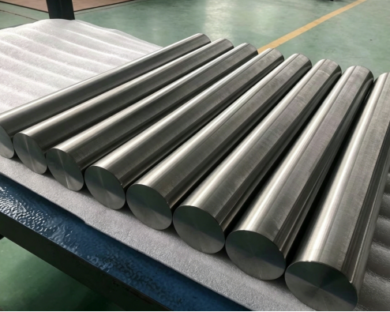
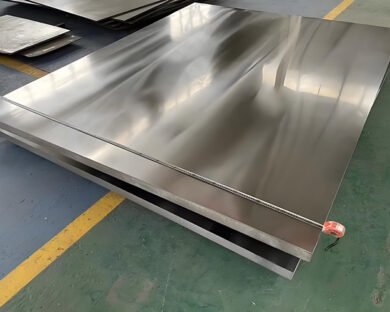
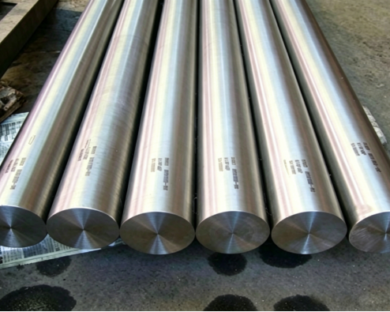
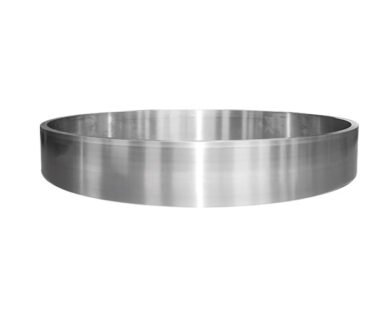
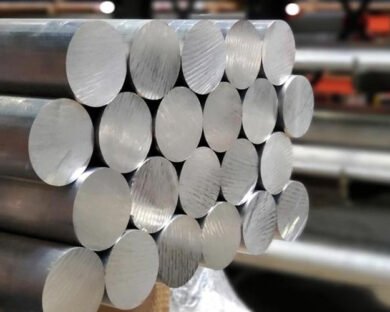
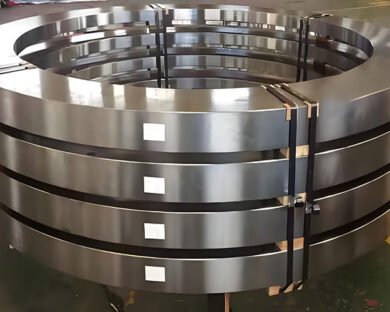
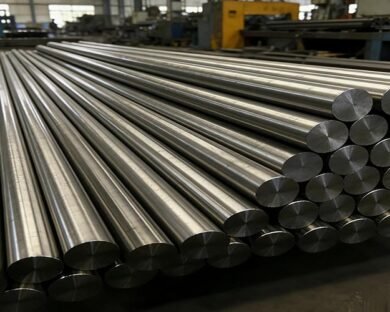
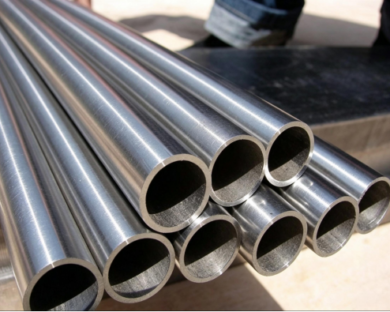
GH4133(or GH33A) is a classic nickel-based superalloy that has a long history of success in turbine disc forgings for aero engines. It is made for load carrying, high-temperature, rotating components and results in excellent strength, fatigue resistance, and structural stability at temperatures up to 750°C.
GH4133 turbine discs are one of the foremost superalloys of China’s aerospace industry, and therefore, they find extensive application in both military and civil aircraft engines, where working under cyclic stress and high-temperature is very critical.
What Is GH4133 Nickel-Based Superalloy?
GH4133 is a Ni-Cr based precipitation-strengthened wrought superalloy with an austenitic matrix. Flawless high-temperature strength and creep resistance are offered by the alloy distributing with uniform dispersion of the γ’ phase (Ni₃(Al, Ti, Nb)), which is its main strengthening mechanism.
The grain boundary cohesion and overall toughness are significantly improved with the trace elements B and Zr.
Chemical Composition and Material Properties
Typical Chemical Composition
- Ni: Balance (~60–68%)
- Cr: 19.0–22.0%
- Ti: 2.5–3.0%
- Al: 0.7–1.2%
- Nb: 1.3–1.7%
- Mo: 0.5–1.0%
- Fe: ≤5%
- C: ≤0.07%
- Trace elements: B, Zr
Main Physical Features
- Density: Approximately 8.24 g/cm³
- Melting point interval: 1320–1370°C
- Heat conduction: ~11.2 W/(m·K)
Mechanical Characteristics
At normal room temperature:
- Tensile strength ≥1080 MPa
- Yield strength ≥750 MPa
- Elongation ≥16%
Even at a high temperature of 650–700°C, the alloy still exhibits high strength and excellent toughness; thus, it remains a good candidate for the turbine disc application.
Heat Treatment of GH4133 Turbine Disc Forgings
GH4133’s performance is largely influenced by the heat treatment, whose accuracy has to be pinpoint.
Typical Heat Treatment Procedure:
1080±10°C / 8h / Cooling in air
750±10°C / 16h / Cooling in air
Thanks to this, γ′ phase precipitates uniformly, the grains get recrystallized, and you benefit from an excellent combination of strength, toughness, and fatigue resistance.
Forging Process for GH4133 Turbine Discs
In order to produce GH4133 turbine discs of aerospace quality, a combination of advanced metallurgical and forging methods is used:
Vacuum Melting (VIM + VAR)
- Vacuum Induction Melting (VIM)
- Vacuum Arc Remelting (VAR)
This combination of melting and remelting in vacuum blows off the impurities, prevents segregations, and results in the purest possible material.
Precision Forging
- Isothermal or hot die forging
- Controlled deformation ratio and temperature
- Optimized grain flow along stress direction
The grain structure is therefore very fine and the fatigue properties are greatly enhanced.
Non-Destructive Testing (NDT)
None of the turbine discs are allowed to leave the factory before passing several inspections:
- Ultrasonic testing (UT)
- Dye penetrant inspection (PT)
- X-ray inspection
Ensuring that the internal structure is defect-free and that the surface is intact.
Principal Benefits of GH4133 Turbine Disc Forgings
Outstanding Performance at High Temperatures
It would still uphold its robust mechanical properties even if it were under load continuously at temperatures as high as 750°C.
Excellent Resistance to Fatigue
Refined grain structure coupled with γ′ hardening phase led to significantly improved low-cycle fatigue resistance.
Aerospace Reliability Backed by Field Success
These are among the materials chosen for use in multiple serial production activities of Chinese aero engines, further substantiating the statement of their long-time operational stability.
Highly Processible Material
Being very conductive to large scale forging as well as multiple types of machining operations, metallurgical performance remains stable under all conditions.
Typical Applications in Aero Engines
Various components made from GH4133 turbine disc forgings include:
- Turbine discs
- Compressor discs
- Load-bearing rings
- High-temperature fasteners
Limitations of GH4133 Alloy
While GH4133 performs well below 750°C, it has certain limitations:
- Reduced creep ductility above 700°C
- Sensitivity to notch and stress concentration
- Not suitable for long-term service above 800°C
For higher temperature applications, more advanced superalloys may be required.
Improved Variant: GH4133B
An upgraded version, GH4133B, incorporates elements such as Mg and Zr to enhance grain boundary strength and improve creep life.
Common Failure Modes and Maintenance Considerations
Typical Failure Mechanisms
- Low-cycle fatigue (LCF)
- Creep deformation
- Thermal corrosion
- Grain boundary cracking
Maintenance Recommendations
- Strict control of engine operating temperature
- Avoid prolonged overheating conditions
- Regular non-destructive inspection
- Controlled start-up and shutdown cycles
These measures significantly extend component service life.
Custom GH4133 Turbine Disc Forging Solutions
We provide aerospace-grade customized solutions:
- Disc size and geometry customization
- Controlled forging ratio and grain structure
- Heat treatment optimization
- Full NDT inspection and certification
Send us your technical drawings or requirements — our engineering team will provide a tailored solution within 24 hours.