Aerospace-Grade 7475 Aluminum Alloy Forgings
Overview and Key Advantages of Aerospace-Grade 7475 Aluminum Alloy Forgings
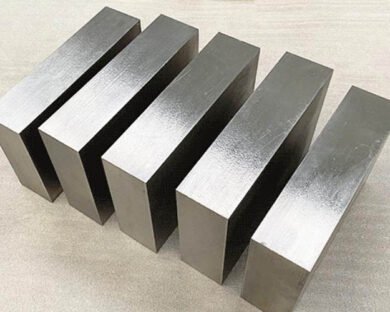
The 7475 aluminum alloy retains the extremely high strength of 7075, significantly enhancing its fracture toughness, anti-stress corrosion SCC resistance, and anti-spalling corrosion performance. It strikes a balance between strength and toughness, reducing the risk of fatigue fracture of the components and enhancing the service safety and service life of the entire machine. The forged piece undergoes large deformation forging, resulting in dense and uniform grains, controllable anisotropy, and the ability to achieve near-net-shape forming of complex contours. This reduces the subsequent machining allowances and lowers the overall manufacturing cost.
Applicable Operating Conditions and Industries for Aerospace-Grade 7475 Aluminum Alloy Forgings
| Industry |
Typical Operating Conditions |
Recommended Heat Treatment |
Forging Form |
| Aerospace |
Aircraft fuselage and wing load-bearing fittings, landing gear auxiliary components, cabin rings; subject to alternating loads and marine environments (salt spray); requires damage tolerance and stress corrosion resistance |
T73 / T76 |
Shaped die forgings, ring forgings, open-die forged blocks, cylinder forgings |
| Military Equipment |
eapon structural load-bearing housings, connecting brackets; subject to impact and alternating loads, humid/salt-spray field environments |
T73 / T76 |
Open-die forged blocks, ring forgings, shaped die forgings |
| High-end Rail Transit |
Heavy-duty vehicle body connecting brackets; high-load, lightweight, and corrosion-resistant applications |
T73 |
Forged blocks, forged slabs |
| High-end Equipment / Molds |
High-strength tooling fixtures and mold bases; lightweight, high-strength tooling |
O/T73 |
Forged blocks (suitable for subsequent machining) |
| Research Institutes |
Material testing, component simulation and development |
O / T73 / T76 |
Small-sized forged billets, test-piece forgings, small-batch production |
Core Technical Specifications for Aerospace-Grade 7475 Aluminum Alloy Forgings
| Grade |
Material System |
Supply Form |
Application Conditions |
Standards |
Size Range |
Thickness / Wall Thickness |
Inner/Outer Diameter (Ring Forgings) |
Surface Condition |
| 7475-O |
Al-Zn-Mg-Cu |
Open-die forged blocks, slabs, ring blanks |
Pre-machining, subsequent heat treatment; good plasticity, pre-forming |
ASTM B98,AMS4100,GJB2053A |
0.5–1200 kg per piece |
Slabs: 10–300 mm; Ring blank wall thickness: 15–250 mm |
ID: φ80–φ2200 mm; OD: φ120–φ2500 mm |
As-forged (black), ground, or rough-machined |
| 7475-T73 |
Al-Zn-Mg-Cu |
Closed-die, open-die, and ring forgings |
Primary load-bearing components; high stress-corrosion resistance; salt spray/humid environments; fatigue-critical applications |
AMS4101,ASTM B98,GJB2053A |
0.5–1200 kg per piece |
Slabs: 10–300 mm; Ring blank wall thickness: 15–250 mm |
ID: φ80–φ2200 mm; OD: φ120–φ2500 mm |
As-forged (black skin), ground, or machined (bright finish) |
| 7475-T76 |
Al-Zn-Mg-Cu |
Closed-die and ring forgings |
Balanced strength and toughness; moderate corrosion environments; secondary aerospace structural components |
AMS4102,ASTM B98,GJB2053A |
0.5–1200 kg per piece |
Slabs: 10–300 mm; Ring blank wall thickness: 15–250 mm |
ID: φ80–φ2200 mm; OD: φ120–φ2500 mm |
Forged (black/unmachined surface), ground, or machined (bright finish) |
Chemical Composition
| Element |
Zn |
Mg |
Cu |
Cr |
Si |
Fe |
Mn |
Ti |
Al |
| Standard Range |
5.1-6.1 |
1.9-2.6 |
1.2-1.9 |
0.18-0.25 |
≤0.10 |
≤0.12 |
≤0.06 |
≤0.06 |
Balance |
Mechanical Properties
| Temper |
Tensile Strength Rm MPa |
Yield Strength Rp0.2 MPa |
Elongation A% |
Brinell Hardness HB |
Notes |
| 7475-O Annealed |
≤520 |
≤310 |
≥12 |
≤150 |
Soft state; facilitates pre-machining; requires subsequent heat treatment |
| 7475-T73 |
490-560 |
420-490 |
≥7 |
140-160 |
High stress-corrosion resistance; preferred for damage-tolerant components |
| 7475-T76 |
520-590 |
450-520 |
≥6 |
148-165 |
Higher strength than T73; slightly lower toughness |
Key Advantages of Aerospace-Grade 7475 Aluminum Alloy Forgings
- Sturdy and balanced: With extremely high tensile strength and far superior fracture toughness compared to 7075, it is suitable for load-bearing components that need to withstand alternating impact loads;
- Excellent corrosion resistance: In the T73 state, it has outstanding resistance to stress corrosion cracking, and can be used for long-term operation in harsh conditions such as humidity and salt fog;
- High forging density: The forging process eliminates casting porosity and ensures uniform structure, with fatigue performance superior to sheet metal and castings;
- Wide adaptability: It can be forged into ring parts, square block parts, die-cast parts, tube-shaped parts, and special-shaped parts, suitable for various scenarios in aviation, military industry, and high-end equipment.
Comparison of Full Life-Cycle Costs: Aerospace-Grade 7475 Aluminum Alloy vs. Other Common Industrial Metals
| Material |
Relative Raw Material Cost |
Component Weight |
Machinability |
Corrosion Maintenance Cost |
Service Life Risk Factors |
Overall Life-Cycle Assessment |
| 7475-T73 Forging |
High (approx. 1.2–1.4x that of 7075-T6) |
Lightest (low density: 2.83 g/cm³) |
Easy to machine |
Low; excellent stress corrosion resistance |
High procurement cost; non-weldable |
★★★★★ Best overall for high-reliability applications; reduces maintenance costs associated with corrosion failure |
| 7075-T6 Forging |
Moderate |
Light |
Easy to machine |
Moderate to high; prone to stress corrosion cracking |
Prone to failure in corrosive environments; relatively low fracture toughness |
★★★☆ Suitable for non-corrosive environments with limited budgets |
| 2A12-T4 Forging |
Moderate |
Light |
Easy to machine |
High; poor corrosion resistance |
Lower strength than 7475; mostly used for components not subject to high loads |
★★☆ Suitable for general structural components with low loads |
| 4130 Alloy Steel |
Low |
Heavy(7.85g/cm³) |
oderate machinability |
High; requires anti-rust coating |
High weight; increases overall vehicle/aircraft load |
★★☆ Suitable for heavy-load applications where lightweighting is not a priority |
| TC4 Titanium Alloy Forging |
Extremely high |
Relatively light |
Difficult to machine; high tool wear |
Extremely low; excellent corrosion resistance |
High procurement and machining costs |
★★★ Suitable for extreme operating conditions with ample budget |
Manufacturing and Processing Workflow for Aerospace-Grade 7475 Aluminum Alloy Forgings
Complete manufacturing process:
Mixing of high-purity aluminum ingots → Melting and casting (strict control of Fe and Si impurities) → Homogenization heat treatment of castings → Pre-heating before forging → Free forging / die forging / ring rolling forging → Solution quenching → Overaging heat treatment (T73/T76) → Inspection by flaw detection → Surface treatment → Dimensional inspection → Outbound
Dimensions and supply forms:
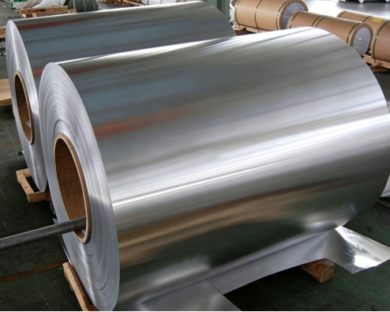
Differentiate thin sheets (Sheet) / thick plates (Plate) as defined by ASTM: Sheet thin sheet: thickness ≤ 6.35mm; Plate thick plate: thickness > 6.35mm. 7475 mainly uses forged plates (Plate) and rarely provides thin sheet (Sheet).
Regular forged billet standard specifications:
Forged plates: thickness 10 – 300mm; maximum width 1200mm; length 500 – 3500mm; can be cut to fixed lengths;
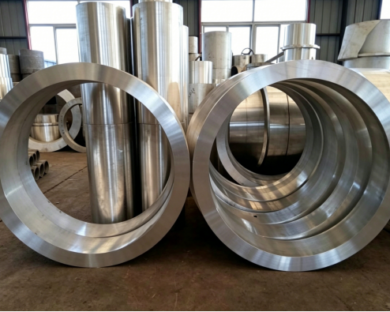
Ring forgings: inner diameter φ80 – φ2200mm, outer diameter φ120 – φ2500mm, wall thickness 15 – 250mm;
Square free forging: single piece 0.5 – 1200kg.
Delivery condition
O (Recrystallization annealed):best plasticity,convenient for pre-processing, bending (not recommended for large bending),default annealed billet;
T73,T76:delivered as solution + overaging heat treatment,mainstream delivery state of finished forgings;
No hot rolled R,cold rolled Y delivery;7475 products are delivered as forged state + heat treatment.
Quality Assurance and Company Advantages
Quality Assurance:
Standards Compliance
ASTM B98/B98M, AMS4100/4101/4102, GJB2053A-2018, GB/T3190-2020.
Factory inspection
- Chemical composition test: Spectral analysis. Component report is issued for each batch of furnace. Fe and Si impurities are strictly controlled;
- Mechanical property test: Tensile test samples (same furnace forging test block / sample from the body), tensile strength, yield strength, elongation;
- Hardness test: Multi-point Brinell hardness test;
Non-destructive testing: Ultrasonic UT testing. According to the aviation forging grade, internal porosity, cracks, and inclusions are detected;
- Dimension and appearance inspection: Three-coordinate / caliper size measurement; Visual surface inspection to check for folding, cracks, and peeling;
- Corrosion performance sampling (T73/T76): Sampling for stress corrosion SCC and fretting corrosion verification;
Issue material certificate COC. Furnace number is traceable. Material traceability can be checked for the melting and casting ingot batch.
Third-party testing institution inspection reports can be provided upon request.
Company Advantages
- Full-process self-developed forging and heat treatment: From ingot batching, forging, to solid solution and aging heat treatment, it integrates all processes to precisely control Fe/Si impurities, ensuring the 7475 aviation-grade composition standard, and preventing the substitution of ordinary 7075 for 7475;
- Multi-specification forging capabilities: Free forging, die forging, and ring rolling ring pieces can all be produced. The single-piece coverage ranges from 0.3 to 1200 kg. It supports large-sized ring forging, customized non-standard die forging with mold opening;
- Precise heat treatment control: The T73/T76 over-ageing process is mature, taking into account strength, fracture toughness, and corrosion resistance indicators, solving the problem of uneven performance in thick-section forged parts;
- Flexible delivery: Supports mass production, as well as scientific research small-batch sample forging for prototyping. Supports sawing, rough processing, and outsourcing for one-stop delivery;
- Complete quality inspection system: Batch traceability, UT flaw detection, mechanical testing, and spectral analysis are all included for a complete set of inspections, meeting the requirements for delivery documents of aviation and military materials;
- Technical support and accessories: Can provide material selection suggestions, assist customers in optimizing forging part drawings and processes, reducing processing allowances and saving customer costs.
FAQ
Q1: What are the key differences between 7475 and 7075?
A: 7475 strictly limits Fe and Si impurities. The fracture toughness and resistance to stress corrosion of T73/T76 are much better than 7075 T6; 7075 T6 has slightly higher strength, but it is prone to stress corrosion cracking in humid salt spray environments; 7475 is mainly used for high-end aerospace components with high damage tolerance requirements.
Q2: Can 7475 aluminum alloy be welded?
A: It is not recommended to weld. After welding, the strength of the heat affected zone of this high-strength aluminum-zinc-magnesium-copper alloy significantly decreases, and its corrosion performance deteriorates. Bolt connection and riveting are preferred for assembly.
Q3: How to choose between 7475 T73 and T76?
A: For salt spray and humid marine environments, T73 should be chosen as it has the best resistance to stress corrosion; for environments with higher strength requirements but in corrosive conditions, choose T76.
Q4: If the forging piece is very thick, will the mechanical properties deteriorate?
A: There will be a section effect. The thicker the cross-section of the forging piece, the lower the core’s quenching property, and the strength and toughness will slightly decrease; for thick-section components, we will communicate in advance and optimize the forging deformation amount and quenching process, and issue performance guarantees based on the actual cross-section.
Q5: Can small samples be provided? What is the minimum order quantity?
A: For research samples, we can provide them in small batches, ranging from a few grams to several kilograms. We can also supply small forging blanks. For mass production, the process follows the forging die and material input.
Q6: Can the black surface coating be used directly?
A: The forging black coating has an oxide layer. It is not recommended to use it directly. Generally, the oxide layer needs to be removed through machining. You can choose to deliver the surface polished or machined to a shiny finish.