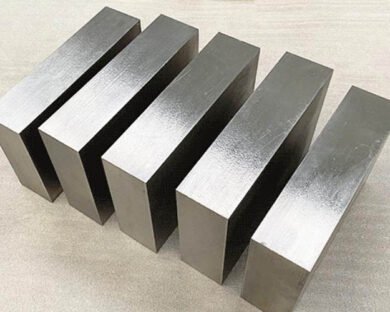
Overview of 7050 Aluminum Alloy Thick Plate
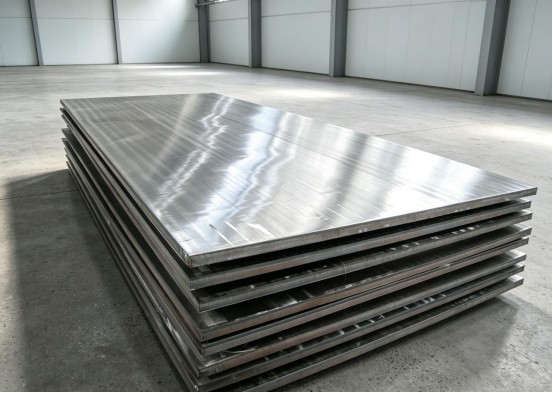
The 7050 aluminum alloy thick plate belongs to the 7XXX series (aluminum-zinc-magnesium-copper series) of high-strength aluminum alloys. Due to its excellent quenching toughness and comprehensive mechanical properties, it is widely used in the manufacturing of main load-bearing structural components in aerospace applications.
Compared with the traditional 7075 alloy, 7050 not only maintains high strength but also significantly enhances fracture toughness and stress corrosion resistance, especially suitable for thick-section components. Its T7451 condition (solution heat treatment + artificial aging + tensile stress relief) is the most commonly used delivery condition in the aerospace industry, which can maintain stable performance within a wide thickness range and reduce processing deformation.
The 7050 thick plates supplied by our company strictly comply with international standards such as AMS 4050 and ASTM B247. The thickness range covers from 6mm to 200mm, and the width can reach 3000mm. The length can be customized according to the order. Before leaving the factory, all products undergo ultrasonic testing (UT) and size inspection to ensure that the internal quality and dimensional accuracy meet the requirements of the aviation grade.
Chemical Composition and Mechanical Properties of 7050 Aluminum Alloy Thick Plates
Chemical Composition
| Element |
Zn |
Mg |
Cu |
Zr |
Fe |
Si |
Mn |
Cr |
Ti |
Al |
| Minimum |
5.7 |
1.9 |
2.0 |
0.08 |
— |
— |
— |
— |
— |
Balance |
| Maximum |
6.7 |
2.6 |
2.6 |
0.15 |
0.15 |
0.12 |
0.10 |
0.04 |
0.06 |
Balance |
Mechanical Properties
| Temper |
Tensile Strength (MPa) |
Yield Strength (MPa) |
Elongation (%, 50mm gauge length) |
Brinell Hardness (HBW) |
Rockwell Hardness (HRC) |
Fracture Toughness(MPa・m¹/²) |
| 7050-T7451 |
510–550 |
455–490 |
6–10 |
150–170 |
30–35 |
≥55 |
| 7050-T7651 |
530–570 |
470–510 |
5–8 |
160–180 |
33–38 |
≥50 |
| 7050-O |
280–320 |
140–170 |
10–15 |
85–105 |
15–20 |
— |
Comparison of full life-cycle costs with other common industrial metals.
| Material |
Density (g/cm³) |
Tensile Strength (MPa) |
Specific Strength (MPa・cm³/g) |
Unit Cost (CNY/kg) |
Weight Reduction Effect |
Corrosion Resistance |
Processing Cost |
Life-Cycle Cost |
| 7050-T7451 |
2.83 |
530 |
187 |
85–110 |
Baseline 100% |
Excellent (Stress corrosion resistant) |
Medium |
Medium-High (Excellent long-term cost-performance) |
| 7075-T6 |
2.81 |
570 |
203 |
90–120 |
+2% |
Fair (Thick plates prone to corrosion) |
Medium |
High |
| 6061-T6 |
2.70 |
310 |
115 |
35–50 |
-39% |
Good |
Low |
Low (Insufficient strength) |
| Q355 Steel |
7.85 |
355 |
45 |
8–12 |
-76% |
Poor (Requires anti-corrosion treatment) |
High |
High (Weight + anti-corrosion) |
| TC4 Titanium Alloy |
4.51 |
900 |
199 |
300–400 |
+6% |
Excellent |
Very High |
Very High |
Applications and Industries for 7050 Aluminum Alloy Thick Plates
- Aerospace (core field)
Working conditions: High alternating loads, low temperature, high-altitude corrosion, thick-section bearing
Product forms: Aircraft frame, wing panel/beam, landing gear, rocket components, satellite parts (main materials used in C919 and other aircraft models)
- Military equipment/Defence
Working conditions: Explosive shock, extreme environment, high protection requirements
Product forms: Armor plate, missile compartment, military vehicle structure, ship pressure-bearing parts
- High-end mold manufacturing
Working conditions: High hardness, stable size, wear resistance, anti-fatigue
Product forms: Large injection molds, blow molding molds, ultrasonic welding molds, shoe molds, tooling fixtures
- Heavy-duty machinery and rail transportation
Working conditions: Large load, vibration, corrosion, lightweighting
Product forms: Construction machinery arm, high-speed train body, wind power equipment structure, heavy truck frame
- Marine engineering
Working conditions: Seawater corrosion, wave alternating loads, low temperature
Product forms: Offshore platform structure, ship deck, deep-sea equipment components
Manufacturing and Processing of 7050 Aluminum Alloy Thick Plates
Dimensions and Supply Forms
- Standard Stock Specifications: Thickness ranges, widths, and cut-to-length sizes; distinction between sheet and plate products, aligned with ASTM definitions.
- Delivery Condition: Hot-rolled (R) / Cold-rolled (Y) / Recrystallization annealed (M) (Default: annealed state, offering optimal ductility for bending and welding).
- Surface Finish: Pickled and passivated, machined bright finish, or ground finish; free from delamination, oxide inclusions, and cracks.
- Customization Capabilities: Precision blanking, waterjet cutting, beveling, and outsourced precision machining; small-batch samples available.
- Core Manufacturing Process
- Melting & Casting: Electric furnace + refining + vacuum degassing → Semi-continuous ingot casting (strict control of hydrogen content ≤0.12 ml/100g).
- Homogenization: Three-stage homogenization (465°C/48h + 475°C/24h + 490°C/12h) to eliminate dendritic segregation.
- Hot Rolling: Initial rolling at 420–440°C; multi-pass rolling with intermediate annealing; finish rolling at 320–350°C; forging ratio ≥4:1.
- Solution Quenching: Soaking at 470–480°C → Rapid water quench (staged heating for thick plates to prevent deformation).
- Pre-stretching & Aging: 1–3% pre-stretching for stress relief → T7451 two-stage over-aging (120°C/24h + 170°C/8h).
- Finishing: Leveling → Cutting → Surface treatment → Non-destructive testing (NDT) → Marking and warehousing.
- Dimensions and Supply Forms
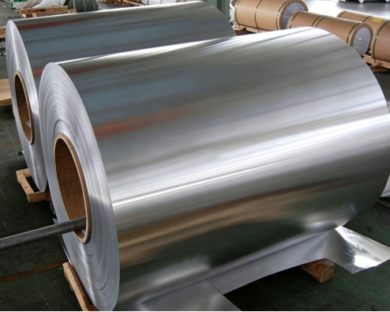
- Sheet: Thickness 0.2–6.0 mm; cold-rolled/annealed; coils or flat sheets.
Plate: Thickness 6.0–300 mm; hot-rolled + heat-treated; flat plates or cut-to-length sizes.
- Standard Stock Specifications: Thickness 6–150 mm; width… 1250/1525/2020 mm; lengths of 2550/3660/4020 mm
- Delivery condition: Default T7451; optional O (annealed, optimal ductility), T6, T7651
- Surface finish: Pickled and passivated (Sa2.5), machined bright finish (Ra ≤ 0.8 μm), ground finish; free from peeling, oxide inclusions, and cracks
- Customization capabilities: Precision cutting, waterjet/laser cutting, beveling, CNC finishing, small-batch sampling (starting from 10 kg)
Quality Assurance & Company Strengths
Our quality system covers all relevant international specifications,including GB (GB/T 29503, 3190, 16865), ASTM/AMS (B209, AMS 4050, B594), and EN (EN 3982, EN 440O-1).
Prior to dispatch, products must pass a full suite of material tests:
- OES spectro-analysis for precise alloy chemistry.
- Mechanical evaluation including tensile, hardness, and ASTM E399 fracture toughness.
- Complete volumetric NDT via ASTM B594 Class B ultrasonic testing, paired with PT/MT forsurface integrity.
- Corrosion validation featuring ASTM G34 exfoliation testing (Grade B), SCC checks,
and electrical conductivity(38% IACS).
- Precision dimensional checks using CMM(±0.02 mm limit, Ra1.6 pum).
- Internal stress and metallographic microstructural checks.
Why Work With Us on 7050 Plates?
- Having worked with 7050 heavy plates for 15 years, we focus heavily on low-quench-sensitivityrolling and T7451 stress-relief processing. This ensures exceptional property uniformity(99.5% qualified rate) throughout thick cross-sections.
- We supply thicknesses from 6 mm up to 300 mm, with particular experience in heavy platesexceeding 150 mm. Standard tempers include O, T6, T7451, and T7651 (our O-temper plate with stands 180° bending tests reliably). Down stream processing options-such as precision cutting, beveling, CNC work, and surface treatment-can be completed in-house before
FAQ
Q1: What is the main difference between 7050 and 7075 thick plates?
A: It mostly comes down to thickness and stress corrosion resistance.
For plates under 38 mm (1.5″),7075 actually holds a slight edge in tensile strength. But once you cross that 38 mm threshold,7050 performs much better due to its lower quench sensitivity.In heavy sections,7050 retains its mechanical strength, hardness, and toughness through the core, where 7075 starts to drop off.
On top of that, 7050 offers far better resistance to both stress corrosion cracking (SCC) and exfoliation, which is why it is the go-to choice for structural aerospace and military components with thick cross-sections.
Q2: How is the weldability of 7050 thick plate?
A: The welding performance is generally (common to all 7000 series), with O-state having the best performance; T7451 requires preheating at 80–120℃, using ER5356/ER5183 welding wire, controlling the heat input ≤ 20kJ/cm, post-welding stress relief annealing at 150℃ for 4 hours to avoid softening and cracks in the heat-affected zone.
Q3: How to ensure uniform performance of thick sections in 7050 thick plates?
A: Through three-level homogenization + gradient hot rolling + segmented solution treatment + pre-tensioning process, ensuring the difference in performance between the core and the surface ≤ 5%; conduct UT full-thickness flaw detection to eliminate internal defects and ensure uniform microstructure.
Q4: What are the anti-corrosion treatment methods for 7050 thick plates?
A: It is recommended to use anodizing (film thickness 5–15μm), powder coating, fluorocarbon paint; for marine/corrosive environments, add sealing treatment + sacrificial anode protection, with a corrosion protection life of up to 15–20 years.