Phone Number

+86 0538 6368027

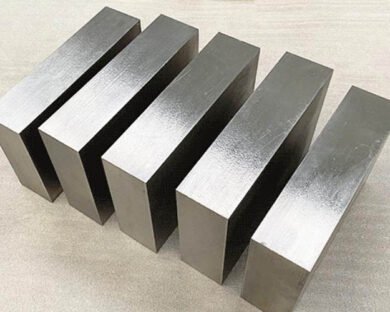
6061 Aluminum Alloy Forgings

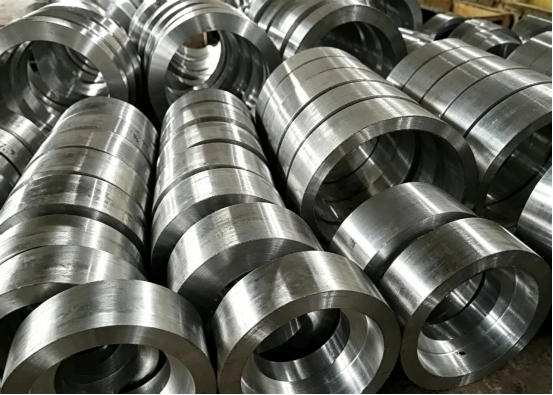
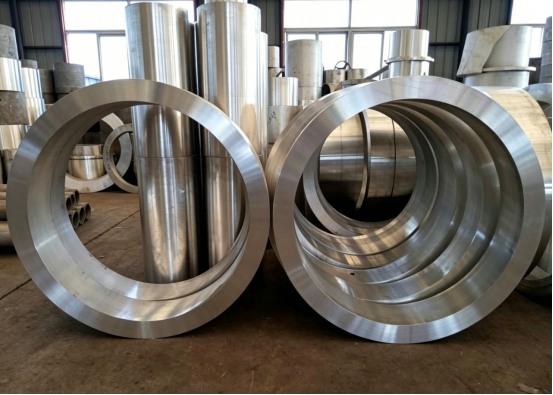
Produced using a combination of dual-vacuum metallurgy and precision forging processes, the 6061 aluminum alloy product is classified as a lightweight, high-strength structural forging. Through a comprehensive process involving purification via melting, densification via forging, and precise heat treatment to optimize its metallographic structure, the product achieves a balanced combination of lightweight properties, high strength, fatigue resistance, impact resistance, and dimensional stability. Designed to serve as a superior alternative to traditional steel and standard extruded aluminum, it primarily targets critical load-bearing, transmission, sealing, and connection components within high-end equipment systems. Consequently, it stands as the preferred structural component for the machinery, energy, rail transit, and hydraulic fluid equipment sectors, enabling significant weight reduction, enhanced efficiency, and improved overall system reliability.

6061 Aluminum Alloy Forgings


Product Overview: TIPTOP 6061 Aluminum Alloy Forgings


Produced using a combination of dual-vacuum metallurgy and precision forging processes, the 6061 aluminum alloy product is classified as a lightweight, high-strength structural forging. Through a comprehensive process involving purification via melting, densification via forging, and precise heat treatment to optimize its metallographic structure, the product achieves a balanced combination of lightweight properties, high strength, fatigue resistance, impact resistance, and dimensional stability. Designed to serve as a superior alternative to traditional steel and standard extruded aluminum, it primarily targets critical load-bearing, transmission, sealing, and connection components within high-end equipment systems. Consequently, it stands as the preferred structural component for the machinery, energy, rail transit, and hydraulic fluid equipment sectors, enabling significant weight reduction, enhanced efficiency, and improved overall system reliability.


Typical application conditions of 6061 aluminum alloy forgings


  1. This product performs exceptionally well in normal temperature to medium temperature conditions. Its standard safe service temperature range covers -40°C to 150°C. Under T6 heat treatment, the forgings can maintain their nominal mechanical properties within 100°C; when heated to 150°C, although there is a slight weakening, most of the designed strength can still be locked. It should be noted that once the working environment exceeds the 200°C threshold, the internal structure of the material will undergo a qualitative change, resulting in a rapid decline in tensile strength.


  1. Tailored specifically for medium and low stress components. Perfectly suitable for structural parts that can withstand constant static loads or medium-frequency alternating stresses. Due to its material constitutive properties, it is not recommended to use this forging in dangerous conditions with extremely high stress, extreme fatigue life requirements, or strong impact. If such rigid requirements are encountered, it is recommended to choose 7075 ultra-hard aluminum alloy or directly upgrade to special steel forgings. However, in basic load-bearing areas such as industrial machinery supports and frame connections, this product has absolute performance redundancy.


  1. The material possesses a naturally formed anti-chemical erosion passivation layer. It demonstrates outstanding resistance to pitting corrosion and stress corrosion cracking in various environments such as air, fresh water, marine salt fog, most organic acids, and various petroleum-derived media. However, this material is sensitive to strong alkaline fluids, high-concentration inorganic acids (such as concentrated nitric acid, concentrated hydrochloric acid), and long-term high-temperature and high-pressure saturated steam. It should be avoided from being exposed without protection in such extreme chemical media.


  1. The process has extremely strong adaptability and is recognized as a “highly weldable aluminum alloy”. On-site construction can use ER4043 or ER5356 welding wires for high-quality deposition. This characteristic gives it a very high degree of design freedom, enabling the large-sized forgings to be welded with extruded profiles, plates and other irregular components in a large enclosure, thus constructing large-scale complex lightweight composite engineering structures.


  1. Under the solution aging (T6 state), the material has excellent chip removal properties during cutting. When performing large-scale, high-speed CNC precision milling, it can not only easily achieve extremely strict form and position tolerances, but also directly produce a high-polished mirror-like surface effect without the need for secondary polishing.


6061 aluminum alloy forgings are suitable for the following industrial sectors:


Industry

Part

Function

Aerospace Industry

Non-critical structural components, aircraft interior parts, hydraulic housings It offers high reliability and excellent fatigue resistance. Due to its good weldability and corrosion resistance, 6061 is frequently used for auxiliary airframe structures and helicopter rotor system components.

Marine & Offshore

Marine Hardware, Outboard Motor Brackets, Pump and Valve Housings, Seawater Piping Flanges It possesses exceptional resistance to seawater corrosion, allowing for long-term use with virtually no need for protective coatings, and is lightweight for easy installation.

Oil & Gas

Pipe supports, wellhead control panel components, non-magnetic structural components for drilling platforms, safety valve bodies. Provides spark-free properties (essential for preventing the ignition of flammable gases) and good weather resistance in non-strongly acidic environments.

Renewable Energy

Gearbox housings, generator mounts, and yaw gear ring seats in wind turbines; slewing bearings and connecting arms in solar tracking systems; and pipe fittings and valve bodies in hydrogen energy systems. It meets outdoor requirements for weather resistance, UV resistance, and salt spray resistance, while simultaneously reducing the weight at the top of the tower and lowering structural costs.

Automotive Industry

Suspension System: Control Arms, Steering Knuckles, Wheel Hubs, Brake Calipers, Shock Absorber Mounts Achieve lightweighting while ensuring safety, thereby reducing fuel and energy consumption and enhancing handling responsiveness.

General Machinery & Automation

Machine tool protective covers, guide rails, feed plates, cams, gearboxes, cylinder heads, various connecting flanges, and bases. Cost-effective, readily available, and easy to process, it is the preferred material for achieving equipment weight reduction and rapid delivery.


Advantages and Features of TIPTOP 6061 Aluminum Alloy Forgings


  1. The lightweight effect is remarkable, significantly reducing costs and increasing efficiency. The density is only one-third of that of steel, and under the condition of meeting the same structural strength requirements, the weight can be reduced by approximately 60%.
  2. Strong corrosion resistance, reducing maintenance costs. A natural layer of dense aluminum oxide protective film forms on the surface, and in most environments, no additional coating is required.
  3. Excellent comprehensive mechanical properties, stable and reliable. Meeting the strength requirements of most industrial structural components and load-bearing parts.
  4. Outstanding process adaptability, easy to process and connect, with a large design freedom, facilitating the manufacture of complex structural components.
  5. Flexible production capacity, meeting the needs of multiple varieties and customization.


Physical and Mechanical Properties of 6061 Aluminum Alloy


Item

Unit

O(Annealed)

T4(Solution Heat Treated & Naturally Aged) T6(Solution Heat Treated & Artificially Aged) T651(Solution Heat Treated, Aged & Stress Relieved) T73 (Over-aged for Stress Corrosion Resistance

Density

g/cm³

2.70 2.70 2.70 2.70

2.70

Tensile Strength

MPa 120~150 205~240 260~310 255~305

230~270

Yield Strength

MPa 55~75 110~140 240~280 235~275

200~240

Elongation % 18~25 14~20 8~12 9~13

10~15

Brinell Hardness (HB) 40~55 70~85 95~110 90~108

80~98

Typical Applications

Components requiring secondary bending or cold working Medium-strength components requiring specific plasticity General-purpose high-strength load-bearing components (Most common) High-precision, low-deformation precision components Components for high-stress corrosion environments


TIPTOP 6061 Aluminum Alloy Forgings: Product Specifications and Supply Forms


0 Annealed state, T4 natural aging after solid solution treatment, T6 artificial aging after solid solution treatment, T651 stress relief after solid solution treatment, T73 over-aged for stress corrosion resistance.


Forging shape

Standard shapes: discs, bushings, flanges, housings, ring parts

Custom shapes: Various special-shaped parts (customization based on provided drawings is supported)


Size & Weight Range

Outer Diameter: φ50mm ~ φ1200mm

Single Piece Weight: 0.5kg ~ 800kg


Tolerance grades

For rough forgings: ±3mm

For precision forgings: ±0.5mm

For CNC machined parts: ±0.05mm


Supply forms

Forging blanks (rough forging / precision forging), heat-treated semi-finished products, fully precision processed finished products, surface treated finished products.


Manufacturing Process and Processing Technology of TIPTOP 6061 Aluminum Alloy Forgings


  • Order Matching: Confirm the drawings, material, heat treatment status, dimensional tolerances, inspection requirements, and delivery standards.
  • Vacuum Induction Melting (VIM): Vacuum melting of raw materials to initially remove gases and non-metallic impurities, improving the purity of the material.
  • Electroslag Remelting (ESR): Secondary purification to further homogenize the chemical composition and microstructure, eliminating segregation.
  • Radial Forging: Forming the part, optimizing the metal flow lines, improving density and comprehensive mechanical properties, and producing qualified forgings.
  • Solution + Aging Heat Treatment: Perform the corresponding heat treatment as per requirements (O/T4/T6/T651/T73), stabilizing mechanical properties.
  • Non-destructive Testing + Third-Party Inspection: Conduct ultrasonic testing (UT), in conjunction with third-party authoritative inspection, and issue a formal inspection report.
  • CNC Precision Machining: Perform precise machining such as turning, milling, and boring according to the drawing requirements, ensuring form and position tolerances and dimensional accuracy.
  • Final Inspection, Marking, Packaging: Comprehensive re-inspection, marking, and protective packaging.

Logistics Delivery, Completion of Delivery.


TIPTOP Quality Assurance and Company Advantages


Quality Assurance

  • Full-process traceability: Records and archives are kept for each step, including raw materials, melting, forging, heat treatment, processing, and testing. Each batch can be traced.
  • Self-inspection + specialized inspection: Each process is inspected by a dedicated person. Non-conforming products must not flow into the next process.
  • Factory inspection: Dimension, appearance, hardness, and non-destructive testing are conducted for each batch.
  • General standards for aluminum alloy forgings: ASTM B247, GB/T 3190, GB/T 25151
  • Material inspection certificate: Supports EN10204 3.1 / 3.2 grade material certification
  • Non-destructive testing standards: ASTM E165, ASTM A609, etc. inspection specifications
  • Heat treatment follows aerospace/industrial grade aluminum alloy heat treatment process standards


Company Advantages

  • Full-process production: Own vacuum melting, electroslag remelting, forging, heat treatment, and CNC machining production lines. Core processes are not outsourced, ensuring controllable costs and delivery times.
  • Leading metallurgical technology: Dual vacuum melting for purification, with high material purity and extremely low internal defect rate of forged parts.
  • Comprehensive specifications: Outer diameter ranging from φ50 to φ1200mm, weight from 0.5 to 800kg. All standard and special-shaped parts can be accepted, compatible with both small and large batches.
  • Complete heat treatment capabilities: Proficient in the full series of heat treatment processes such as O/T4/T6/T651/T73, with precise performance matching.
  • Strong precision control ability: Multiple levels of tolerance options from rough forging to precision machining to meet the requirements of both ordinary conditions and high-end precision equipment.
  • Comprehensive testing qualifications: Internal non-destructive testing laboratory + long-term cooperation with CNAS-recognized third-party institutions, capable of issuing international standard reports.
  • Mature customization services: Technical team provides support for drawing evaluation, process optimization, and material selection suggestions. Single-piece samples and large-batch orders can all be accepted.


Frequently Asked Questions


Q1: What is the difference between 6061 forgings and 6061 extruded bars?

A: Forgings feature continuous and well-distributed metal flow lines with a denser grain structure. Their transverse mechanical properties, fatigue resistance, and impact strength are far superior to those of extruded bars, making them better suited for structural components subject to multi-directional stresses and alternating loads. Extruded materials, conversely, are more suitable for parts subject to simple axial loading and for general machining applications.


Q2: Can you provide third-party material certification?

A: Yes. We collaborate with CNAS-accredited laboratories to issue internationally recognized material and inspection certificates in accordance with EN10204 standards (Levels 3.1 and 3.2).


Q3: What is the Minimum Order Quantity (MOQ)? How do I request samples?

A: The minimum order quantity for samples starts at 10 pieces, while mass production orders start at 50 pieces. You may directly submit your product drawings and technical specifications; we will provide a proposal and quotation within 48 hours.


Q4: What is the typical lead time?

A: The lead time for standard forged blanks is 15–20 days. For finished parts involving precision CNC machining, the lead time is 30–35 days; expedited orders can be scheduled upon negotiation.


Q5: How should I select the appropriate heat treatment temper?

A: The “0” temper is suitable for parts requiring subsequent cold working or bending. The “T4” temper offers a balance between strength and ductility. The “T6” temper is the preferred choice for general high-strength applications. The “T651” temper is ideal for high-precision components where minimal deformation is critical. The “T73” temper is the preferred choice for applications where there is a risk of stress corrosion cracking.


Q6: Do you offer complementary surface treatment services?

A: Yes, we do. We can provide a range of surface finishing services, including anodizing, hard anodizing, painting/coating, polishing, and passivation.
 

Related products