7075 Aluminum Alloy Coil
Product Overview of 7075 Aluminum Alloy Coils
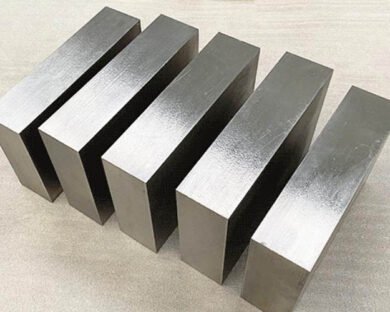
The 7075 aluminum alloy sheet material belongs to the Al-Zn-Mg-Cu ultra-high-strength aerospace-grade aluminum alloy. The sheet material is in the form of continuous rolled coil, different from a single sheet plate. It is the core base material for lightweight and high-strength structures. Market positioning: High-end lightweight load-bearing structures, military aviation, high-end equipment, precision molds, and specialized base materials for new energy lightweight components. It also takes into account the requirements for batch continuous processing and is compatible with automated stamping, bending, CNC deep processing, and laser cutting assembly line production.
Applicable Operating Conditions and Industries for 7075 Aluminum Alloy Coils
- Aerospace and military industry
Operating conditions: Ultra-high strength, lightweight, anti-fatigue, low-temperature environment. Product forms: 7075-O cold-rolled sheet (for body small parts), T6 hot-rolled sheet for flat thick plates (for body frame, landing gear components)
- New energy vehicles / rail transportation
Operating conditions: Lightweight reduction, chassis load-bearing, battery pack structure, impact resistance. Product forms: Thin cold-rolled sheet for stamping shells, mid-strip narrow belts, hot-rolled thick sheet for processing crossbeams
- High-end molds and tooling fixtures
Operating conditions: High hardness, wear resistance, pressure resistance, no deformation. Product forms: T6/T651 hot-rolled sheet for flat thick plates, precision processing templates
- Outdoor equipment / unmanned aircraft / sports equipment
Operating conditions: Lightweight, high strength, weather resistance, bending forming. Product forms: O-shaped cold-rolled sheet, bending frames, body shells, mountaineering equipment
- Precision mechanical automation equipment
Operating conditions: High rigidity, low self-weight, precision base, linear modules. Product forms: Medium-thick sheet, laser cutting + CNC processing
- Ships, polar equipment
Operating conditions: Low-temperature without cracking, mild seawater corrosion resistance. Product forms: Acid-washed and passivated sheet, structural support plates
Chemical Composition and Mechanical Properties of 7075 Aluminum Alloy Coil
Chemical Composition
| Element |
Zn |
Mg |
Cu |
Cr |
Fe |
Si |
Mn |
Ti |
Al |
| Standard Range |
5.1–6.1 |
2.1–2.9 |
1.2–2.0 |
0.18–0.28 |
≤0.50 |
≤0.40 |
≤0.30 |
≤0.20 |
Balance |
Mechanical Properties
| Delivery Condition |
Tensile Strength MPa |
Yield Strength MPa |
Elongation (50mm Gauge Length) |
Brinell Hardness HB |
Suitable Processing |
| 7075-O Annealed Coil |
≤275
|
≤145
|
≥17
|
≤75
|
Bending, stamping, deep drawing, complex forming |
| 7075-T6 Aged Coil |
≥570
|
≥505
|
≥9
|
150–165
|
High-strength structures, molds, load-bearing parts |
| 7075-T651 Stress-Relieved & Aged |
≥560
|
≥495
|
≥10
|
148–162
|
Precision machined parts; low internal stress, deformation-resistant |
Key Advantages of 7075 Aluminum Alloy Coils
- Extremely high structural strength (strong tensile resistance)
Among all the aluminum alloy families, 7075 is widely recognized as the high-strength model. After undergoing heat treatment, its tensile strength can reach a level that is beyond the reach of ordinary aluminum materials, and it can even compete head-on with many types of steel. This makes it the preferred choice for applications in structural components that require high loads and large stresses, as it offers both weight reduction and high strength.
- Excellent hardness performance
Compared to the aluminum materials of the 5th or 6th series, the surface hardness of 7075 sheet material is much higher. During actual processing and subsequent use, this high hardness means that it is more resistant to wear, less prone to scratches or surface deformation, and is highly suitable for use in precision components with strict requirements for wear resistance.
- Excellent machining and cutting performance
Although it has high hardness, its mechanical processing performance in the annealed or solution-treated state is very good. During cutting, it is not prone to sticking to the tool, the chip removal is smooth, and it can achieve very high surface finish and dimensional accuracy. It can effectively help the processing factory improve production efficiency and reduce the scrap rate.
- Excellent fatigue resistance life
The 7075 sheet material has an outstanding ability to resist fatigue failure. Under harsh conditions where it frequently undergoes alternating loads (i.e., repeated force application and release), it is less likely to experience fatigue fracture, and has a high safety margin. Therefore, it is indispensable in high-frequency vibration fields such as aerospace, high-end bicycle frames, and racing accessories.
- High material utilization rate brought by rolls
Compared to sheets, the main advantage of rolls (Coil) lies in their ability to be continuously stamped or cut. Manufacturers can cut the rolls flexibly according to the actual required length, significantly reducing the leftover edges and corners during the cutting process. This can directly help enterprises save a considerable amount of costs, especially when the raw material price is high like 7075.
Comparison of Full Life-Cycle Costs with Other Common Industrial Metals
- Comparison of 6061/6063 aluminum alloys
Strength: The yield strength of 7075 is more than twice that of 6061-T6. The thickness of the sheet can be reduced by 30% under the same load, resulting in less material usage;
Life cycle: Anti-fatigue and wear-resistant, the equipment replacement cycle is prolonged;
Cost: The unit price is higher. It is suitable for high-strength load-bearing parts and scenarios with lightweight and high added value, making it more cost-effective.
- Comparison of titanium alloys
Advantages: The procurement and processing cost of 7075 is only 1/4 of that of titanium alloys. The forming process is simple, and special welding is not required;
Shortcomings: Its heat resistance is weaker than that of titanium. Lightweight structures at room temperature should preferentially use 7075.
7075 Aluminum Alloy Coil Manufacturing Process and Supply Forms
Process Steps:
High-purity aluminum ingot melting → Online spectroscopic composition control → Casting/Hot rolling of billets → Rough rolling (gauge reduction) → Finish rolling (thickness control) → Coil annealing (O-temper) or aging/hardening (T6-temper) → Surface pickling/finishing → Slitting/Cut-to-length → Surface inspection → Protective film application, packaging, and warehousing
Supply Dimensions and Classification (Compliant with ASTM Standards)
- Thin Sheet/Plate: Thickness 0.2–6.0 mm; supplied exclusively as cold-rolled coils; cut-to-length sheets available;
- Thick Plate: Thickness 6–30 mm; hot-rolled coils; cut-to-length/sized upon request;
Delivery Temper/Condition Descriptions
R (Hot-rolled): Surface oxide scale present; suitable for rough machining; low cost;
Y (Cold-rolled): High thickness precision; smooth, fine surface finish;
O (Fully Annealed – Default Supply): Very low internal stress; optimal ductility; suitable for sharp-angle bending, stamping, and deep drawing; customers can perform subsequent heat treatment to increase strength;
Three standard surface grades; the entire coil is free from peeling, oxide inclusions, rolling cracks, light/dark streaks, and dents;
7075 Aluminum Alloy Coil: Quality Assurance and Company Advantages
Standards Compliance:
ASTM B98/B98M, AMS 4045, GB/T 3880, ISO 9001, and aerospace material testing specifications.
Comprehensive Factory Testing:
- Chemical Composition: Direct-reading spectrometry; reports issued for every melt and coil.
- Mechanical Properties: Tensile testing (tensile strength, yield strength, elongation) and Brinell hardness testing.
- Metallographic Analysis: Grain size assessment; verification of the absence of coarse, brittle phases.
- Surface NDT: Full-coil visual inspection; random penetrant testing (PT) for micro-cracks.
- Dimensional Accuracy: Micrometer thickness checks, caliper width checks, and flatness/shape verification.
- Internal Stress Testing: Deformation verification for T6/T651 tempers to ensure stability during precision machining.
Company Advantages
- Full-process self-owned production lines: Self-owned hot rolling, cold rolling, annealing and tempering furnaces, and coil cutting and flattening production lines. There is no outsourcing or subcontracting. Thickness and mechanical properties are stable and controllable, eliminating the price differences of middlemen.
- Wide-width large-coil customization capability: Regular 1600mm wide coils are in stock. The maximum customizable width is 2000mm for ultra-wide 7075 coils. It is suitable for large-scale automated stamping lines.
- Precise annealing process control: Exclusive 7075 low-temperature annealing process. The plasticity of the coil is uniform throughout the roll, and there is no cracking during bending. The yield rate of O-shaped forming is industry-leading; custom T6/T651 pre-tempering coils can be provided.
- Small-batch rapid delivery: Mainstream thickness coils ranging from 0.5 to 20mm are in stock. Samples can be cut zero-cut within 3 days; large-volume orders are steadily scheduled, and the delivery time is better than that of competitors.
- One-stop deep processing support: Integrated services of cutting, flattening, cutting, milling notches, and precision processing. Customers do not need to outsource to multiple parties, reducing management costs.
- Military and aerospace-grade quality control system: Strictly follows AMS aviation standards. The impurity elements are strictly controlled. Each coil has a unique furnace number for traceability. It can be combined with third-party supervision and third-party re-inspection.
- Surface treatment customization service: Customized services such as pickling, brightening after cold rolling, and wire drawing surface can be provided. Adaptable anodizing solutions are available to solve problems of color difference and poor oxidation after processing.
- Technical support and support services: Provide bending process, heat treatment and tempering schemes, and welding process guidance. Provide material selection optimization suggestions for new energy and aerospace structural components.
FAQ
Q1: Can 7075-O (annealed) coils be directly bent and formed? What is the maximum bending angle?
A: The “O” temper indicates a fully annealed state with optimal ductility; it can be bent 180 degrees flat without cracking. In contrast, the T6 (solution heat-treated and artificially aged) temper is unsuitable for sharp-angle bending and is only appropriate for minor bends; O-temper coils must be used for forming operations involving significant deformation.
Q2: How corrosion-resistant is the 7075 sheet material? Can it be used outdoors directly?
A: 7075 contains copper, and its natural corrosion resistance is weaker than that of 6061. For long-term outdoor use, it is recommended to perform anodizing, hard anodizing or spraying; for short-term use in a dry indoor environment, the bare material can be used.
Q3: What are the differences between the 7075 sheet material and the 7075 plate? How should one choose?
A: Coils are continuous rolls suitable for automated stamping and batch slitting/production, offering lower costs. Individual sheets are better suited for small-batch or sporadic processing. Coils are the preferred choice for mass-production assembly lines.
Q4: Is higher hardness better for 7075-T6? Will it deform during machining?
A: Higher hardness correlates with higher strength, but also results in greater internal stress, making the material prone to deformation during precision machining. For precision molds and high-precision machined parts, the stress-relieved T651 temper is recommended to minimize machining-induced deformation.