
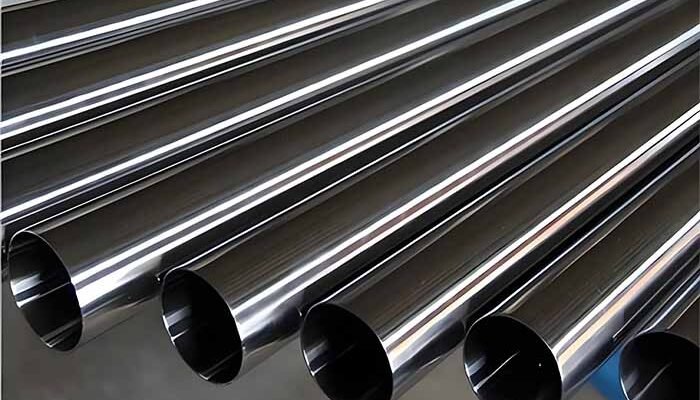
Stainless steel is almost ubiquitously used in industries, however, normally people don’t discuss it in abstract terms. The main concern is usually how it will perform in a specific environment, whether it will corrode, how it will be machined, and how it will age.
When it comes to TIPTOP Metal, stainless steel suppliers broadly supply materials in different forms that customers can machine or fabricate. So, instead of treating stainless steel as one product, we mostly view it as a raw material for different end uses.
Typically, the standard response to what stainless steel is made of is iron coupled with chromium. This is quite right, but gives you little knowledge on its own.
In practical usage, the main factor remains: after adding chromium, the metal forms a very thin layer that resists corrosion. This is what retards the oxidation. The other elements like nickel, molybdenum, carbon, etc., are present to change the material’s characteristics.
To illustrate:
– 18/10 stainless steel is stable and workable due to nickel content
– 316 stainless steel is suitable for harsh environments as it contains molybdenum
Hence, composition changes a little bit with the change of the environment to be tackled by the material.
Most of the time, the choice comes down to 304 or 316.
304 stainless steel is widely used because it works well in general conditions. It’s relatively easy to process and doesn’t cost as much.
While 316 stainless steel is selected in cases of exposure to salts, chemicals, or moisture. Initially, the difference isn’t obvious, but over time, the difference in performance becomes evident.
For welding, 316L stainless steel is preferred in most cases. It is not related to strength but more about preventing problems that can arise from welding stainless steel, particularly at the joints.
In practice, stainless steel is rarely bought as a “material”—it’s bought in a form that fits the job.
You’ll typically see:
The choice isn’t complicated, but it does depend on what happens next—cutting, welding, or machining.
In piping systems, stainless steel pipe and stainless steel pipe fittings are usually selected for one simple reason: they last longer without constant maintenance.
You’ll find them in:
The material choice here is often conservative. If there’s any doubt about corrosion, people tend to move from 304 to 316 rather than take risks.
Welding stainless steel isn’t difficult, but it does require a bit more control than carbon steel.
The main issues people run into are:
That’s why lower carbon grades like 316L stainless steel are commonly used. It’s less about making welding easier, and more about avoiding problems afterward.
Stainless steel ends up in a wide range of places, but the reason is usually the same—it reduces maintenance.
You’ll see it in:
Even small items like stainless steel zip ties are used in situations where corrosion would otherwise cause failure over time.
In most projects, material selection doesn’t need to be overly complex.
A simple way to think about it:
Beyond that, the focus usually shifts to dimensions, machining allowance, and availability.
At TIPTOP Metal, we don’t treat stainless steel as a finished product. Most of what we supply is meant to be processed further.
That includes:
Our role is mainly upstream—making sure the material is consistent so that downstream machining or fabrication doesn’t run into unnecessary issues.
If you’re working on a specific application, it usually makes more sense to look at the product form directly rather than the material in general.
You can explore:
Stainless steel isn’t always the most advanced material, but it’s often the most practical one.
It’s predictable, widely available, and performs well in a wide range of conditions. That’s why it continues to be used across so many industries.
From our side at TIPTOP Metal, the focus is simple—provide stainless steel materials that behave the way customers expect them to when they start machining or fabricating.