Product Overview
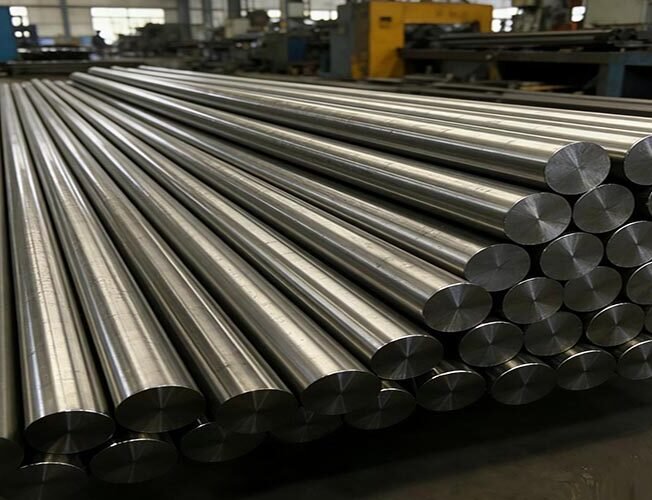
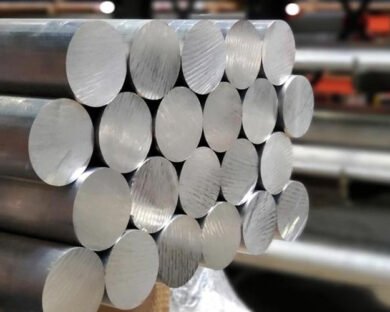
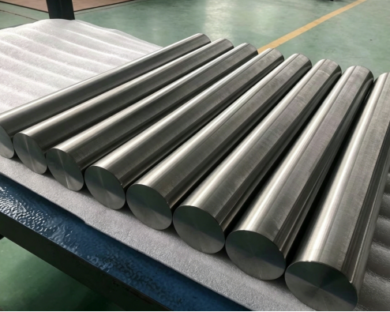
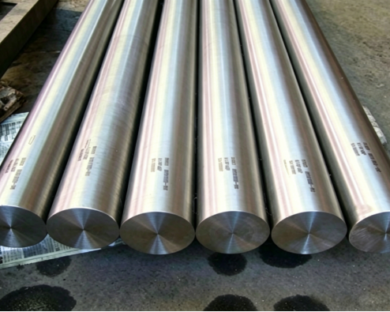
The GH4169 cold drawn deformed bar is a high-strength, nickel-based alloy bar manufactured from the precipitation-hardened superalloy GH4169, by cold drawing deformation processing. Form cold drawing by cold drawing not only enhances the dimensional and surface qualities, but also augments the mechanical properties of the product compared to traditional hot-rolled bars.
GH4169 bar material finds a wide array of application in aerospace, energy and high-end equipment manufacturing sectors, especially where parts need to deliver dependable mechanical performance under elevated temperature, sustained stress and harsh environments.
Due to the fact that GH4169 is an alloy with a combination of high strength, excellent resistance to fatigue and stability of structure over a broad temperature range, bars obtained by cold drawing of this alloy are typically used as raw material for precision machined parts, turbine components and high-temperature structural elements.
GH4169 Cold Drawn Bars Features
The cold drawing deformation method results in the introduction of a number of very useful enhancements in GH4169 bar for industrial use.
Improved dimensional accuracy of the bars is the first of those benefits which leads not only to reduced amount of subsequent machining but also to an increase in fatigue life due to smoother surface.
The cold drawing process imparts a certain level of work hardening, which is nature of the strengthening of the material without melting, i.e. physically altering the material, which can increase the strength of the material over conventionally hot-rolled bars.
GH4169 possess exceptional mechanical properties allowing it to be used even in high temperatures. Tensile strength and creep resistance can be retained at high levels even at a temperature of approximately 700°C.
The excellent oxidation and corrosion resistance of the alloy also makes it suitable for use in demanding environments.
GH4169 Alloy Properties
GH4169 is a nickel-based, precipitation-hardened superalloy whose main constitution elements are nickel, chromium and iron, whereas the strengthening elements are molybdenum, niobium, titanium and aluminum.
It is engineered to preserve stable mechanical properties across a wide range of temperatures. Some of its important qualities include high tensile strength, good resistance to fatigue and strong resistance to creep, which are all necessary for components that are continuously under stress and exposed to elevated temperatures.
The typical mechanical properties are tensile strength of 965 MPa, yield strength of 550 MPa and an elongation of 30% which, respectively, provide a good balance between strength and plasticity.
Manufacturing Steps of GH4169 Cold Drawn Deformed Bars
GH4169 cold drawn bars manufacturing includes several major steps.
Initially, the method involves vacuum melting or refined alloy steel making, which effectively curbs impurities giving rise to the overall high quality of the product.
Once casting and forging have been completed, the metal is rolled to hot-rolled bar form. Subsequently, these bars are deformed by cold drawing, a process in which their diameter is decreased by means of drawing dies in a controlled atmosphere.
Cold drawing not only enhances the accuracy in dimensions and the surface finish but also causes the improvement of mechanical characteristics due to work hardening. Bars after drawing can be subjected to heat treatment, e.g. solution treatment or aging treatment to bring about the desired level of material performance.
During production, usually, strict inspections are carried out so that the product meets the set specifications.
Applications of GH4169 Cold Drawn Bars
Because of their high strength and excellent high-temperature stability, GH4169 cold drawn bars are used in a variety of demanding industrial fields.
In the aerospace industry, they are commonly used as raw materials for turbine engine components such as shafts, fasteners and structural parts.
In energy equipment, the bars may be used for high-temperature bolts, structural connectors and other mechanical parts that require stable performance at elevated temperatures.
The material is also used in nuclear power equipment and chemical processing industries, where components must operate in environments involving high temperature, corrosion or mechanical stress.
Equivalent Grades of GH4169 Alloy
GH4169 corresponds to several international alloy designations used in different standards.
The most widely known equivalent is Inconel 718 (UNS N07718) in the United States. Similar grades are also found in European standards, including NC19FeNb in France and NiCr19Fe19Nb5Mo3 in Germany.
Although the naming systems differ, these alloys share essentially the same chemical composition and mechanical characteristics.
Summary
GH4169 cold drawn deformed bar is an important semi-finished product based on the GH4169 nickel-based superalloy. Through the cold drawing process, the bar obtains improved dimensional accuracy, surface quality and mechanical strength.
Thanks to its combination of high strength, oxidation resistance and corrosion resistance, this material is widely used in aerospace, energy and other high-temperature engineering applications where reliable material performance is required.