GH2132 Retaining Ring for Generator Rotor
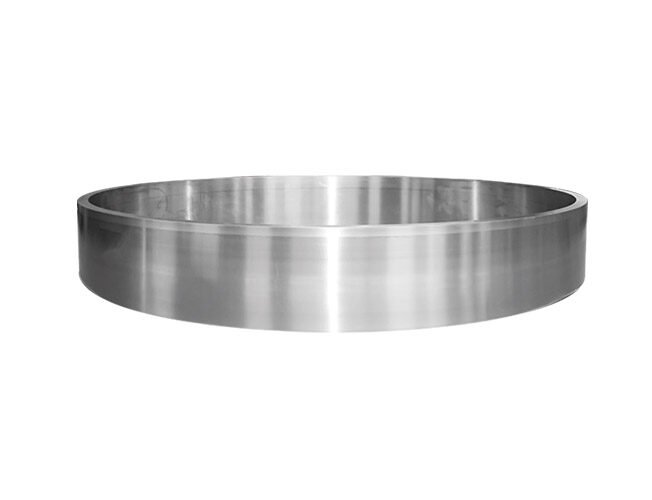
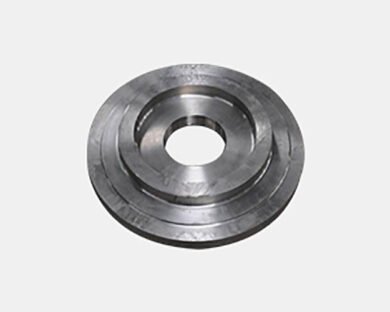
The GH2132 generator retaining ring is a forged structural ring installed at the rotor end of high-speed generators. Its function is straightforward: secure the end turns of the rotor winding and withstand the centrifugal force generated during operation.
In large generators, the retaining ring carries continuous tensile stress while rotating at high speed. Any deformation or loss of strength may directly affect rotor stability. For this reason, the material used for the retaining ring must provide reliable strength and dimensional stability under both mechanical load and elevated temperature.
This type of retaining ring should not be confused with common retaining rings and snap rings used for axial positioning in standard mechanical assemblies. GH2132 rings are structural components rather than elastic positioning elements.
Material and Alloy Structure
GH2132 is an iron-based high-temperature alloy with a nominal composition of Fe-25Ni-15Cr. It is further strengthened with molybdenum, titanium, aluminum, vanadium, and a small amount of boron.
Nickel improves structural stability at temperature. Chromium contributes to oxidation resistance. Molybdenum and titanium support precipitation strengthening and long-term creep resistance. The alloy system was developed for service environments where both heat and stress are present for extended periods.
Under temperatures below approximately 650°C, the microstructure remains stable when processed correctly.
Mechanical Performance
After proper heat treatment, GH2132 typically reaches:
Tensile strength around 1055 MPa
Yield strength around 647 MPa
Stable creep resistance for sustained loading
For generator applications, yield strength is especially important. During rotation, centrifugal force creates outward radial stress in the retaining ring. Over time, insufficient strength could lead to gradual deformation. GH2132 is selected to reduce that risk.
Mechanical values depend on section size and heat treatment condition, so final properties are verified through inspection and testing.
Heat Treatment Control
Material performance is closely related to heat treatment.
A common process route includes solution treatment near 982°C followed by aging at approximately 718°C. The aging stage allows strengthening phases to form within the matrix, increasing tensile and yield strength.
Without the aging process, the alloy remains softer and does not reach the required mechanical level for generator rotor service. For large-diameter retaining rings, uniform temperature control during treatment is important to ensure consistent properties across the section.
Difference from Standard Retaining Rings
In general industrial equipment, retaining rings are used to hold components in position on shafts or inside housings. Typical examples include:
Internal retaining ring
External retaining ring
Standard retainer rings
General retaining rings and snap rings installed with a retaining ring tool
Those products are usually thin, elastic rings designed for assembly convenience.
A GH2132 generator retaining ring is different. It is a heavy forged ring designed to:
Resist high centrifugal stress
Maintain interference fit with the rotor
Operate at elevated temperature
Meet balance requirements in rotating systems
Its function is structural rather than positional.
Manufacturing Process
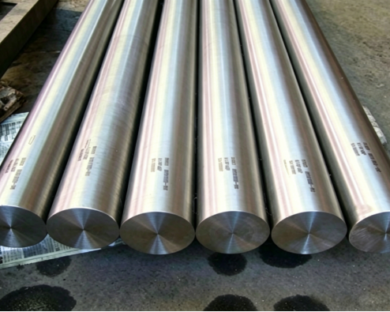
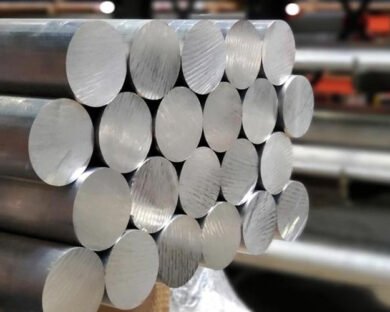
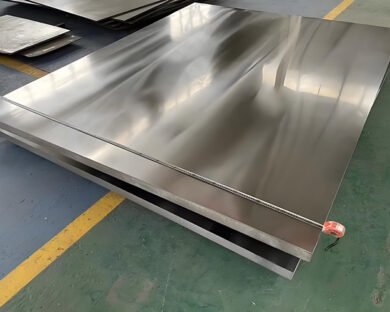
Production normally begins with forged ring blanks. Forging parameters are controlled to achieve a dense and uniform structure. After forging, the ring undergoes solution and aging treatment, followed by machining to final dimensions.
Quality control may include:
Chemical composition verification
Ultrasonic inspection
Magnetic particle testing
Mechanical property testing
Dimensional inspection
Because the retaining ring is a safety-related rotor component, inspection standards are stricter than those applied to ordinary retaining rings.
Application Areas
Power Generation
Primary use is in high-speed generator rotors where long-term strength and stability are required.
Railway Traction Motors
In traction systems, rotor components experience repeated stress cycles. GH2132 retaining rings provide improved reliability under such conditions.
Turbine and Rotating Equipment
The alloy is also used in other rotating or high-temperature structural parts where creep resistance is necessary.
Installation
Unlike small internal retaining ring or external retaining ring products that are installed with a retaining ring tool, large generator retaining rings are typically assembled using controlled heating and interference fitting.
Correct installation ensures uniform stress distribution during rotor operation.
Conclusion
GH2132 generator retaining rings are forged iron-based alloy rings designed for high-stress rotor applications. When properly heat treated, the material provides stable tensile strength, yield strength, and creep resistance at service temperatures below 650°C.
Compared with standard retaining rings and snap rings used in mechanical positioning, GH2132 retaining rings serve as structural load-bearing components in rotating electrical equipment.
Technical specifications, dimensions, and heat treatment conditions can be defined according to the generator design and operating requirements.