
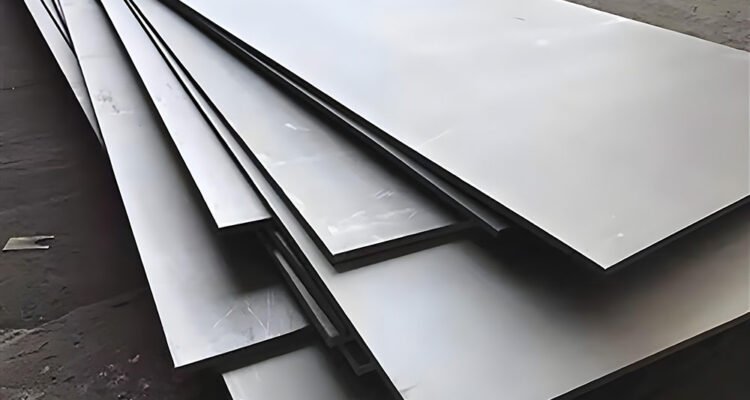
Nickel based alloys are commonly selected when ordinary stainless steel cannot meet temperature or corrosion requirements. In many industrial systems, these materials are not used as finished consumer products but as raw materials or semi-finished components that will later be machined, welded, or assembled.
TIPTOP Metal focuses on supplying nickel base alloys in the form of bars, forged blanks, cast semi-finished parts, and custom rough-machined components. We are not an equipment manufacturer. Our role is to provide stable material quality that downstream manufacturers can rely on.
The performance of nickel based alloys starts with composition. Different grades contain varying amounts of chromium, molybdenum, cobalt, or niobium depending on whether the priority is corrosion resistance, creep strength, or oxidation stability.
In practical terms, customers are usually concerned with two things:
Is the chemical composition within standard range, and is the internal structure consistent?
At TIPTOP Metal, nickel based alloys are supplied as:
Hot forged round bars
Open-die forged blocks
Rolled bars
Nickel-based alloy castings in rough form
Custom semi-finished blanks for further machining
We verify material certificates and maintain traceability records. For many projects, especially in energy or chemical sectors, this documentation is as important as the mechanical properties themselves.
Nickel based alloys properties make them suitable for high temperature high strength nickel base alloys applications. These materials maintain strength at temperatures where many steels begin to soften.
In real working conditions, this usually means:
Better resistance to creep deformation
More stable mechanical performance under thermal cycling
Improved resistance to aggressive chemical media
However, not every application requires a nickel based super alloy. Sometimes a lower alloy grade is sufficient. Material selection should match service temperature and load rather than aiming for the highest specification available.
Our experience at TIPTOP Metal is mostly related to supplying raw nickel base alloys for parts that will later be machined into turbine components, valve bodies, or high-temperature connectors.
Nickel-based alloys for precision manufacturing often begin as forged or cast semi-finished parts. Machining shops prefer near-net shapes to reduce cutting time, because nickel base alloys are harder to machine than carbon steels.
We supply custom pre-machined blanks where key surfaces are prepared but final dimensions are left for the customer. This approach reduces material waste and improves overall efficiency.
Nickel based alloys are known to work-harden quickly. For this reason, forging ratio and initial structure control matter even at the raw material stage. Poor upstream processing can create machining difficulties later.
Our responsibility is to ensure that the semi-finished material delivered is suitable for precision processing.
Nickel-based investment casting alloys are often chosen for complex geometries. In many cases, customers do not require fully finished cast parts but rather nickel-based alloy castings in rough or partially processed condition.
We work with controlled casting routes to supply cast components that will undergo:
Additional machining
Heat treatment of nickel based alloys
Surface finishing
Dimensional tolerance at this stage is defined according to casting standards, not final machining standards. Clear communication at the beginning of a project avoids misunderstandings about what constitutes a finished product.
Heat treatment of nickel based alloys is often performed after forging or casting to stabilize microstructure.
For raw materials and semi-finished forms, this may include:
Solution annealing
Aging treatment
Stress relieving
Improper thermal cycles can change nickel based alloys properties significantly. Therefore, heat treatment is coordinated based on grade and intended use.
At TIPTOP Metal, we either perform controlled heat treatment in-house or coordinate with qualified partners, depending on material size and specification.
Although we mainly supply raw and semi-finished materials, customers frequently ask about welding metallurgy and weldability of nickel base alloys.
Most nickel base alloys exhibit good weldability when correct filler metals and heat input parameters are used. However, improper welding procedures may lead to hot cracking or residual stress.
For projects involving fabrication, we provide basic technical information regarding weldability so that downstream manufacturers can prepare suitable welding procedures.
Reference data from organizations such as Nickel Institute can also support material selection and welding planning.
Nickel based alloys are not everyday materials. They are typically selected when service conditions justify the additional cost.
In many industries, the final product performance depends on the reliability of upstream raw materials. Supplying stable nickel base alloys in bar, forging, or casting form is therefore a critical step in the manufacturing chain.
TIPTOP Metal operates as a supplier of nickel based alloys raw materials and semi-finished components. We focus on composition control, structural consistency, and realistic processing capability. If your project involves high temperature high strength nickel base alloys or custom semi-finished blanks, we can review specifications and discuss feasible supply forms according to your production plan.