AISI 410 Basic Martensitic Stainless Steel
Product Overview and Key Advantages of AISI 410 Basic Martensitic Stainless Steel
AISI 410 sits squarely in the mid-range of industrial stainless steels. It’s a straightforward martensitic grade—nothing fancy, but reliable where it counts. The designation follows the ASTM system in the United States, and its Chinese counterpart is 1Cr13 (more recently redesignated as 12Cr13).
As the foundational alloy in the 400-series martensitic family, 410 has become a global reference point for this class of material. The same basic product goes by several names depending on the territory: SUS410 in Japan, 1.4006 (or X12Cr13) in Germany, 410 S21 in the UK, and UNS S41000 in the broader international system.
It’s not the most advanced alloy out there, but that’s exactly the point—it offers a practical balance between mechanical performance and cost, which is why it remains a staple in many engineering applications.
AISI 410 Basic Martensitic Stainless Steel: Suitable Operating Conditions and Industries
Grade 410 demonstrates dependable performance in mild chemical and atmospheric conditions, including exposure to fresh water, saturated steam, and weak acidic or alkaline solutions. However, it is not recommended for severe environments such as marine exposures or highly oxidizing chemicals.
From a thermal standpoint, continuous operation is ideal below 650°C, as scaling resistance degrades sharply past 870°C. During processing, heat treaters must bypass the 400–580°C tempering window to avoid severe loss of impact toughness and embrittlement.
Industries and Product Forms
| Industry Sector |
Typical Applications |
Product Forms |
| Energy & Power |
Steam turbine blades, steam valves, valve stems, pump shafts |
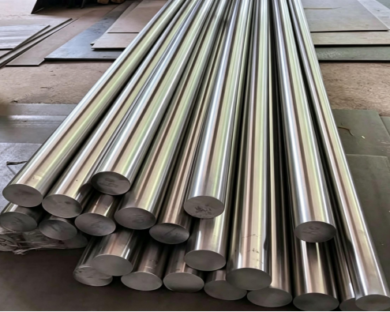
Forgings, bars |
| Petrochemical |
Valve components, fasteners, bolts, nuts, pump parts |
Bars, forgings |
| Machinery Manufacturing |
Shafts, gears, bearings, molds, springs, pins |
Bars, plates |
| Cutlery/Tableware |
Knives, tableware (spoons, forks, knives, etc.) |
Plates |
| Medical Devices |
Surgical instruments, surgical tools |
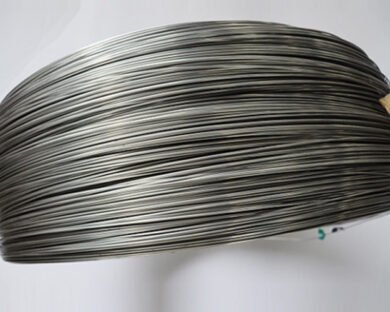
Bars, wire |
| Aerospace |
Turbine blade repair, precision mechanical couplings |
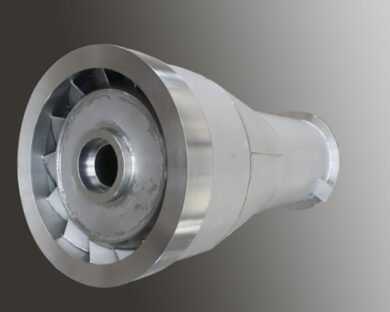
Powder, forgings |
| Architectural |
Decoration Architectural components, decorative parts |
Plates |
| Automotive |
Industry Automotive parts |
Plates, bars |
AISI 410 Basic Martensitic Stainless Steel: Chemical Composition and Mechanical Properties
Chemical Composition
| Element |
AISI 410 Standard Content (%) |
Notes |
| C |
≤ 0.15(0.08–0.15) |
Core strengthening element |
| Cr |
11.5–13.5 |
Source of corrosion resistance |
| Mn |
≤ 1.00 |
|
| Si |
≤ 1.00 |
|
| P |
≤ 0.040 |
|
| S |
≤ 0.030 |
|
| Ni |
≤0.60 |
|
| Fe |
Balance |
|
AISI 410 is a 400-series martensitic stainless steel featuring chromium as the primary alloying element (11.5–13.5%) and a carbon content controlled below 0.15%. Unlike austenitic stainless steels (such as 304 or 316), 410 contains no nickel or only trace amounts, significantly reducing material costs while maintaining basic corrosion resistance.
Mechanical Properties
Anealed State (As-supplied condition)
| Property |
Value |
| Tensile Strength ((≥) |
450 MPa |
| Yield Strength ((≥) |
205 MPa |
| Elongation ((≥) |
20% |
| Brinell Hardness ((≤) |
HB 217 |
| Rockwell Hardness ((≤) |
HRB 96 |
Quenched and Tempered State (After heat treatment)
| Property |
Value |
| Tensile Strength |
Up to 817 MPa |
| Yield Strength(0.2% offset) |
Up to 727 MPa |
| Elongation |
17.5% |
Comparison of Life-Cycle Costs: AISI 410 Basic Martensitic Stainless Steel vs. Other Common Industrial Metals
Raw Material Costs
| Material |
Relative Cost |
Notes |
| AISI 410 |
Baseline (Low) |
Nickel-free or trace nickel; low raw material cost |
| 304 Stainless Steel |
+60–100% |
Contains 8% nickel; significantly higher cost |
| 316 Stainless Steel |
+100–150% |
Contains molybdenum and higher nickel; highest cost |
| Carbon Steel |
-35–60% |
Cheapest raw material, but poor corrosion resistance |
Life cycle cost consideration
Advantages of AISI 410:
Procurement cost: Among the 400 series stainless steels, it is at a medium to low level, much lower than the 300 series austenitic stainless steel.
Processing cost: Good processing properties in annealed state, high cutting efficiency.
Heat treatment cost: Performance can be adjusted through heat treatment, no need for complex solution treatment.
Maintenance cost: Moderate corrosion resistance, low maintenance requirements in mild environments.
Overall comparison:
Compared to carbon steel: Initial procurement cost is higher, but corrosion resistance is significantly improved, full life cycle is extended, and maintenance cost is reduced.
Compared to 304 stainless steel: Initial cost is 40-60% lower, but corrosion resistance is weaker, suitable for non-severe corrosive environments.
Compared to 316 stainless steel: Cost advantage is more obvious, suitable for medium-low corrosive conditions.
Key Advantages of AISI 410 Basic Martensitic Stainless Steel
- Excellent hardenability, high hardness and good toughness. Through heat treatment, a wide range of performance can be achieved.
- Outstanding cost-effectiveness. As a nickel-free or low-nickel martensitic stainless steel, the raw material cost is significantly lower than that of 304/316 austenitic stainless steels.
- Balanced comprehensive performance, including moderate corrosion resistance, good mechanical properties and machinability.
- Application adaptability: AISI 410 is suitable for a wide range of industrial scenarios requiring moderate corrosion resistance, high strength and wear resistance, covering areas such as cutting tools, valves, turbine blades, fasteners, medical devices, etc.
AISI 410 Basic Martensitic Stainless Steel Supply Forms and Delivery Conditions
Delivery Conditions:
Annealed (Default): Optimal plasticity, easy to bend, weld, and machine
Quenched + Tempered (On Demand)
Hot Rolled (R) / Cold Rolled (Y)
Surface Grades:
Pickled and Passivated Finish
Machine-finish Finish
Grinded Finish
No Peeling, No Oxide Inclusions, No Cracks
Customization Capabilities:
Single Cutting
Waterjet Cutting
Beveling
Outsourced Finishing
Small Batch Samples Available
AISI 410 Basic Martensitic Stainless Steel Quality Assurance and Company Advantages
The following quality inspections are performed on AISI 410 products prior to shipment:
| Inspection Category |
Specific Items |
| Chemical Composition Analysis |
Determination of element content (C, Cr, Mn, Si, P, S, etc.) |
| Mechanical Property Testing |
Tensile strength, yield strength, elongation |
| Hardness Testing |
Brinell hardness (HB), Rockwell hardness (HRB/HRC) |
| Metallographic Examination |
Grain size, carbide distribution, microstructural uniformity |
| Dimensional Tolerance Inspection |
Thickness deviation, width deviation, straightness |
| Surface Quality Inspection |
Surface defects, lamination, cracks, oxide inclusions |
| Corrosion Resistance Testing |
Salt spray test, etc. (conducted as required) |
Applicable Standards:
Products fully comply with the requirements of international standards such as ASTM, ASME, AMS, and SAE.
Company Advantages
- Complete range of in-stock products
Standard thickness: 0.1 – 200mm (full coverage)
Standard width: 1000mm, 1500mm, 2000mm, 2500mm, etc.
Standard length: 2000mm, 3000mm, 6000mm, 12000mm
Various surface conditions: black skin, brushed finish, mirror finish, acid-washed finish, etc.
- Complete processing support capabilities
Precise cutting: flat cutting, strip cutting, fixed-length cutting
Zero cutting material: custom dimensions according to the drawing
Waterjet cutting: precise processing of complex shapes
Groove processing: meeting welding preparation requirements
Outsourced precision processing: one-stop supporting service
- Flexible supply model
Immediate delivery of in-stock products
Supply of small batches of samples
Customization of non-standard sizes
- Professional technical support
Material selection consultation
Recommendations for heat treatment processes
Welding process guidance
Full-process quality traceability
FAQ
Q1: Will AISI 410 rust?
A: All stainless steels can be corroded under certain conditions. The chromium content of 410 is 11.5–13.5%, and it performs well in moderate corrosive environments. However, it is prone to pitting corrosion or stress corrosion cracking in harsh environments such as marine atmosphere and strong acids.
Q2: Does AISI 410 have magnetism?
A: Yes. 410 is a martensitic stainless steel and has magnetism in both annealed and hardened states.
Q3: Can AISI 410 be welded?
A: Yes, but it requires preheating at 150–260℃. Post-welding annealing should be carried out promptly to prevent cracking. It is recommended to use 410 grade or 309 grade welding rods.
Q4: What is the delivery condition of AISI 410?
A: It is usually delivered in annealed state, which has the best plasticity and is suitable for bending, welding and mechanical processing.
Q5: What is the maximum operating temperature of AISI 410?
A: It is recommended to use it below 650℃. Above 870℃, its oxidation resistance significantly decreases. Avoid tempering in the 400–580℃ range.
Q6: What are the differences between AISI 410 and 304 stainless steel?
| mparison Item A |
AISI 410 |
AISI 304 |
| crostructure M |
Martensite |
Austenite |
| Magnetism |
Yes |
No (annealed state) |
| Corrosion resistance |
Moderate |
Excellent |
| Nickel content |
≤0.75% |
8–10.5% |
| Price |
Low |
High |
| Hardenable by heat treatment |
Yes |
No |