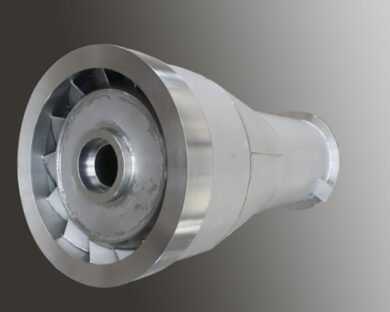
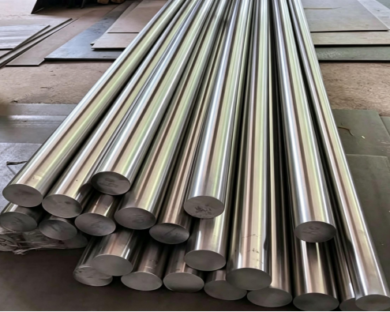
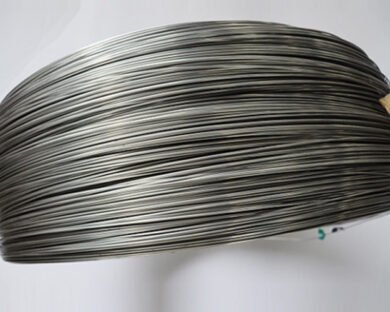
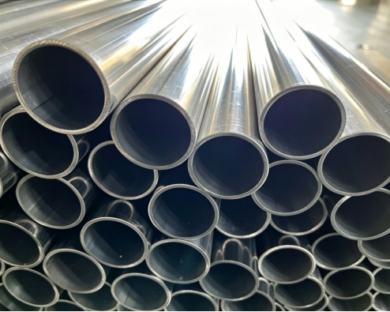
Product overview and core advantages of dual-phase stainless steel profiles
Duplex stainless steel is a specialized material characterized by a balanced microstructure of ferrite and austenite, where each phase constitutes nearly 50% (and no less than 30%).
This dual-phase configuration merges the key advantages of both constituent phases—the high strength and resistance to chloride-induced stress corrosion from ferritic steel, alongside the excellent toughness and workability from austenitic steel. Because its yield strength is double to triple that of austenitic stainless steel, components can be designed with thinner wall sections under identical load requirements, leading to substantial weight reduction in machinery and equipment.
Technical Specifications for Duplex Stainless Steel Profiles
Comparison of Common Grades and Applicable Standards
| Grade |
UNS No. |
EN Standard |
GB Standard |
Chinese Grade |
Classification |
| SAF2304 |
S32304 |
1.4362 |
— |
00Cr23Ni4N |
Lean Duplex |
| SAF2205 |
S31803 / S32205 |
1.4462 |
GB/T 21833 |
022Cr22Ni5Mo3N / 022Cr23Ni5Mo3N |
Standard Duplex |
| SAF2507 |
S32750 |
1.4410 |
GB/T 21833 |
022Cr25Ni7Mo4N |
Super Duplex |
| S32760 |
S32760 |
1.4501 |
— |
022Cr25Ni7Mo4WCuN |
Super Duplex |
| S32550 |
S32550 |
1.4507 |
— |
03Cr25Ni6Mo3Cu2N |
Super Duplex |
Applicable Operating Conditions and Product Forms by Grade
| Grade |
Applicable Operating Conditions |
Recommended Product Forms |
| SAF2304(Lean) |
Mildly corrosive environments; general applications replacing 304/316L |
Plate/Sheet, Pipe/Tube, Profiles |
| SAF2205(Standard) |
Municipal wastewater treatment, general seawater transport, chemical storage tanks, flue-gas desulfurization (FGD), conventional heat exchange equipment |
Plate/Sheet, Pipe/Tube, Bar, Profiles, Forgings |
| SAF2507(Super) |
Deep-sea oil & gas, subsea pipelines, core desalination equipment, high-temperature reactors for strong acids/alkalis |
Plate/Sheet, Pipe/Tube, Bar, Profiles |
| S32760(Super) |
Extremely corrosive environments; high-temperature conditions with high chloride ion concentrations |
Plate/Sheet, Pipe/Tube, Forgings |
Dimensions and Forms of Supply
Plates/Sheets:
Hot-rolled plate: Thickness 3–60 mm
Cold-rolled sheet: Thickness 1.0–6 mm
Medium-heavy plate: Thickness 6–60 mm
Width: 1000 mm, 1250 mm, 1500 mm, 1800 mm, 2000 mm, 2500 mm
Length: Standard 6000 mm; cut-to-length up to 14 m available
Tubing/Piping:
Outer diameter range: Φ6 mm–Φ530 mm
Wall thickness range: 0.7 mm–45 mm
Length range: 4000 mm–15000 mm
Bars:
Diameter range: Φ3 mm–Φ300 mm
Length range: 1000 mm–6000 mm
Profiles/Sections:
- beams, I-beams, angle steel, channel steel, and custom special shapes
Surface Condition
Pickled and passivated: Scale removed, corrosion resistance enhanced
Machined bright finish: Precision-machined surface
Ground finish: Surface treated by grinding
Quality requirements: Free from delamination, oxide inclusions, and cracks
Chemical Composition and Mechanical Properties of Duplex Stainless Steel Profiles
Chemical Composition
| Element |
SAF2205 (S31803) |
SAF2507 (S32750) |
SAF2304 (S32304) |
| Cr |
21.0~23.0 |
24.0~26.0 |
22.0~24.0 |
| Ni |
4.5~6.5 |
6.0~8.0 |
3.5~5.5 |
| Mo |
2.5~3.5 |
3.0~5.0 |
0.10~0.60 |
| N |
0.14~0.20 |
0.24~0.32 |
0.05~0.20 |
| C |
≤0.030 |
≤0.030 |
≤0.030 |
| Mn |
≤2.00 |
≤1.20 |
≤2.50 |
| Si |
≤1.00 |
≤0.80 |
≤1.00 |
| P |
≤0.030 |
≤0.035 |
≤0.040 |
| S |
≤0.020 |
≤0.020 |
≤0.030 |
| Cu |
— |
≤0.50 |
0.10~0.60 |
Mechanical Properties
| Grade |
Tensile Strengthσb
(MPa) |
Yield Strengthσ0.2
(MPa) |
Elongationδ(%) |
Hardness |
| SAF2205 |
≥640 |
≥450 |
≥25 |
≤290 HB |
| SAF2507 |
≥730 |
≥550 |
≥20 |
≤310 HB |
| SAF2304 |
≥600 |
≥400 |
≥25 |
≤290 HB |
Key Differentiating Features:
The yield strength of duplex stainless steel is 2–3 times that of austenitic stainless steel.
The high yield strength of SAF2507 is attributed to the strengthening effect of nitrogen.
Fine grain size imparts higher yield strength and toughness to the steel.
Pitting Resistance Equivalent Number (PREN) formula: PREN = Cr% + 3.3Mo% + 16N%
Duplex Stainless Steel Profiles: Applications and Industries
| Industry Sector |
Typical Operating Conditions |
Recommended Grades |
Product Forms |
| Oil & Gas |
Oil and gas transmission pipelines, heat exchangers, high-pressure piping |
2205 / 2507 |
Seamless pipes, welded pipes, plates |
| Marine Engineering |
Offshore oil platforms, subsea pipelines, seawater systems |
2205 / 2507 |
Pipes, plates, forgings |
| Chemical/Petrochemical |
Reactors, heat exchangers, storage tanks, piping |
2205 / 2507 |
Plates, pipes, bars |
| Desalination |
RO high-pressure piping, seawater pipelines |
2205 / 2507 |
Pipes, plates |
| Shipbuilding |
Chemical tanker cargo tanks, ship structural components |
2205 / 2304 |
Plates, profiles |
| Pulp & Paper |
Digesters, bleaching equipment, storage systems |
2205 |
Plates, pipes |
| Nuclear Power |
Nuclear island equipment, heat exchanger tubes |
2205 / 2507 |
Pipes, plates |
| Construction/Bridges |
Load-bearing structures, curtain walls |
2205 / 2304 |
Profiles, plates |
| Flue Gas Desulfurization |
Desulfurization towers, flue ducts |
2205 |
Plates, pipes |
| Food/Pharmaceutical |
Processing equipment, aseptic piping |
2205 |
Pipes, plates |
Guide to Precise Material Selection Based on Operating Conditions
Prefer 2205 Duplex Steel for:
Municipal sewage treatment equipment, standard seawater transmission pipelines
Small-to-medium chemical storage tanks, atmospheric pressure reaction equipment
General components for flue gas desulfurization, conventional heat exchange equipment
Standard corrosive environments, scenarios with low chloride ion content
Prefer 2507 Super Duplex Steel for:
Deep-sea oil and gas equipment, subsea pipelines, offshore platform components
Core equipment for high-chloride seawater desalination
Fine chemicals, high-temperature reactors for strong acids and alkalis
Industrial equipment requiring high pressure, high temperature, high corrosion resistance, and ultra-long service life.
Comparison of Full Life-Cycle Costs: Duplex Stainless Steel Profiles vs. Other Common Industrial Metals
| Comparison Dimension |
Ordinary Carbon Steel |
304/316L Stainless Steel |
2205 Duplex Stainless Steel |
2507 Duplex Stainless Steel |
| Initial Material Cost |
Low |
Medium |
Medium-High |
High |
| Wall Thickness Requirement |
Baseline |
Baseline |
Reduced by 30%–50% |
Reduced by 30%–50% |
| Yield Strength |
~235MPa |
~200~300MPa |
≥450MPa |
≥550MPa |
| Corrosion-Resistant Service Life |
3–5 years |
8~12 years |
>15 years |
>20 years |
| Maintenance Requirements |
Frequent coating maintenance |
Periodic maintenance |
Maintenance-free or minimal maintenance |
Maintenance-free |
Key Points of Economic Analysis
Material reduction due to strength advantages: The yield strength of duplex stainless steel is double that of 300-series stainless steel; under the same load, wall thickness can be reduced by 30%–50%, directly lowering material usage and transportation costs.
Extended service life: In harsh environments, the service life of duplex stainless steel can reach three times that of 316L (e.g., in seawater pump and valve applications).
Reduced maintenance costs: Duplex stainless steel requires no maintenance coatings.
Significant full life-cycle cost advantages: In marine engineering applications, while the initial cost of thin-walled duplex stainless steel piping is 1.8 times higher than that of 304 stainless steel, the maintenance-free period extends to over 15 years, resulting in a 63% reduction in total life-cycle maintenance costs.
Key Advantages of Duplex Stainless Steel Profiles
- Ultra-high strength: Yield strength reaches 420–600 MPa, far exceeding that of conventional austenitic stainless steels.
- Excellent corrosion resistance: Superior resistance to pitting, crevice corrosion, and chloride stress corrosion cracking.
- Good weldability: Low susceptibility to hot cracking during welding, high thermal conductivity, and a low coefficient of linear expansion.
- Outstanding impact resistance: High energy absorption capacity.
- Life-cycle cost-effectiveness: Wall thickness can be reduced by 30%–50%; 30-year life-cycle costs are 25%–40% lower than those of carbon steel and austenitic stainless steel.
- Market position: 2205 duplex steel accounts for over 80% of market consumption, making it the most widely used grade. Products are extensively applied in sectors such as petrochemicals, offshore engineering, shipbuilding, nuclear power, pressure vessels, papermaking, architectural curtain walls, and rail transportation.
FAQ
Q1: What’s the difference between 2205 and 2507 duplex stainless steel, and how do you choose?
2205 is the standard duplex grade (22Cr-5Ni-3Mo), while 2507 is the super duplex grade (25Cr-7Ni-4Mo). The latter contains more chromium, molybdenum, and nitrogen, which gives it better corrosion resistance and higher strength. 2205 offers a minimum yield strength of 450 MPa and tensile strength of 640 MPa, compared to 550 MPa and 730 MPa for 2507. For general corrosive conditions, 2205 is usually sufficient. When dealing with high chloride levels, elevated temperatures, or severely corrosive environments, 2507 is the better choice.
Q2: How is the corrosion resistance of duplex stainless steel measured?
The pitting resistance equivalent number (PREN) is commonly used, calculated as: PREN = Cr% + 3.3Mo% + 16N%. A higher PREN value means better resistance to pitting and crevice corrosion. 2205 typically has a PREN of 34–36, while 2507 falls in the 42–45 range.
Q3: Is duplex stainless steel easy to weld? What should be considered?
It welds well. The key is to maintain a balanced austenite-ferrite structure (ideally around 50% each) and avoid the formation of harmful phases such as sigma phase or chromium nitride.
Q4: Is duplex stainless steel worth the higher upfront cost?
Yes. Although the initial material cost is higher, wall thickness can often be reduced by 30% to 50%. Over a 30-year service life, the total lifecycle cost can be 25% to 40% lower than that of carbon steel or standard austenitic grades. In offshore applications, maintenance costs alone can drop by as much as 63%. It really pays to look at the long-term picture.
Q5: What forms and sizes are commonly available?
Sheets (1.0–60 mm thick, 1000–2500 mm wide), pipes (OD 6–530 mm, wall thickness 0.7–45 mm), bars (3–300 mm diameter), and structural profiles like H-beams, I-beams, and angles. Custom sizes are also available upon request.
Q6: What standards apply to duplex stainless steel?
Common standards include ASTM A240/A240M, ASME SA-240, GB/T 21833 (seamless pipes), GB/T 31303 (bars), GB/T 39033 (wire rods), and YB/T 6025 (hot-rolled plates for shipbuilding), among others.
Q7: What is the default delivery condition?
The default condition is recrystallization annealed (M), which offers the best formability for bending, welding, and other fabrication processes. Hot-rolled (R) or cold-rolled (Y) conditions are also available upon request.
Q8: What corrosive environments are duplex stainless steels suitable for?
2205 works well in general wastewater, dilute acids and alkalis, and low-chloride environments. 2507 is designed for more aggressive conditions—high-chloride seawater, strong acids and alkalis, and elevated temperatures. In 20% dilute sulfuric acid at 60°C or below, 2205 shows a corrosion rate of less than 0.1 mm per year.