Overview of Super-Austenitic Stainless Steel Pipe Products
Super austenitic stainless steel, simply put, is an austenitic stainless steel with a high alloy content. Its pitting resistance equivalent value (PREN) usually reaches over 40. The higher this value is, the stronger the resistance to pitting corrosion will be.
This material is based on the common 304 and 316 stainless steel, with the content of elements such as molybdenum, nitrogen, and chromium significantly increased. As a result, it achieves a qualitative improvement in resistance to pitting corrosion, crevice corrosion, and stress corrosion.
For industries such as chemical engineering, marine engineering, and energy, which frequently come into contact with highly corrosive media, the reliability of pipeline materials directly affects the lifespan of equipment and production safety. Super austenitic stainless steel pipes precisely fill an important gap – their corrosion resistance is far superior to that of ordinary stainless steels (such as 304, 316L), approaching the expensive nickel-based alloys (such as Hastelloy C-276, Inconel 625), but at a much lower price than the nickel-based alloys.
Core Technical Specifications for Super Austenitic Stainless Steel Pipes
Common Grades and Material Equivalents
| Grade |
UNSNo. |
EN/DIN No. |
GB Grade |
Characteristics |
| 904L |
N08904 |
1.4539 |
00Cr20Ni25Mo4.5Cu |
Cu-bearing; specialized for sulfuric acid resistance |
| 254SMO |
S31254 |
1.4547 |
00Cr20Ni18Mo6CuN |
6% Mo type; preferred for seawater applications |
| 1.4529 |
N08926 |
1.4529 |
015Cr20Ni25Mo6CuN |
6%–7% Mo; high Ni content |
| AL-6XN |
N08367 |
— |
— |
6% Mo type; resistant to chloride corrosion |
| 654SMO |
S32654 |
— |
— |
7% Mo type; PRE value up to 56 |
Applicable Standards
| Standards Organization |
Standard No. |
Scope of Application |
| ASTM |
A312/A312M |
Seamless and welded austenitic stainless steel nominal pipe |
| ASTM |
A269/A269M |
Seamless and welded austenitic stainless steel tubing for general service |
| ASTM |
A213/A213M |
Seamless tubes for boilers, superheaters, and heat exchangers |
| ASTM |
B673/B674/B677 |
Specific standards for super austenitic stainless steel welded/seamless pipes |
| ASTM |
B675/B690 |
Standards for N08367 series alloy pipes |
| ASME |
SA312/SA269/SA213 |
Pipes for pressure vessels |
| GB |
GB/T 12771/13296/14976 |
Pipes for fluid transport and boiler heat exchangers |
Dimensional Range
| Parameter |
Seamless Pipe |
Welded Pipe |
| OD |
Φ3mm~Φ630mm |
Φ6mm~Φ219mm |
| Wall Thickness |
0.3mm~100mm |
0.3mm~4.0mm |
| Length |
4,000mm~13,000mm(customizable) |
Customized upon request |
Supply Form and Surface Condition
| Item |
Specification |
| Sheet |
Thickness<4.75mm |
| Plate |
Thickness≥4.75mm |
| Tube/Pipe Type |
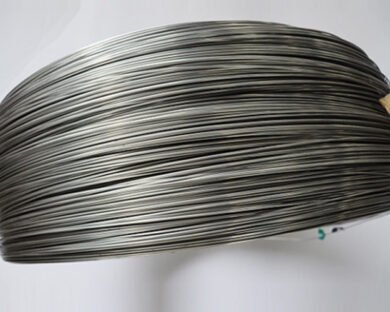
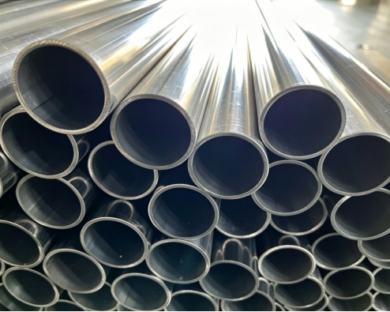
Seamless pipe, welded pipe, capillary tube (OD 0.2–6 mm) |
| Delivery Condition |
Solution-treated (recrystallization annealed / M-state) |
| Surface Finish |
Pickled and passivated, machined bright finish, ground finish; free from peeling, oxide inclusions, and cracks |
Chemical Composition and Mechanical Properties of Super Austenitic Stainless Steel Pipes
Chemical Composition
| Element |
904L (N08904) |
254SMO (S31254) |
1.4529 (N08926) |
AL-6XN (N08367) |
| C |
≤0.020 |
≤0.020 |
≤0.020 |
≤0.030 |
| Si |
≤1.00 |
≤0.80 |
≤0.50 |
≤1.00 |
| Mn |
≤2.00 |
≤1.00 |
≤1.00 |
≤2.00 |
| P |
≤0.030 |
≤0.030 |
≤0.030 |
≤0.040 |
| S |
≤0.010 |
≤0.010 |
≤0.010 |
≤0.030 |
| Cr |
19.0-23.0 |
19.5-20.5 |
19.0-21.0 |
20.0-22.0 |
| Ni |
23.0-28.0 |
17.5-18.5 |
24.0-26.0 |
23.5-25.5 |
| Mo |
4.0-5.0 |
6.0-6.5 |
6.0-7.0 |
6.0-7.0 |
| Cu |
1.0-2.0 |
0.5-1.0 |
0.5-1.5 |
≤0.75 |
| N |
— |
0.18-0.22 |
0.15-0.25 |
0.18-0.25 |
| Fe |
Balance |
Balance |
Balance |
Balance |
Mechanical Properties
| Grade |
Tensile Strength (MPa) |
Yield Strength (MPa) |
Elongation (%) |
Hardness |
| 904L |
≥490 |
≥216 |
≥35 |
HRB≤90 |
| 254SMO |
≥650 |
≥300 |
≥35 |
HB182-223 |
| 1.4529 |
≥650 |
≥295 |
≥35 |
HRB≥90 |
| AL-6XN |
≥760 |
≥380 |
≥45 |
HBW≤240 |
The core technical highlight of super austenitic stainless steel lies in its nitrogen alloying technology. By introducing nitrogen and increasing Cr and Mo content, the material achieves significantly higher strength while maintaining excellent ductility and toughness. Its PREN value is far higher than that of conventional stainless steel.
Operating Conditions and Industries for Super-Austenitic Stainless Steel Pipes
Applicable Operating Conditions
| Operating Condition Type |
Typical Media |
Applicable Grades |
| High chloride ion environments |
Seawater, halide solutions |
254SMO、AL-6XN |
| Sulfuric acid media |
Dilute and concentrated sulfuric acid |
904L(Cu-optimized) |
| Phosphoric acid media |
Wet-process phosphoric acid |
904L、1.4529 |
| Flue gas desulfurization |
High concentrations of Cl⁻、SO₂、Low pH |
1.4529 |
| High-temperature seawater |
Seawater heat exchange, desalination |
AL-6XN、254SMO |
Application Industries and Product Forms
| Industry Sector |
Specific Applications |
Recommended Grades |
Product Forms |
| Marine Engineering |
Desalination units, seawater heat exchangers, offshore platform piping, marine piping systems |
254SMO、AL-6XN |
Seamless pipes, welded pipes |
| Petrochemical |
Reactors, heat exchangers, and piping handling chloride ion/sulfuric acid/phosphoric acid media |
904L、254SMO |
Seamless pipes, pipe fittings |
| Flue Gas Desulfurization(FGD) |
Absorption towers, flue ducts, spray systems |
1.4529 |
Welded pipes, large-diameter pipes |
| Nuclear Power |
Auxiliary systems, seawater cooling systems |
AL-6XN、254SMO |
Seamless pipes |
| Pulp & Paper Bleaching |
Bleaching tanks, chlorine dioxide processing equipment |
904L、1.4529 |
Pipes, pipe fittings |
| Pharmaceutical & Food |
High-purity, corrosion-resistant process piping |
904L |
Sanitary polished pipes |
| Environmental Protection |
Wastewater treatment units |
254SMO |
Pipes |
Key Advantages of Super Austenitic Stainless Steel Pipes
1.Top-notch corrosion resistance performance
The point corrosion resistance equivalent (PREN) of super austenitic stainless steel is usually above 40, and for some grades it is even higher, far exceeding 316L (about 25). This indicates that it has an extremely strong ability to resist point corrosion and crevice corrosion in harsh media such as chloride ions, acids, and salts, and is suitable for environments where other materials are prone to failure.
- Wide applicable temperature range
This type of material can operate stably within a temperature range of -196℃ to +400℃, covering most industrial conditions from cryogenic to medium-high temperatures. Whether it is the low-temperature pipeline for liquefied natural gas (LNG) or the high-temperature section of a chemical reactor, it can maintain excellent performance.
- A good combination of strength and resilience
Compared with ordinary austenitic stainless steel, the yield strength of super austenitic stainless steel has increased by 50% to 100%, while still maintaining a high elongation rate. This means that under the same strength requirements, thinner wall thicknesses can be used, achieving lightweighting and material savings without sacrificing safety.
- Significant advantage in terms of cost-effectiveness
In terms of corrosion resistance, super austenitic stainless steel has reached a level comparable to that of nickel-based alloys such as Hastelloy C-276, yet the material cost is much lower. For projects that require a balance between performance and budget, it is an excellent compromise solution – it eliminates the need for frequent equipment replacements and does not significantly increase the initial investment.
Manufacturing Process and Processing Technology of Super Austenitic Stainless Steel Tubes
- Typical Manufacturing Process Flow: The mainstream production process for super austenitic stainless steel tubes is the “hot extrusion + cold rolling/cold drawing” route.
- Seamless Tube Process Flow: Electric furnace smelting → AOD/VOD refining → Die forging/forging → Homogenizing heat treatment → Raw tube → Pickling → Inspection and grinding → Cold rolling → Degreasing → Heat treatment (solution treatment) → Pickling → Rinsing → Inspection and grinding → Lubrication → Cold drawing → Degreasing → Heat treatment (solution treatment) → Straightening → Cutting → Pickling → Passivation → Finished product inspection → Warehousing –
Intermediate heat treatment temperature: 1,150~1,180℃, holding time 5~10 minutes
Cooling rate: ≥350℃/min rapid cooling
Quenching completed within 20 seconds after solution treatment
Acid-washed and passivated surface: Removes oxide scale, forming a passivation film
Machine-machined bright surface: Precision-machined surface
Grinded surface: Mechanically ground surface
Quality Requirements: No peeling, no oxide inclusions, no cracks
- Customization Capabilities
Single-piece cutting (cutting according to drawings)
Waterjet cutting/plasma cutting/laser cutting
Beveling
Small batch samples available
Comparison of Life-Cycle Costs Between Super-Austenitic Stainless Steel Pipes and Other Common Industrial Metals
| Material Category |
Relative Price (Baseline: 316L) |
Corrosion Resistance Comparison |
| 316L Stainless Steel |
1x |
Baseline |
| Super-Austenitic Stainless Steel |
Approx. 3–5x |
Far superior to 316L; approaches nickel-based alloys |
| Copper-Nickel Alloy |
Higher than super-austenitic |
Comparable or slightly lower |
| Titanium Alloy |
15–20x of 316L |
Excellent; though super-austenitic can match it in certain operating conditions |
| Nickel-Based Alloy(C-276/625) |
2–3x of super-austenitic |
Slightly superior, but the margin is limited |
Life Cycle Cost (LCC) Advantage
In practical applications under harsh corrosion conditions (such as the top condenser of an oil refinery):
- Carbon steel: fails after only 6 months of service
- Super duplex stainless steel: service life is extended to 2 years
- Super austenitic stainless steel (Alloy 35): recommended as an economic alternative to nickel-based alloys 625 and C-276, has been in stable service for over 2 years
Core conclusion:
Although the initial purchase cost of super austenitic stainless steel is higher than that of ordinary stainless steel, its extremely long service life and extremely low maintenance and replacement frequency make it superior to carbon steel and ordinary stainless steel in terms of life cycle cost; at the same time, its corrosion resistance is close to that of nickel-based alloys while the cost is only 1/3 to 1/2 of the latter, making it the most cost-effective solution for high-performance corrosion-resistant pipe materials.
FAQ
Q1: What are the differences between super austenitic stainless steel and ordinary 304/316L stainless steel?
A: The Cr, Mo, and Ni contents of super austenitic stainless steel are much higher than those of ordinary stainless steel, and N element is also added. Its PREN value (corrosion resistance equivalent at points) is ≥ 40, while that of 316L is only about 25. There is a qualitative leap in terms of corrosion resistance against pitting, crevice corrosion, and stress corrosion.
Q2: Can the corrosion resistance of super austenitic stainless steel replace nickel-based alloys?
A: In most environments with chloride ions, sulfuric acid, phosphoric acid, etc., the corrosion resistance of super austenitic stainless steel is close to nickel-based alloys such as Hastelloy C-276 and Inconel 625. Although nickel-based alloys still have advantages in extreme conditions, super austenitic stainless steel has a cost of only 1/3 to 1/2 of nickel-based alloys and is an extremely cost-effective alternative.
Q3: In what temperature range can super austenitic stainless steel pipes be used?
A: The typical operating temperature range is -196℃ to +400℃. The upper limit temperature depends on the medium type and concentration. It is recommended to conduct targeted evaluations during design and selection.
Q4: What should be noted during welding?
A: When welding super austenitic stainless steel, the following points should be noted:
It is recommended to use nickel-based welding wires such as ERNiCrMo-3
Strictly control the interlayer temperature not to exceed 150℃
Avoid staying in the sensitization temperature range (600-900℃) for a long time
Generally, no solution treatment is required after welding, but acid washing and passivation can be considered under harsh medium conditions.
Q5: How to handle the problem of work hardening?
A: Super austenitic stainless steel has a significant tendency to work hardening during cold processing. For bending, expansion, etc., larger bending radii should be selected and deformation rates should be controlled. Cutting is recommended to use plasma or laser cutting to avoid edge hardening caused by mechanical shearing.
Q6: How to prevent the formation of σ phase?
A: The formation of σ phase will reduce the toughness and corrosion resistance of the material. It should be avoided to operate for a long time in the temperature range of 600-1000℃. During production, the elimination and inhibition of σ phase formation can be achieved through high-temperature solution treatment (1,150-1,180℃) + rapid cooling (≥350℃/min).
Q7: How to perform surface treatment of the pipe material?
A: Super austenitic stainless steel pipes are usually delivered in the solution-treated state. The surface can undergo acid washing and passivation treatment. Acid washing can remove the oxide scale produced during hot processing and form a protective passivation film.