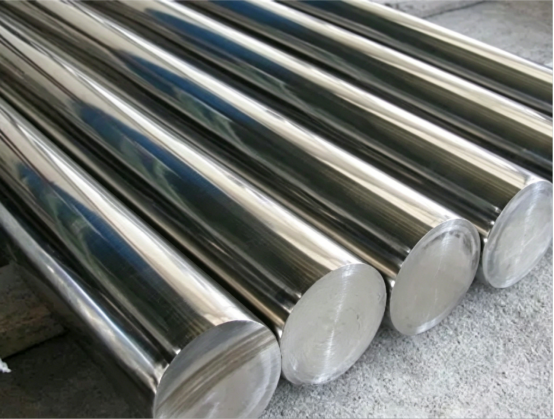
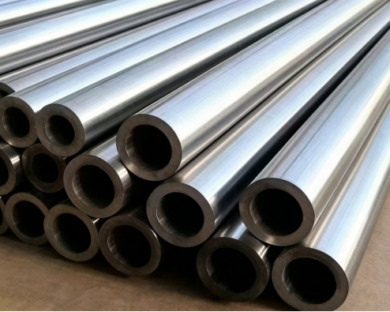
ASTM B550 Zr 702 Zirconium Alloy Bar
Product Overview of ASTM B550 Zr-702 Zirconium Alloy Bars
Zr702 (international designation UNS R60702) is a commercially pure alpha-phase zirconium grade that complies with the ASTM B550/B550M standard for zirconium and zirconium alloy bars and wires. Thanks to its exceptional corrosion resistance, it serves as a key structural material in highly corrosive chemical processing environments.
Key Specifications for ASTM B550 Zr-702 Zirconium Alloy Bars
The ASTM B550 standard covers three grades of zirconium and zirconium alloy bars and wires:
| Grade |
UNS No. |
Material Type |
Typical Applications |
Standards |
| Zr702 |
R60702 |
Unalloyed Zirconium (Commercially Pure) |
Chemical equipment linings, corrosion-resistant structural components |
ASTM B550/B550M、ASME SB550、GB/T 8769、GB/T 26314 |
| Zr704 |
R60704 |
Zirconium-Tin Alloy |
Nuclear reactor cladding tubes |
ASTM B550/B550M |
| Zr705 |
R60705 |
Zirconium-Niobium Alloy(含Nb 2.0-3.0%) |
Corrosion-resistant, high-strength structural components |
ASTM B550/B550M |
Specifications:
| Parameter |
Specification Range |
| Diameter/OD |
Φ0.5 – Φ800 mm |
| Length |
50 – 6000 mm(customizable) |
| Density |
6.51 g/cm³ |
| Supply Condition |
nnealed (M), Hot-worked (R), Cold-worked (Y) |
| Surface Condition |
Polished, Turned, Forged, Rolled, Black (as-processed) |
Dimensional Tolerance Reference:
Cold-worked round bars (diameter ≤25mm): tolerance ±0.05mm
Precision ground bars: h6 or h7 tolerance grades available (e.g., Φ20mm h6 tolerance is 0/-0.013mm); surface roughness Ra ≤1.6μm
Applicable Operating Conditions and Industries for ASTM B550 Zr-702 Zirconium Alloy Bars
Zr702 exhibits excellent performance in the following media:
Hydrochloric acid (20%, boiling point): Corrosion rate < 0.02 mm/a
Sulfuric acid (20%, boiling): Service life > 10 years (1,000 times that of 316 stainless steel)
Acetic acid/hydroiodic acid/iodomethane (methanol carbonylation): Virtually no corrosion; can replace tantalum at 60% lower cost
Strong alkaline solutions (sodium hydroxide, etc.): Corrosion resistance comparable to nickel
High-temperature steam, chloride solutions, alkaline media: Excellent corrosion resistance
Application Industries and Corresponding Product Forms
| Industry Sector |
Typical Application Scenarios |
Product Forms |
| Chemical/Petrochemical |
cetic acid reactor linings, methanol carbonylation tower internals, HCl condenser heat exchanger tubesheets/tube bundles, sulfuric acid dilution coolers |
Bars, tubes, plates, forgings |
| Chlor-alkali Industry |
Caustic soda pump shafts, HCl pipeline flanges, high-temperature/high-pressure valve stems, agitator blades |
Bars (machined shafts), flanges |
| Fine Chemicals & Pharmaceuticals |
High-pressure reactor liners, corrosion-resistant sampling tubes, aseptic piping systems |
Bars, tubes, lining plates |
| Nuclear Industry |
Nuclear reactor structural materials |
Bars, tubes, forgings |
| Aerospace |
Corrosion-resistant structural components |
Bars, precision machined parts |
| Electronics/Vacuum Coating |
Zirconium targets, structural components for the electronics industry |
Bars, plate targets |
Chemical Composition and Mechanical Properties of ASTM B550 Zr-702 Zirconium Alloy Bars
Chemical Composition (ASTM B550 Standard Requirements)
Zr702 (UNS R60702) is commercially pure zirconium, based on high-purity zirconium with strictly controlled impurity element content:
| Element |
Standard Requirement (wt%) |
Remarks |
| Zr + Hf |
≥ 99.2% |
Matrix |
| Hf |
≤ 4.5% |
Hafnium is an associated element |
| Fe + Cr |
≤ 0.20% |
— |
| O |
0.10 – 0.16% |
Interstitial element |
| C |
≤ 0.05% |
— |
| N |
≤ 0.025% |
Interstitial element |
| H |
≤ 0.005% |
Strictly controlled to prevent hydrogen |
Mechanical Properties (Annealed State)
| Property Indicator |
ASTMB550 Requirement |
Typical Measured Value |
| Tensile Strength(Rm) |
≥ 379 – 380 MPa |
≥ 380 MPa |
| Yield Strength(Rp0.2) |
≥ 207 – 240 MPa |
≥ 240 MPa |
| Elongation(A50mm) |
≥ 16% |
≥ 20% |
| Hardness |
— |
HV 120–150 |
| Melting Point |
1852℃ |
— |
| Density |
6.51 g/cm³ |
— |
Comparison of Full Life-Cycle Costs with Other Common Industrial Metals
| Comparison Criteria |
Zr702 Zirconium Bar |
316L Stainless Steel |
Hastelloy(C-276) |
Tantalum |
| Initial Material Cost |
Moderately High |
Low |
High |
Extremely High |
| Density(g/cm³) |
6.51 |
7.98 |
8.89 |
16.6 |
| Equipment Weight |
Baseline |
+23% |
+37% |
+155% |
| Hydrochloric Acid Resistance (Boiling) |
Excellent(<0.02 mm/a) |
Poor (Rapid Corrosion) |
Excellent |
Excellent |
| Sulfuric Acid Resistance (Boiling) |
Excellent (Service Life >10 Years) |
Poor |
Excellent |
Excellent |
| Stress Corrosion Resistance |
Immune |
Susceptible |
Good |
Immune |
| Maintenance/Replacement Cost |
Extremely Low |
High (Frequent Replacement) |
Moderate |
Extremely Low |
| Total Lifecycle Cost |
Low |
High |
Moderately High |
Extremely High |
Key Conclusions:
- 316 Stainless Steel: Higher initial cost, but service life is extended by tens to hundreds of times; total lifecycle cost is significantly lower.
- Hastelloy: Superior corrosion resistance, lower density, and more advantageous overall cost.
- Tantalum: Comparable corrosion resistance, with approximately 60% lower cost and 60% lower density.
Key Advantages of ASTM B550 Zr-702 Zirconium Alloy Bars
- Outstanding corrosion resistance: Excellent corrosion resistance in most organic acids, excellent performance in inorganic acids, and good corrosion resistance in strong alkalis. Immune to stress corrosion cracking, with extremely strong resistance to pitting and crevice corrosion. The corrosion rate in harsh media such as boiling hydrochloric acid (20%), boiling sulfuric acid, etc. is extremely low, with a lifespan over 1000 times that of 316 stainless steel.
- Significant cost advantages: Combining the performance similar to tantalum in terms of resistance to hydrochloric acid/sulfuric acid/acetate/wet chlorine with a significantly lower overall cost than precious metals, it is a cost-effective alternative to 316 stainless steel, Hastelloy alloys, and tantalum materials.
- Excellent processing and welding performance: Good plasticity, excellent welding performance, no risk of phase transformation brittleness during welding, suitable for large-scale linings and thin-walled structures.
- Outstanding lightweight advantage: Density is only 6.51 g/cm³, approximately 60% lighter than tantalum (16.6 g/cm³). Significant weight reduction for equipment.
With these advantages, Zr702 zirconium rods are widely applicable in harsh environments with extremely high corrosion requirements, such as in the chemical, petrochemical, pharmaceutical, chlor-alkali, and nuclear industries.
Quality Assurance and Company Advantages
Implementation Standards
| Standard No. |
Scope of Application |
| ASTM B550/B550M |
Zirconium and zirconium alloy bars and wires |
| ASME SB550 |
Zirconium bars for pressure vessels |
| GB/T 8769 |
National standard for zirconium and zirconium alloy bars |
| GB/T 26314 |
Zirconium and zirconium alloy forgings |
Factory Inspection Items
| Inspection |
Category Test Method |
Purpose |
| Chemical Composition |
Spectroscopic analysis |
Verify elemental content meets standards |
| Mechanical Properties |
Tensile test |
Tensile strength, yield strength, elongation |
| Non-destructive Testing |
ltrasonic Testing (UT), Eddy Current Testing (ET) |
Detection of internal defects |
| Hydrogen Content |
Specialized test |
Prevention of hydrogen embrittlement |
| Grain Size |
Rating (ASTM Grade 6–7) |
Microstructural uniformity |
| Hydrostatic/Airtightness |
Hydrostatic test, airtightness test |
Sealing integrity (applicable to tubing) |
| Dimensional Accuracy |
Dimensional measurement |
Diameter, length, straightness |
Quality Commitment
- Material certificate provided with each batch
- Third-party inspection reports available
- Strict quality traceability system ensuring material origin traceability
Company Advantages
- Complete production process: From sponge zircon melting to product delivery, we have a complete manufacturing chain
- Comprehensive specifications: Full coverage of diameters from Φ0.5 to 800mm, and length can be customized up to 6000mm
- Multiple delivery states: Tempered state (M), hot-processed state (R), and cold-processed state (Y) are all available for flexible selection
- Various surface treatments: Acid washing and passivation, polishing (Ra ≤ 0.8μm)
- Support for small batches: Small batch samples can be sent
- Processing support: Zero cutting, water jet cutting, groove processing, and off-site fine processing services are all available in one package
FAQ
Q1: What are the differences between Zr702 and Zr705? How to choose?
A: Zr702 is industrial pure zirconium (UNS R60702), with better corrosion resistance and lower cost; Zr705 is zirconium-niobium alloy (UNS R60705), with higher strength. Generally, Zr702 is preferred in strong corrosive chemical environments; Zr705 can be selected for higher strength corrosion-resistant structural components.
Q2: What is the standard delivery state of the Zr702 zirconium rod?
A: The default delivery state is recrystallization annealed state (M), which has the best plasticity and is convenient for subsequent bending, welding, etc. Processing can also be provided in hot processed state (R) or cold processed state (Y) upon request.
Q3: Can Zr702 zirconium rods be welded?
A: Yes. Zr702 has good weldability. TIG welding (with pure Ar gas purity ≥ 99.999%) or electron beam welding is recommended. After welding, stress relief annealing at 600℃ is recommended. Direct welding in the air is strictly prohibited.
Q4: In which media is Zr702 not corrosion-resistant?
A: Zr702 is not corrosion-resistant in hydrofluoric acid (HF) and free fluoride ions. Isolation measures or composite linings should be taken in these media.
Q5: What is the minimum order quantity? Can small batch samples be ordered?
A: Small batch samples can be dispatched. Zero cutting is supported. The specific order quantity can be consulted.
Q6: What are the machining precautions for zirconium rods?
A: It is recommended to use carbide or TiAlN coated cutting tools, with low rotational speed and high-pressure coolant. Avoid cutting temperatures exceeding 300℃ (to prevent surface hydrogen absorption/oxidation).
Q7: Does the product provide material certificates?
A: Yes. Each batch of products comes with a material certificate, and a complete set of testing reports including chemical composition, mechanical properties, and non-destructive testing can be provided.