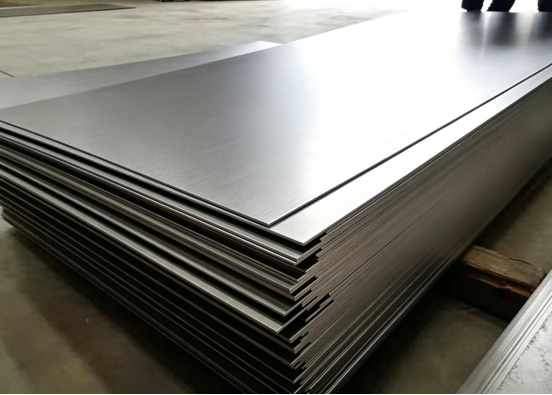
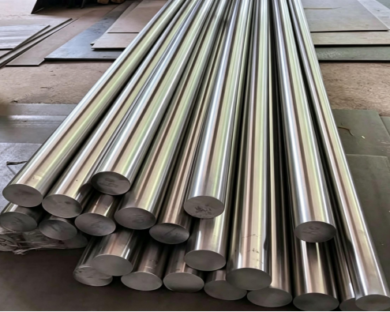
ASTM B551 Zirconium Grade 702 Sheets
ASTM B551 Zirconium Alloy 702 Plate: Product Overview and Key Advantages
ASTM B551 zirconium alloy 702 sheet is a strategic base material for extreme anti-corrosion conditions. It is currently the most demanded and most mature pure zirconium sheet in the field of special non-ferrous metals. As the ultimate weapon to avoid harsh chemical corrosion, it is widely used in high-risk heavy chemical industries, key nuclear power circuits, and advanced deep-sea equipment.
Differentiated core value: Full-spectrum chemical corrosion resistance. In special engineering designs, when traditional titanium materials, Hastelloy alloys, or high-nickel stainless steels reach their service limits under strong acids and strong bases, Zr702 often provides an excellent lifespan solution. This is due to the material’s nearly instinctive affinity for oxygen – its surface can spontaneously form a strong, inert microscopic zirconia passivation barrier at room temperature.
Its defense performance in typical media is as follows:
In the hydrochloric acid environment: It remains immune to any concentration of hydrochloric acid at room temperature, and is one of the few metal plates in the current international industrial field that can directly withstand the assault of high-concentration hydrochloric acid.
In the sulfuric acid condition: In the acid washing and reaction environment with a concentration not exceeding 70% and the system working temperature controlled within 60°C, it exhibits long-term structural stability. Nitric acid/phosphoric acid erosion: In normal temperature solutions of various concentrations of nitric acid, the corrosion is close to zero; when facing non-oxidizing phosphoric acid with a concentration of 50% and in a boiling state, it still maintains the corrosion resistance limit.
The process and application of extended pure zirconium R60702 not only possesses the aforementioned dominant chemical corrosion resistance properties, but also features a low thermal expansion coefficient and an extremely low thermal neutron absorption cross-section. This enables it to extend beyond the manufacturing of single chemical pump valves, heat exchangers, and reactor inner linings, and further penetrate into high-tech value-added industrial chains such as nuclear fuel cladding and special submerged pressure-resistant shells.
ASTM B551 Zirconium Alloy 702 Plate: Technical Specifications
| Item |
Details |
| Grade |
Zr702 ( UNS R60702) |
| Standard |
ASTM B551/B551M |
| Material Type |
Commercially pure zirconium (unalloyed); Zirconium + Hafnium ≥ 99.2% |
| Applicable Grade Series |
R60700 (low-oxygen zirconium), R60702 (commercially pure zirconium), R60704 (Zr-Sn alloy), R60705 (Zr-Nb alloy), R60706 (Zr-Nb alloy) |
| Thickness Range |
0.5mm ~ 50.0mm |
| Width Range |
≤1000mm |
| Length Range |
≤2000mm |
| Surface Finish |
Pickled and passivated, machined bright, or ground |
| Delivery Condition |
Recrystallization annealed (default); hot-rolled or cold-rolled conditions also available |
Chemical Composition
| Element |
Content (Mass Fraction)
|
Notes |
| Zirconium (Zr) + Hafnium (Hf) |
≥ 99.2%
|
Hafnium is a naturally co-occurring element; typically not separated |
| Oxygen(O) |
≤ 0.16%(Typical 0.10~0.16%)
|
Critical impurity; affects the balance between strength and ductility |
| Iron + Chromium(Fe+Cr) |
≤ 0.20%
|
— |
| Carbon(C) |
≤ 0.05%
|
— |
| Nitrogen(N) |
≤ 0.025%
|
Excessive levels accelerate localized corrosion |
| Hydrogen(H) |
≤ 0.005%
|
Excessive levels (>0.005%) may cause hydrogen embrittlement |
Mechanical Properties
| Property |
Standard Minimum Requirement |
Typical Measured Value |
Notes |
| Tensile Strength |
≥ 380 MPa |
380~450 MPa |
— |
| Yield Strength (0.2% offset) |
≥ 205 MPa |
205~310 MPa |
— |
| Elongation |
≥ 16% |
20~25%(average of longitudinal and transverse) |
Optimal ductility in annealed state |
| Hardness |
— |
135-165 HB |
— |
| Modulus of Elasticity |
— |
~95 GPa |
Approximately half that of steel |
| Density |
— |
6.51 g/cm³ |
— |
| Melting Point |
— |
~1852°C |
— |
Note: The table above lists typical properties in the annealed condition (recrystallization annealed). Material in the cold-rolled condition exhibits higher strength but lower ductility; the supply condition can be customized according to customer requirements.
Applicable Operating Conditions and Industries for ASTM B551 Zirconium Alloy 702 Plate
| Industry |
Typical Operating Conditions |
Product Forms |
Key Advantages |
| Chemical Processing Industry |
Heat exchangers, reactors, towers, and valves handling high-temperature, high-concentration organic acids (e.g., acetic, formic, lactic acids) |
Plate (heat exchanger tubesheets, vessel linings), welded pipe |
Virtually zero corrosion in organic acids |
| Fertilizer/Urea Production |
Ammonium carbamate environments |
Plate, pipe, forgings |
Resistance to ammonium carbamate corrosion |
| Chlor-Alkali Industry |
Sodium hypochlorite bleaching systems |
Plate, piping |
Resistance to hypochlorite corrosion |
| Pickling/Chemical Equipment |
Equipment linings, agitators, pickling tanks, valves, and piping in hydrochloric or sulfuric acid media |
Plate (linings), bar (agitators), pipe |
Usable at any concentration in hydrochloric acid (at ambient temperature) |
| Nuclear Industry |
Light-water reactor fuel rod cladding and core structural materials |
Sheet, strip, tubing |
Extremely low thermal neutron absorption cross-section |
| Marine Engineering |
Pressure-resistant hulls for deep-sea exploration equipment, sensor protective housings |
Heavy plate, forgings |
Seawater corrosion resistance, non-magnetic |
| Specialized Heat Exchange |
Molten salt or liquid metal heat exchange components |
Plate, pipe |
Resistance to high-temperature molten media |
| Medical/Precision Instruments |
Specialized medical implants |
Sheet, foil |
Biocompatibility, non-magnetic |
Life-Cycle Cost Comparison of ASTM B551 Zirconium Alloy 702 vs. Other Common Industrial Metals
| Comparison Criteria |
Zr702 Zirconium Plate |
Titanium Alloy (TA2) |
316L Stainless Steel |
Nickel-based Alloy (C-276) |
| Unit Material Cost |
High (approx. 2–3 times that of titanium plate) |
Medium |
Low |
Very High |
| Corrosion Resistance |
★★★★★(Broad-spectrum) |
★★★★(Localized limitations) |
★★★ |
★★★★★ |
| Fabrication Cost |
High (Requires vacuum welding/protective atmosphere) |
Medium |
Low |
High |
| Equipment Service Life |
Extremely long (several times that of stainless steel) |
Long |
Short (frequent replacement) |
Long |
| Maintenance Cost |
Very low |
Low |
High |
Low |
| Life-Cycle Cost |
Optimal |
Favorable |
High (frequent replacement + downtime losses) |
Relatively high |
Although the initial procurement cost of zirconium plate is significantly higher than that of stainless steel, its service life in production units handling organic acids—such as acetic acid and formic acid—can be several times longer than that of high-alloy stainless steels or high-nickel alloys. When factoring in extended equipment lifespan, reduced maintenance, and minimized losses from downtime, Zr702 often proves to be the most cost-effective choice for applications involving severe corrosive conditions.
Manufacturing and Processing of ASTM B551 Zirconium Alloy 702 Plate
Manufacturing Process Flow
Zirconium ore purification → Vacuum Arc Remelting (VAR) → Ingot casting → Forging (breakdown) → Hot rolling → Cold rolling → Vacuum annealing → Surface treatment → Inspection → Finished product
Key Process Stages:
Melting: Vacuum Arc Remelting (VAR); melting is conducted in a high-vacuum environment to prevent oxidation and impurity contamination; multiple melts (≥3 times) may be performed to ensure compositional uniformity.
Forging: Breakdown forging temperature 1050±20°C; final forging temperature ≥800°C.
Hot/Cold Rolling: Cold rolling to target thickness following hot rolling.
Annealing: Vacuum annealing to relieve internal stress and improve plasticity and toughness.
Dimensions and Supply Forms
Standard stock specifications:
|
Classification
|
Thickness |
Width |
Length |
|
Sheet
|
0.5mm ~ 4.8mm
|
≤1000mm
|
≤2000mm
|
| Plate |
4.8mm ~ 50.0mm |
≤1000mm |
≤2000mm
|
ASTM B551 Zirconium Alloy 702 Plate: Quality Assurance and Company Advantages
Applicable Standards
ASTM B551/B551M: Standard Specification for Zirconium and Zirconium Alloy Strip, Sheet, and Plate
Also meets ASME SB551/SB551M requirements for pressure vessel applications
Factory Inspection Items
| Inspection Category |
Specific Items
|
Purpose |
| Chemical Composition Analysis |
Zr+Hf、O、Fe+Cr、C、N、H
|
Ensure compliance with ASTM standard limits |
| Mechanical Property Testing |
Tensile strength, yield strength, elongation
|
Verify mechanical properties meet standards |
| Bending Performance Testing |
Bending test
|
Verify ductility and workability |
| Dimensional Accuracy Inspection |
Thickness, width, and length tolerances
|
Ensure dimensional compliance |
| Surface Quality Inspection |
No delamination, oxide inclusions, or cracks
|
Ensure surface quality |
| Non-Destructive Testing |
Ultrasonic testing (optional)
|
Ensure absence of internal defects |
TIPTOP Company Advantages
- Custom Manufacturing Capabilities
End-to-end control: Fully in-house production, from vacuum melting to final product inspection
Flexible specifications: Thickness 0.5–50.0 mm, width ≤1000 mm, length ≤2000 mm; larger dimensions available upon request
Multiple supply conditions: Annealed (M), hot-rolled (R), or cold-rolled (Y)
Various surface finishes: Pickled, machined (bright), or ground
- Comprehensive Processing Services
One-stop service including precision cutting, waterjet cutting, beveling, and finish machining
Small-batch samples available to lower the barrier for material selection
- Quality Commitment
Strict adherence to ASTM B551/B551M standards
Complete material certification provided for every batch
Products free from delamination, oxide inclusions, and cracks
FAQ
Q1: What is the difference between Zr702 and Zr705? A: Zr702 is commercially pure zirconium, offering superior corrosion resistance, excellent ductility, and good workability; it is ideal for highly corrosive environments where strength requirements are moderate. Zr705 is a zirconium-niobium alloy with double the strength. This product is Zr702, designed specifically for extreme corrosion resistance.
Q2: What is the standard delivery condition for the plates? A: They are supplied in the recrystallized annealed (M-state) condition by default. This state offers optimal ductility and stress relief, facilitating subsequent bending, rolling, and welding. Please specify if hard-temper or cold-rolled conditions are required when inquiring.
Q3: Can Zr702 be welded? What precautions are necessary? A: Yes, it has excellent weldability, but strict isolation from air is mandatory (TIG/argon arc welding or plasma welding is recommended). Shielding gas (argon) purity must reach 99.999%. Ample argon shielding must be provided for the welding torch trailing shield and the back of the weld seam. At temperatures above 300°C, zirconium rapidly absorbs oxygen, nitrogen, and hydrogen, causing weld embrittlement and degradation. Weld joint edges must be thoroughly cleaned before welding.
Q4: Which media is Zr702 not resistant to? A: It must not be used with hydrofluoric acid (HF) or acidic solutions containing fluoride ions, as fluoride ions instantly destroy the protective surface film. Additionally, severe localized corrosion may occur in anhydrous chlorides (such as high-temperature dry chlorine gas or anhydrous organic chlorides).
Q5: What is the Minimum Order Quantity (MOQ)? Are samples available? A: We support engineering prototyping and pilot testing, and accept small-batch sample orders. As we stock common specifications, please contact our sales department directly to quickly confirm specific MOQs.
Q6: What surface finishes are available for the plates? A: Three finishes are available: pickled and passivated (default), mechanically bright, and precision polished. A standard pickled surface finish is recommended, as it effectively removes the oxide scale and oxygen-enriched surface layer formed during hot rolling.
Q7: What is the approximate hardness of Zr702 plate? A: In the annealed state, the Brinell hardness is approximately 135–165 HB, and the Vickers hardness is approximately 85–120 HV. It offers good machinability and is suitable for waterjet cutting, machining, and drilling.