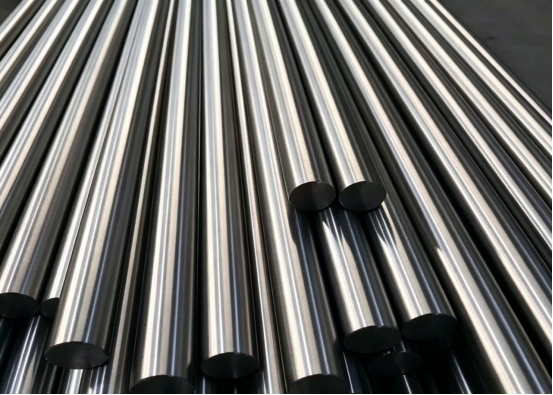
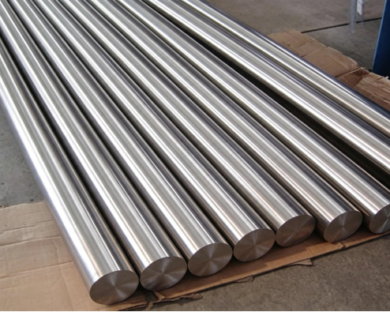
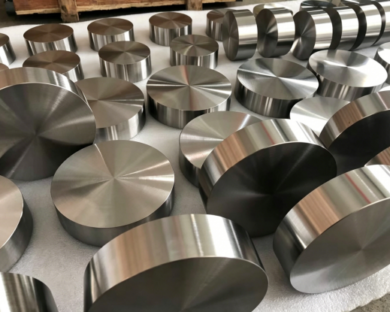
Product Overview: Haynes 188 Cobalt-Based Alloy Bars
Haynes 188 is a super high-grade solid alloy rod made by relying on the solid solution strengthening mechanism. As a representative material benchmarking against the world’s top aviation and gas turbine hot-end materials, this alloy was specifically developed to overcome the 1000℃ extreme working conditions. When facing multiple harsh environments such as ultra-high temperatures, intense thermal cycles, complex sulfation/oxidation erosion, and persistent creep, it demonstrates a service life and load-bearing stability that cannot be achieved by conventional nickel-chromium heat-resistant steels or 310S, Inconel 600/625 and other materials. It is an ideal core base material for replacing these materials. Currently, it is widely used in core load-bearing components in high-precision and high-tech fields such as aerospace power, heavy-duty gas turbines, high-temperature petrochemicals, cutting-edge heat treatment equipment, and key heat-end components of nuclear energy.
Applicable Operating Conditions and Industries for Cobalt-Based Alloy Haynes 188 Bars
Conditions: Aircraft engine combustion chamber, thrust tube, tail nozzle, rocket high-temperature insulation parts, 1000–1095℃ high-frequency thermal cycling, high-speed airflow erosion;
Bar material form: Φ6–80mm finely ground and polished bars, used for flame stabilizer pins, combustion chamber support shafts, sealing adjustment bolts, nozzle pull rods.
- Gas turbines (thermal power / industrial / marine)
Conditions: Transition section support of combustion chamber, burner nozzle, high-temperature sealing parts, containing sulfur-containing flue gas, 850–1095℃ long-term continuous operation;
Bar material form: Φ30–150mm machined bars, forged rough bars, machined columns, nozzle core shafts, high-temperature fasteners.
Conditions: Radiation tube support of cracking furnace, high-temperature reactor internals, sulfur recovery device, high-temperature sulfidation, chloride salt thermal corrosion;
Bar material form: Φ40–200mm hot-rolled bars, large forgings, fabricated internal load-bearing shafts, catalyst support frames, high-temperature valves and valve stems.
- Heat treatment industrial furnaces
Conditions: Muffle furnace material tray support, furnace rollers, high-temperature fixtures, thermocouple sleeves, 900–1050℃ day-night cycle oxidation;
Bar material form: Universal standard bars of all specifications, batch standard length polished bars, cost-effective replacement for 310S/Inconel 600.
Conditions: High-temperature molten salt heat exchange equipment, reactor hot-end drive mechanism, vacuum + high-temperature molten salt corrosion;
Bar material form: Φ80–320mm large-diameter forgings, precision machined shaft-like blanks.
- Special military industry & testing equipment
Conditions: High-temperature wind tunnels, thermal simulation test machines, internal components of high-temperature vacuum furnaces;
Bar material form: Precision small-diameter polished bars, custom stepped irregular bars.
Technical Specifications for Haynes 188 Cobalt-Based Alloy Bars
| Grade System |
Grade Designation |
Applicable Product Forms |
Applicable Standards |
| US Standard |
UNS R30188 |
Bar / Plate / Strip / Forgings |
ASTM B637(Bars)、AMS 5608、AMS 5772 |
| German Standard |
W.Nr.2.4683 |
Bars, Forgings |
EN 10088、EN 4449 |
| Chinese Standard |
GH5188 (Equivalent to Haynes 188) |
High-temperature alloy bars (all forms) |
GB/T 14992、GB/T 24588 |
Bar Size Range (Supply Scope)
| Item |
Parameter Range |
Surface Delivery Condition |
| Round Bar Diameter |
Φ6mm~Φ320mm |
1. Hot-rolled/forged black bar (rough machined)
2. Turned and precision-ground bar, Ra ≤ 1.6 μm (finished product)
3. Peeled bright bar |
| Single Bar Length |
500mm~6000mm |
Custom cut-to-length, square-cut ends, and chamfering available |
| Tolerance Grade |
Hot-rolled: ±0.5~2mm;Precision-ground:±0.01~0.05mm |
Customized precision tolerances per customer drawings |
| Special-Shaped Bars |
Square bars, hexagonal bars, stepped shaft blanks |
Custom forged/rolled products |
Chemical Composition
|
Co
|
Balance (Matrix) |
W |
13.0~15.0 |
|
Cr
|
20.0~23.0 |
Ni |
20.0~24.0 |
|
C
|
0.05~0.15 |
La |
0.03~0.15(Rare-earth oxidation-resistance component) |
|
Mn
|
≤1.25 |
Si |
0.20~0.50 |
| Fe |
≤3.0 |
B |
≤0.015
|
Room-Temperature Mechanical Properties (Standard Bar: Solution Annealed at 1180°C, Water Quenched)
| Property Indicator |
Standard Minimum Value
|
Typical Measured Value |
| Tensile Strength Rm |
≥963 MPa
|
980–1080 MPa |
| Yield Strength Rp0.2 |
≥446 MPa
|
460–520 MPa |
| Elongation A |
≥45%
|
50%–58% |
| Rockwell Hardness HRC |
≤25 HRc
|
20–24 HRC |
| Brinell Hardness HB |
≤230 HB
|
200–220 HB |
| Room Temperature Impact Energy KV |
≥160 J
|
180–200 J |
Typical Short-Term High-Temperature Tensile Properties
| Test Temperature |
Tensile Strength |
Yield Strength |
Elongation |
| 800℃ |
440–480 MPa |
290–330 MPa |
≥32% |
| 980℃ |
370–410 MPa |
240–270 MPa |
≥28% |
| 1095℃ |
180–220 MPa |
120–150 MPa |
≥22% |
Key Advantages of Haynes 188 Cobalt-Based Alloy Bar Stock
As a cutting-edge superalloy constructed through the four-element solid solution strengthening mechanism of cobalt, nickel, chromium and tungsten, Haynes 188 (commonly referred to as GH5188 in China) holds its irreplaceable position in the industrial field due to its remarkable toughness and load-bearing capacity demonstrated under extreme conditions exceeding 1000℃.
In the materials field, crossing temperatures of over 1,000 degrees Celsius often leads to a sharp decline in the performance of common nickel-based alloys (such as the 600 and 625 series) and heat-resistant steels. However, the 188 alloy, relying on a high cobalt matrix and supplemented by the lattice distortion effect of refractory tungsten elements, managed to maintain structural stability in this persistent stress creep environment.
In addition, the high temperatures in industrial environments are often accompanied by the erosion, oxidation and severe sulfation caused by complex gases. The remarkable feature of this alloy lies in the introduction of a trace amount of rare earth lanthanum (La) element. This element can react synergistically with 22% chromium, “welding” a layer of extremely difficult-to-remove tight passivation film on the surface of the material, thus solving the problem of ordinary alloys peeling and deteriorating at high temperatures. What’s even more remarkable is that, when subjected to frequent thermal shock in the cold-hot cycle, due to the high nickel content locking the austenite structure, it hardly leaves any space for thermal fatigue cracks to grow.
For the manufacturing sector, it has overcome the previous limitation where high-hardness special steel could not be processed. While maintaining extremely high thermal strength, it has also opened the door to both cold and hot processing as well as traditional/special welding techniques. It is a key material for ensuring the long-term service of aerospace power, gas turbine blades, and special nuclear energy heat-end components.
Performance Evolution of Haynes 188 Cobalt-Based Alloy Bars After Long-Term Thermal Exposure
Microstructural evolution (long-term service at 760–870℃)
- Grain boundaries precipitate M₂₃C₆ and M₆C carbides, slightly enhancing room temperature strength and hardness;
- After several thousand hours of long-term residence, Laves phases (Co₂W) are precipitated, reducing plasticity and impact toughness;
- Compared with Haynes 25, the Laves phase precipitation rate is lower, and the degree of aging embrittlement is significantly lighter;
- At temperatures above 1000℃ for long-term use, Laves phases dissolve, and plasticity decays at a slower rate.
Mechanical property change patterns
- Short-term thermal exposure (≤ 500h, 900–1095℃): Tensile strength and yield slightly increase, elongation only decreases by 5%–10%, impact energy decreases by less than 15%, and the performance is stable;
- Long-term exposure (1000–10000h, 760–870℃): Hardness increases by 10–30HB, elongation drops to 30%–40%, impact toughness decreases by 20%–30%, but still far better than the attenuation rate of ordinary nickel-chromium alloys at the same period;
- Long-term service at 1095℃ ultra-high temperature: Carbides coarsen, Laves phases dissolve, strength slowly decreases, plasticity slightly recovers, and there is no risk of sudden brittle fracture.
Antioxidation / corrosion resistance performance changes
The La element forms a stable oxide film that does not peel off for a long time, and the weight loss under 10000h of cyclic oxidation is only 1/5 of that of 310S stainless steel; the sulfurization corrosion rate at high temperatures remains extremely low throughout the process, and there is no continuous corrosion thickening.
Usage suggestions
For structural components that are continuously used at 700–900℃ for a long time, design with plasticity redundancy reserved; for conditions above 1000℃, there is almost no risk of aging embrittlement, and it is the optimal range for medium- and long-term high-temperature use.
Comparison of Cobalt-based Haynes 188 Alloy with Conventional Nickel-Chromium Heat-resistant Alloys
| Comparison |
Criteria Standard Ni-Cr Heat-Resistant
|
Haynes 188 |
| Unit Material Cost |
1x
|
3-4x |
| Max. Continuous Service Temp. |
~850°C
|
1095°C |
| Design Wall Thickness |
Thick
|
Can be reduced by 30–40% |
| Replacement Frequency |
Every 2–3 years 5–8 years
|
5-8years |
| Total 10-Year Cost |
High
|
Lower |
Manufacturing and Processing Workflow for Cobalt-Based Alloy Haynes 188 Bars
Smelting Process (Focus on Purity)
Vacuum Induction Melting (VIM) combined with Electroslag Remelting (ESR) or Vacuum Arc Remelting (VAR); strict control of S, P, O, and H impurities and reduction of inclusions to prevent high-temperature service cracking and meet aerospace-grade purity standards.
Billeting and Forging
- Uniform heating and soaking of ingots at 1150–1180°C to eliminate segregation;
- Open-die forging (drawing out) for billeting with a total deformation of ≥60% to break down coarse as-cast grains;
- Final forging temperature ≥980°C to avoid processing cracks caused by low-temperature forging;
- Slow cooling after forging to relieve forging stresses.
Rolling / Precision Forging into Bars
Small-diameter bars: Multi-pass hot rolling into round bars;
Large-diameter bars (Φ120–320mm): Formed into rounds using specialized forging machines to ensure uniform internal and external microstructure.
Solution Heat Treatment (Determines Final Properties)
High-temperature soaking at 1175–1190°C for complete solutionizing, followed by rapid water cooling or forced-air cooling; alloying elements (W, Cr) fully dissolve into the matrix to achieve a standard delivery state characterized by low hardness and high ductility; age hardening prior to shipment is prohibited.
Surface Finishing
- Black bars: Shot blasting only to remove oxide scale;
- Peeled bars: Lathe turning to remove surface decarburized layers and oxidation defects;
- Precision ground bars: Centerless grinding for high dimensional accuracy and low surface roughness, ready for direct component machining.
Non-Destructive Testing (NDT) & Physical-Chemical Re-inspection
Individual ultrasonic testing (UT) for internal porosity and cracks, and magnetic particle testing (MT) for surface defects; sampling from each heat for chemical composition analysis, mechanical property testing (at room and high temperatures), and grain size inspection.
Pre-shipment Quality Assurance
Implement the compliance standard system
International: ASTM B637, AMS 5608, W.Nr.2.4683; Domestic: GB/T 14992 – General Standard for High-Temperature Alloys, GB/T 24588 – Non-Destructive Testing Standard, Aviation Materials Testing Specification; Can issue quality guarantee documents compliant with ASME, EU CE, and special equipment raw material quality assurance documents.
Factory inspection must include all items (by batch / per piece)
- Melting composition test: Spectroscopy for each furnace + Chemical Titration, issue complete material sheet;
- Mechanical property test: Room temperature tensile, high-temperature tensile, room temperature impact, hardness, leave samples for archiving;
- Metallographic test: Grain size, inclusion rating, observation of carbide structure;
- Non-destructive testing (per piece execution)
UT Ultrasonic Testing: Detect internal cracks, porosity, shrinkage cavities;
MT Magnetic Particle Testing: Full coverage of surface micro-cracks, oxidation defects;
- Dimension and surface full inspection: Diameter tolerance, straightness, surface roughness visual inspection + instrument detection;
- Special customized testing: High-temperature permanent creep, cyclic oxidation test, thermal corrosion simulation test (performed by third-party authoritative institutions as per demand).
Quality guarantee delivery documents
Material certificate, melting furnace number traceability sheet, heat treatment curve report, inspection report for non-destructive testing, original test sheet for mechanical properties, full traceability of each batch of materials.
TIPTOP’s Capabilities and Advantages
- Full-process autonomous smelting and forging integration. Own VIM + ESR vacuum melting production line, ten-thousand-ton forging press, hot-rolled bar line, large-scale heat treatment trolley furnaces. No semi-finished steel billets are purchased from outside. The purity and consistency of the structure are controllable. The aviation-grade quality is stable.
- Full-size bars coverage, advantage of large-diameter customization. Regular Φ6–320mm bars are in stock; custom Φ320–500mm ultra-large forging round blanks can be provided. Short and long lengths, stepped and irregular-shaped bars, square bars and hexagonal bars can all be forged and rolled according to customer’s needs.
- Stable and mature heat treatment process library. Precise temperature control solution line, which can match different customer needs: standard solution state, special solution process for low deformation, controllable cold and hot processing performance, eliminating the problem of excessive hardness in batches and insufficient plasticity.
- One-stop delivery of finishing processing and supporting services. Equipped with CNC lathes, centerless grinding machines, sawing equipment, etc., ready to deliver finished polished bars and pre-processed shaft blanks directly. Customers do not need to undertake secondary outsourcing processing, shortening the delivery cycle.
- Complete third-party qualification testing laboratory. Own certified non-destructive testing team, which can be synchronized with third-party aviation / special equipment testing institutions to meet the requirements of military industry, nuclear power, and petrochemical supervision and inspection.
- Customized research and development to adapt to special conditions. Optimizing the ratio of trace elements for smelting under conditions such as molten salt, high-sulfur flue gas, and high-frequency thermal cycling; providing material selection, wall thickness design, processing and welding process technical support.
FAQ
Q1:Are Haynes 188 and GH5188 the same material?
A: GH5188 is a domestic equivalent grade. Its composition, performance, and application scope are exactly the same as the imported Haynes 188 UNS R30188, and they can be used interchangeably. Our company can issue both American standard and Chinese standard warranty certificates.
Q2: The hardness of the bar material is too high. Can it be adjusted?
A: Yes. The factory standard solutionized state HRC is ≤ 25; if a lower hardness is needed for deep machining, the solid solution holding time can be extended, and the hardness can be reduced to the range of HRC 18–22.
Q3: Can Haynes 188 be welded? Is preheating required?
A: The welding performance is excellent. TIG argon arc welding is recommended; for thick bar materials, preheating at 200–300℃ is required, and no heat treatment is needed after welding. The weld seam has a high temperature strength and oxidation resistance close to the base material.
Q4: Can it operate continuously at 1095℃ for 24 hours at the highest temperature?
A: Yes. In the absence of strong molten salt erosion and low sulfur conditions, it can operate continuously at 1095℃ for a long time; for high sulfur / molten salt conditions, it is recommended to control the long-term temperature ≤ 1050℃ to further extend the service life.
Q5: How to choose between Haynes 230, Haynes 25 compared to Haynes 188?
Haynes 188: Comprehensive balance, considering high-temperature strength + oxidation resistance + resistance to sulfidation; it is the first choice for most general high-temperature components;
Haynes 230: Better thermal stability, minimal long-term aging plasticity reduction at 700–900℃, suitable for extremely long service cycles;
Haynes 25: Higher high-temperature strength, but poor oxidation resistance and prone to aging brittleness, only suitable for short-term high-temperature use in pure air without corrosion.
Q6: Can the bar material be cold bent or cold forged?
A: The standard solutionized state has sufficient plasticity, and it can be slightly cold bent or cold forged; if the deformation exceeds 20%, it is recommended to perform intermediate annealing to eliminate processing stress and avoid cracking.
Q7: Why can it be thinned thinner than nickel-based alloys at the same temperature?
A: The 14% tungsten element solid solution strengthening brings excellent high-temperature creep durability strength. At the same high-temperature load, a thinner cross-section is allowed, directly reducing the part weight and raw material usage.