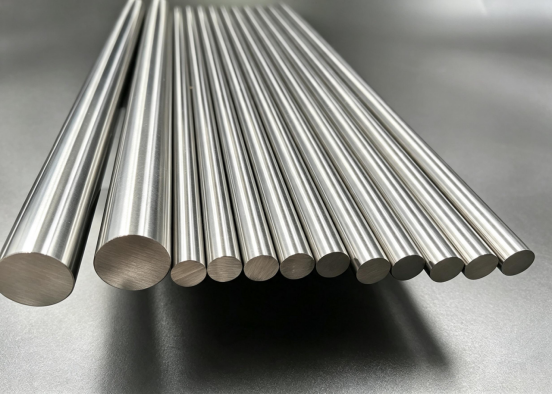
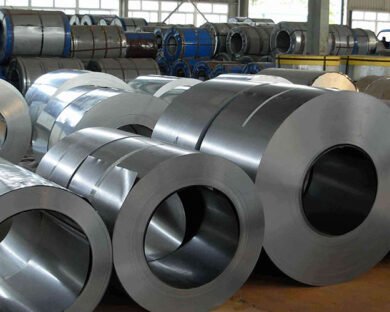
Product Overview: Stellite 6B Cobalt-Based Alloy Forged Rods
Stellite 6B (UNS R30016) is the most widely used forged grade within the Stellite cobalt-based alloy family. It belongs to the cobalt-chromium-tungsten (Co-Cr-W) series of wear-resistant and corrosion-resistant high-temperature alloys. This alloy is based on cobalt (with a remainder of approximately 58% to 62%), and through the addition of high chromium, tungsten, and carbon, it forms a dual-phase composite structure of “cobalt-based solid solution + dispersed hard carbides”.
Stellite 6B is a “all-round” engineering material specifically designed for extreme conditions involving extreme wear, high temperatures, and corrosion. Unlike the ordinary Stellite 6 (in the cast state), 6B refers to the deformed (wrought) state product obtained through hot forging/rolling processing. Through the hot processing, the coarse primary carbide network structure is broken down, significantly improving its toughness, plasticity, and impact resistance compared to the cast state of similar alloys.
Technical Specifications for Stellite 6B Cobalt-Based Alloy Forged Bars
Common Grades and Standards
| Grade |
terial System |
UNS Number |
Core Standard |
Product Form |
Applicable Working Condition |
| Stellite 6B |
Co-Cr-W series cobalt-based alloy |
R30016 |
AMS 5894、ASTM A567 Gr.6B |
Forged rods, forgings, rings, pipes |
ear-resistant parts that need to withstand impact loads, balanced strength and toughness |
| Stellite 6(Cast) |
Co-Cr-W cobalt-based alloy |
R30006 |
AMS 5387(Castings) |
Castings,hardfacing materials |
Pure wear applications; not subjected to impact loads |
| Stellite 6K |
Co-Cr-W cobalt-based alloy |
— |
Corporate standard |
Forged bars, plates |
Higher hardness (HRC 40–48), slightly lower toughness; suitable for cutting tools |
| WR6B |
Co-Cr-W cobalt-based alloy |
— |
Corporate standard |
Forged bars, round bars |
Composition similar to 6B; emphasizes high-temperature wear resistance |
Chemical Composition and Mechanical Properties of Stellite 6B Cobalt-Based Alloy Forged Bars
Chemical Composition
Stellite 6B is a cobalt (Co)-based alloy; the key alloying elements and their functions are as follows:
| Element |
AMS 5894 Standard Range |
Typical Value |
Function |
| Co |
Balance(approx.58%~62%) |
Balance |
Matrix element; provides high-temperature strength, toughness, and microstructural stability |
| Cr |
27.0 ~ 31.0%(AMS) |
28.0 ~ 31.0% |
Forms a Cr₂O₃ passivation layer; provides oxidation and corrosion resistance |
| W |
3.5 ~ 5.5% |
4.0 ~ 5.0% |
Solid-solution strengthening; enhances high-temperature red hardness |
| C |
0.90 ~ 1.40% |
1.0 ~ 1.2% |
Forms hard carbides with Cr and W; primary source of wear resistance |
| Ni |
≤3.0% |
≤3.0% |
Improves toughness and thermal stability |
| Fe |
≤3.0% |
≤3.0% |
Strictly controlled; Fe reduces hot corrosion resistance |
| Si |
≤2.0% |
≤1.0% |
Deoxidizer; improves processability |
| Mn |
≤2.0% |
≤1.0% |
Deoxidizer |
| Mo |
≤1.5% |
Trace |
Supplementary strengthening |
| P |
≤0.04% |
<0.005% |
Impurity; strictly controlled |
| S |
≤0.03% |
<0.003% |
Impurity; strictly controlled |
Mechanical Properties (Forged, Rolled, and Annealed Condition)
| Property Indicator |
AMS 5894 Minimum |
Typical Value |
Remarks |
| Tensile Strength Rm |
≥130 ksi(896 MPa) |
900 ~ 1030 MPa |
— |
| Yield Strength Rp0.2 |
≥70 ksi(483 MPa) |
550 ~ 690 MPa |
0.2%offset |
| Elongation A(50mm) |
≥5% |
8% ~ 15% |
Anisotropy in forged state; longitudinal values higher |
| Reduction of Area Z |
≥7% |
10% ~ 25% |
— |
| Hardness(HRC) |
33 ~ 43 |
36 ~ 40(typical) |
Annealed state |
Although Stellite 6B entails a higher initial procurement cost, it offers exceptional overall economic value when viewed from a full life-cycle perspective:
Typical Cost Comparison
| Comparison Metric |
316L Stainless Steel |
Stellite 6B |
Advantage Factor |
| Initial Material Cost |
1x |
Approx.2~3x |
— |
| Wear Rate |
Baseline |
Approx.1/10 |
10x |
| Maintenance Interval |
3 months |
2 years |
8x |
Summary of Life-Cycle Cost Advantages
- Significantly extended equipment lifespan: Under cavitation and erosion conditions, the service life is more than five times that of standard stainless steel.
- Reduced downtime losses: Maintenance intervals extend from months to years, significantly reducing unplanned downtime.
- Lower lubrication costs: Low friction coefficient enables lubrication-free operation.
- Reduced spare parts inventory: Extended component lifespan leads to a substantial drop in the demand for spare parts.
- Lower overall costs: A chemical plant achieved a 40% reduction in total costs after adopting Stellite 6B for centrifugal pump seal rings.
Stellite 6B Cobalt-Based Alloy Forged Rods: Applicable Conditions and Industries
Key Applicable Conditions
High-temperature wear: Metal-to-metal, abrasive, and adhesive wear in environments ranging from 500°C to 800°C
Corrosive media: Oxidizing acids, wet hydrogen sulfide, high-temperature sulfur-bearing atmospheres, seawater, etc.
Cavitation/Erosion: Cavitation corrosion caused by high-speed fluid impact
Unlubricated sliding: Metal-on-metal friction without lubrication
Thermal shock/Thermal fatigue: Conditions involving repeated heating and cooling cycles
| Industry |
Typical Components/Product Forms |
Operating Conditions |
| Aerospace |
Engine bearings, turbine blade seal rings, nozzle rings |
High temperature, high speed, thermal cycling |
| Nuclear/Thermal Power |
Valve components, steam turbine erosion shields, wear-resistant seal strips |
High-temperature, high-pressure steam |
| Petrochemical |
Pump plungers, sleeves, mechanical seal rings, agitator blades |
Corrosive media, particle erosion |
| Metallurgy/Thermal Processing |
Hot-dip galvanizing sinker rolls, hot extrusion dies, hot shear blades |
Molten metal corrosion, high temperature |
| Food/Pharmaceutical |
Wear-resistant blades, molds, conveyor components |
Hygienic requirements, wear and corrosion resistance |
| General Industry |
Wear plates, gears, sleeves, bushings, tunnel boring seals |
Abrasive wear, impact |
| Industry Sector |
Typical Components/Product Forms |
Operating Condition Characteristics |
| Aerospace |
Engine bearings, turbine blade seal rings, nozzle rings |
High temperature, high speed, thermal cycling |
| Nuclear/Thermal Power |
Valve components, steam turbine erosion shields, wear-resistant seal strips |
High-temperature, high-pressure steam |
| Petrochemical |
Pump plungers, sleeves, mechanical seal rings, agitator blades |
Corrosive media, particle erosion |
| Metallurgy/Hot Processing |
Hot-dip galvanizing sinker rolls, hot extrusion dies, hot shear blades |
Molten metal corrosion, high temperatures |
| Food/Pharmaceutica |
Wear-resistant blades, molds, conveyor components |
Hygienic requirements, wear and corrosion resistance |
| General Industry |
Wear plates, gears, sleeves, bushings, tunnel boring seals |
Abrasive wear, impact |
Manufacturing Process and Machining Techniques for Stellite 6B Cobalt-Based Alloy Forged Bars
Typical Manufacturing Process
Smelting → Forging/Hot Rolling → Heat Treatment (Solution/Annealing) → Non-destructive Testing → Machining/Finishing → Factory Inspection
Key Process Nodes:
- Vacuum Induction Melting (VIM): Ensures high alloy purity and reduces impurities
- Secondary Refining (VAR/ESR): Further reduces gas and inclusion content
- High-Temperature Forging/Hot Rolling: Breaks up the coarse carbide network in the cast state, forming a uniform and refined recrystallized structure
- Solution Heat Treatment: Heating to 1232°C±14°C, holding for ≥15 minutes, air cooling
Dimensions and Supply Forms
Regular Stock Specifications:
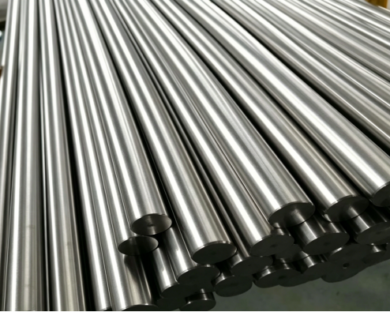
- Forged Bars (Round Bars): Φ10mm ~ Φ300mm, fixed length or non-fixed length
- Plates/Thick Plates: Thickness ≥1mm, width… ≤1000mm, length customizable
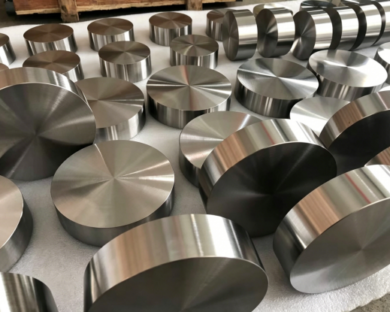
- Forgings: Customized according to drawings
Delivery Condition:
Annealed (M): Default condition, optimal plasticity, easy for bending, welding, and other subsequent processing
Forged (R)
Solution-treated
Surface Grade:
- Pickled and passivated surface (removing oxide scale)
- Machine-finished bright surface (turning/grinding)
- Black skin state (original forged surface)
- Customization Capabilities:
- Single-piece blanking
- Waterjet cutting
- Beveling
- Outsourced finishing
- Small batch samples available
Quality Assurance and Company Advantages
Factory Inspection Items
| Inspection Category |
Test Method |
Applicable Standard |
Purpose |
| Chemical Composition |
Spectroscopic Analysis (OES) |
AMS 5894 / ASTM |
Verify elemental content meets standards |
| Mechanical Properties |
Tensile Test, Hardness Test |
AMS 5894 |
Verify tensile strength, yield strength, elongation, and hardness |
| Ultrasonic Testing(UT) |
Ultrasonic Inspection |
ASTM E112 / GB/T 6402 |
Detect internal defects; forgings require fine grain size (ASTM Grade 5 or finer) |
| Microstructure |
Metallographic Examination |
ASTM E112 |
Evaluate grain size and carbide distribution |
| Dimensional Accuracy |
Measurement |
Drawing Requirements |
Ensure dimensional tolerances |
| Surface Quality |
Visual / Penetrant Inspection |
— |
Free from delamination, oxide inclusions, and cracks |
The following certifications are available for Stellite 6B products:
- AMS 5894 Material Test Report
- Chemical Composition Spectroscopic Analysis Report
- Mechanical Properties Test Report
- Ultrasonic Testing Report
Company Strengths:
- End-to-End Process Control
Full traceability from smelting to flaw detection
Chemical composition and mechanical property data archived for every batch
Small-batch sample shipments supported
Customization of non-standard forgings, rings, and tubular products based on drawings
Value-added services including precision cutting, waterjet cutting, and edge beveling
Strict adherence to international standards such as AMS 5894 and ASTM
Third-party testing and certification available
Fine grain size requirements for forgings (ASTM Grade 5 or finer) to ensure ultrasonic penetration and isotropy
Expert technical team providing material selection consultation
Rapid Response
Comprehensive after-sales technical support
FAQ
Q1: What are the differences between Stellite 6B and Stellite 6?
Stellite 6B usually refers to the deformed product after forging processing, while Stellite 6 generally refers to the cast state product. The chemical compositions of the two are similar, but 6B has a more uniform distribution of carbides after forging, and its impact toughness is about 4 times that of the cast state (typically lower than 5% for the cast state), with an elongation rate of up to 8%–15% (which is usually lower than 5% for the cast state). It is more suitable for manufacturing independent bearing wear-resistant parts.
Q2: What is the maximum operating temperature of Stellite 6B?
Stellite 6B can maintain high red hardness and strength even below 800°C. Its hardness can still remain above HRC 30 at 700°C. The key feature of its red hardness is that it retains high hardness at high temperatures and recovers to its original level after cooling.
Q3: Can Stellite 6B be welded?
- Stellite 6B has excellent welding properties and can be welded onto the substrate surface using tungsten inert gas welding (TIG), oxy-acetylene welding or plasma arc welding. When used as a welding wire, it complies with the AMS 5798 standard. It is recommended to preheat to 200–400°C before welding, control the interlayer temperature, and cool slowly after welding to prevent cracking.
Q4: How difficult is the processing of Stellite 6B?
Stellite 6B has a relatively high hardness (HRC 33–43) and is a difficult-to-machine material. During the machining process, carbide or ceramic tools need to be used, with a lower cutting speed, a larger feed rate, and maintaining system rigidity. Grinding is the main finishing method for it, and it is recommended that professional manufacturers provide the processing services.
Q5: Is Stellite 6B restricted in nuclear power plants?
The cobalt element will generate the radioactive isotope Co-60 under irradiation conditions. Therefore, its application in the irradiation areas of nuclear power plants is strictly restricted. However, it can still be widely used in non-irradiated areas (such as wear-resistant components like valve internals).
Q6: How is the corrosion resistance of Stellite 6B?
Stellite 6B exhibits excellent corrosion resistance to a variety of corrosive media, including oxidizing acids (such as nitric acid), moist hydrogen sulfide, high-temperature sulfur-containing atmospheres, seawater, etc. It has a relatively high chromium content (approximately 30%), which can form a dense Cr₂O₃ protective film on the surface, providing excellent corrosion resistance protection in oxidizing media.
Q7: What is the minimum order quantity for Stellite 6B?
Normally, the minimum order quantity is ≥ 2kg. Small sample orders are also supported. The exact minimum order quantity depends on the specific specification.
Q8: What is the normal delivery status of the Stellite 6B forged bar?
The default delivery condition is annealed state (M), which offers the best plasticity and is suitable for subsequent processing such as bending and welding. Alternatively, forged state (R) or solutionized state can be provided according to customer requirements.