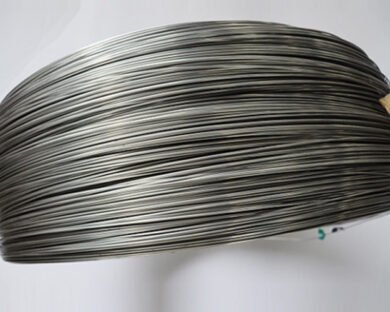
Overview and Core Advantages of Super Austenitic Stainless Steel Pipe Products
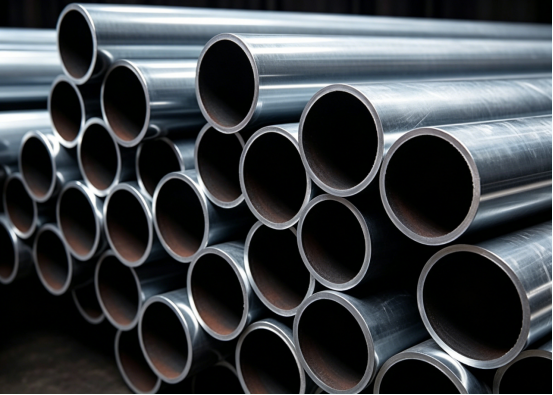
In the extremely demanding modern industrial boundaries, super austenitic stainless steel tubing is a strategic special steel anti-corrosion ace designed for comprehensive defense. Relying on a breakthrough micro-alloying matrix of high nickel, high chromium, high molybdenum, and synergistic nitrogen fixation (such as 904L, 254SMO), this series of tubing maintains the traditional high toughness and excellent weldability of austenitic steel while directly pushing the anti-point corrosion equivalent (PREN) to a new height of over 40. It completely breaks the “defeat curse” of conventional materials in extreme environments such as high-temperature strong acid, extremely high chloride ions, etc., and plays an irreplaceable ultimate safety barrier role in core fluid control systems in aerospace, cutting-edge offshore engineering, and nuclear power.
From both a commercial and engineering perspective, the core advantage of the super austenitic pipe material lies in its ability to reshape the entire life cycle economics under extreme conditions. Traditional pipe materials often experience frequent cracking and downtime for maintenance when exposed to high-concentration sulfuric acid or extreme marine stress corrosion. However, this series of pipe materials, with its nearly defect-free metallurgical purity and self-healing passivation film, achieves zero-fault operation throughout the entire service life. It not only enables engineers to design complex high-pressure pipeline networks without blindly increasing wall thickness due to corrosion compromises, achieving structural lightweighting, but also with its absolute core strength of “one-time full-life service”, helps enterprises eliminate the hidden huge costs caused by frequent shutdowns and maintenance. It is a hard-core technological foundation for the advancement of high-end fluid engineering to the deep sea, deep earth, and green chemical fields.
TIPTOP Super Austenitic Stainless Steel Pipe Core Technical Specifications Table
| Grade |
UNS |
EN/DIN |
Key Characteristics |
| 254SMO |
S31254 |
1.4547 |
High Cr, Ni, and Mo content; nitrogen-alloyed; PREN ≥ 43 |
| 904L |
N08904 |
1.4539 |
High copper content (approx. 1.5%); excellent performance in dilute sulfuric acid |
| AL-6XN |
N08367 |
— |
High Mo (≥ 6%) and Ni (approx. 24%) content; strong resistance to chloride pitting |
| 654SMO |
S32654 |
1.4652 |
Higher degree of alloying; PREN > 50; suitable for extremely harsh corrosive environments |
|
Specification
|
Range
|
Notes
|
|
OD
|
6.0mm – 219mm
|
Customizable; subject to specific customer technical requirements |
|
Wall Thickness
|
0.5mm – 12mm
|
Adjustable based on operating condition requirements |
|
Length
|
5m – 12m
|
Cut to length per customer specifications |
|
Coil Dimensions
|
ID 508mm / 610mm
|
Coil dimensions adjustable based on requirements |
Chemical Composition and Mechanical Properties of TIPTOP Super-austenitic Stainless Steel Pipes
Chemical Composition
| Chemical Element |
254SMO(S31254) |
904L(N08904) |
AL-6XN(N08367) |
| C |
≤0.02 |
≤0.02 |
≤0.03 |
| Si |
≤0.80 |
≤1.00 |
≤1.00 |
| Mn |
≤1.00 |
≤2.00 |
≤2.00 |
| P |
≤0.030 |
≤0.040 |
≤0.040 |
| S |
≤0.010 |
≤0.030 |
≤0.030 |
| Cr |
19.5-20.5 |
19.0-23.0 |
20.0-22.0 |
| Ni |
17.5-18.5 |
23.0-28.0 |
23.5-25.5 |
| Mo |
6.0-6.5 |
4.0-5.0 |
6.0-7.0 |
| N |
0.18-0.22 |
— |
0.18-0.25 |
| Cu |
0.50-1.00 |
1.0-2.0 |
≤0.75 |
| Fe |
margin |
margin |
margin |
Mechanical Properties
| Grade |
Tensile Strength Rm (MPa) |
Yield Strength Rp0.2 (MPa) |
Elongation A (%) |
Hardness (HB) |
Modulus of Elasticity (GPa) |
Density (g/cm³) |
Melting Range (°C) |
| 254SMO |
≥655 |
≥310 |
≥35 |
≤220 |
~195 |
8.0 |
1370-1400 |
| 904L |
≥490 |
≥215 |
≥35 |
≤220 |
~193 |
7.95 |
1300-1390 |
| AL-6XN |
≥650 |
≥310 |
≥30 |
≤230 |
~195 |
8.05 |
1370-1400 |
| 654SMO |
≥750 |
≥430 |
≥35 |
230-250 |
~200 |
8.24 |
1320 – 1390 |
Applicable Operating Conditions and Industries for Super-Austenitic Stainless Steel Piping
| Industry |
Operating Conditions |
Recommended Grades |
Product Form |
| Seawater Desalination |
Seawater heat exchangers, condenser tubes, evaporators |
254SMO, AL-6XN |
Thin-walled seamless pipes, heat exchanger tubes |
| Marine Engineering |
Offshore platform hydraulic/instrumentation piping, subsea pipelines |
254SMO, 654SMO |
Thick-walled seamless pipes, precision pipes |
| Petrochemicals |
Refinery piping, chemical plant reactors, distillation tower internals |
904L, 254SMO |
Seamless pipes, welded pipes |
| Flue Gas Desulfurization (FGD) |
Absorber tower spray pipes, circulating slurry piping |
254SMO, 654SMO |
Large-diameter piping |
| Pulp & Paper |
Pulp bleaching equipment, filter presses, storage tanks |
254SMO |
Piping, plate/sheet |
| Food & Pharmaceutical |
Food processing piping, sanitary piping |
904L |
Sanitary polished pipes (BA/EP) |
| Sulfuric/Phosphoric Acid Production |
Evaporators, heat exchangers, mixers, sulfuric acid transfer systems |
904L |
Acid-resistant piping |
| Power Generation |
Power plant polluted cooling water piping systems |
AL-6XN |
Condenser tubes |
Manufacturing Process and Processing Techniques for TIPTOP Super-Austenitic Stainless Steel Piping
- Step 1: Raw material smelting and steel ingot preparation
Vacuum Induction Melting (VIM) or Argon Oxygen Decarburization Refining (AOD) → Electroslag Remelting (ESR)
Strictly control the chemical composition to ensure ultra-low carbon content (C ≤ 0.02%) and low impurity content (P, S ≤ 0.010%)
Objective: To obtain steel ingots with high purity and uniform composition
- Step 2: Forging blanking and hot rolling piercing
The steel ingot is forged at high temperature to shape the initial round billet.
Hot-rolled punched tube billet preparation
- Step 3: Hot extrusion molding
Heat the tube billet to 1120 – 1180℃
Form the initial blank of the seamless pipe by using the hot extrusion process
- Step 4: Cold rolling processing
The product is produced by the “hot extrusion + three passes of cold rolling” process.
Intermediate annealing treatment is carried out between the cold rolling passes.
Control the deformation amount during cold processing and optimize the microstructure – 51
- Step 5: Solid solution heat treatment
Heat to 1120 – 1180℃ and maintain for 5 – 10 minutes.
Quick water quenching cooling, with a cooling rate not lower than 350℃/min
Obtain uniform austenite structure and eliminate the precipitation of σ phase –
- Step 6: Surface treatment / finishing
Removing oxide scale through pickling and passivation
Bright annealing (BA) or precision polishing
Dimensional sizing, straightening, and finishing
- Step 7: Quality Inspection
- Step 8: Packaging and Delivery
Quality Assurance and Company Advantages
To guarantee uncompromised field performance, every single batch undergoes a rigorous, multi-dimensional validation process prior to dispatch:
- Elemental & Mechanical Verification: We verify matrix integrity through precise chemical ladleanalysis alongside comprehensive tensile, yield, and elongation rating.
- Hardness Mapping: Indentation resistance is thoroughly evaluated via Rockwell and Brinellmethods, cross-referenced with ASTM E18 and E1O criteria.
- Sub-Surface Volumetric Inspection: Utilizing advanced Ultrasonic Testing (UT) per ASTM E213,we scan the entire volume to rule out internal anomalies like micro-cracks, gas porosity,or slag entrapments.
- Skin & Near-Surface Diagnostics: Eddy Current Testing (ET) is deployed according to ASTME426 to catch any subtle near-surface discontinuities, while ASTM E165 Liquid Penetrant Testing(PT) checks for hairline surface-breaking flaws.
- Geometric & Metrology Control: Critical dimensions-including OD, wall thickness, totallength, and ovality-are tightly monitored via coordinate measuring machines (CMM) andcalibrated metrology tools to guarantee absolute drawing compliance.
- Corrosion Resistance Profiling: Intergranular vulnerability is assessed via the sulfuric acid-copper sulfate route (ASTM A262 Practice E), while pitting immunity is verified through ferricchloride immersion per ASTM G48.
- Microstructural & Surface Fingerprinting: We conduct metallographic analysis(ASTM E3/E407)to audit austenite grain refinement and secondary phases, finalizing the process with ISO 4287-compliant laser profiling to ensure a defect-free R, surface roughness.
TIPTOP Company Advantages
- Special Material Manufacturing Expertise
We have years of hands-on experience producing super austenitic stainless steel pipes, and we keep refining our processes. A key milestone has been mastering the “hot extrusion + multi-pass cold rolling” manufacturing route.
- Advanced Melting Facilities
Our shop is equipped with vacuum induction melting (VIM), argon-oxygen decarburization (AOD), and electroslag remelting (ESR) units, which help us achieve high material purity and consistent chemistry from the very start.
- Strict Quality Control
We follow international standards like ASTM, ASME, EN, and GB/T throughout production. Every step is documented and traceable, so quality remains reliable from raw material to finished pipe.
- Custom Manufacturing
When customers send us their drawings or specific requirements, we can make non-standard sizes, special grades, or pipes with particular surface finishes to fit unique applications.
- Quick Response & Stock Availability
We keep regular stock of popular grades and common dimensions, and we offer a 48-hour fast-delivery service to handle urgent needs.
- Technical Support Team
Our engineers are ready to help with material selection advice, welding tips, or failure analysis, so customers can choose and use the right material more effectively.
- On-Time Delivery Track Record
We take delivery schedules seriously and always put quality first. Our products have been shipped to many countries and regions, and our customers have consistently given us positive feedback.
FAQs on Super Austenitic Stainless Steel Pipe
- What are the differences between 904L and 254SMO? How should one choose between them?
Choose 904L: for environments with reducing acidic media (such as dilute sulfuric acid, phosphoric acid) and for medium to low corrosion conditions with high cost control requirements.
Choose 254SMO: for high chloride ion environments (seawater, salt water, flue gas desulfurization), high-temperature chloride-containing conditions, and for occasions requiring higher resistance to pitting corrosion.
- Can a third-party inspection be arranged?
Yes. Our company can arrange for a third-party inspection agency to conduct product testing according to customer requirements.
Common third-party inspection agencies include: SGS, BV, TÜV.
- Will the corrosion resistance of the weld seam area decrease after welding?
The decrease in the resistance to pitting corrosion in the heat affected zone can be controlled within 10%. After welding, no solution treatment is required to meet the usage requirements of most marine and chemical environments.
- 4. Can super austenitic stainless steel be welded with other stainless steels?
For joint connections of different types of steels in equipment such as pressure vessels and chemical pipelines, when appropriate welding materials and welding processes are selected, this welding joint can meet the safety usage requirements of conventional conditions.