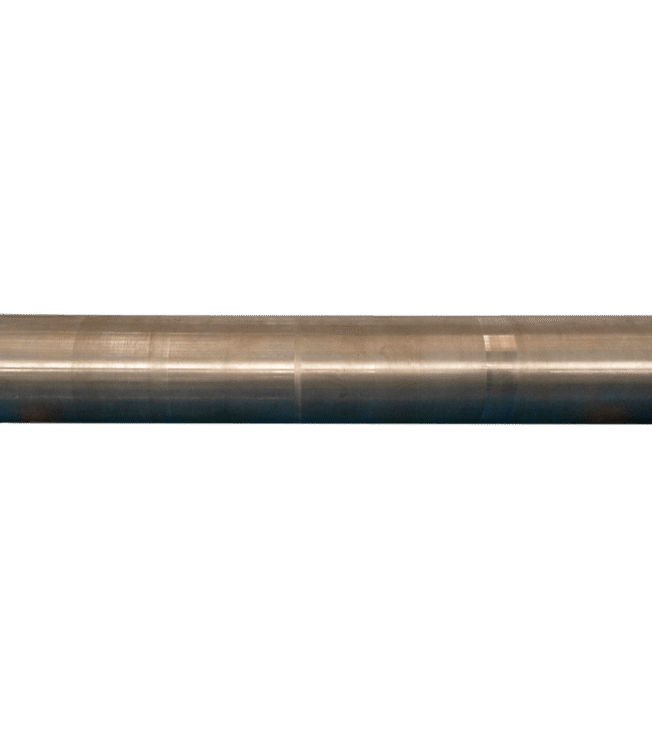
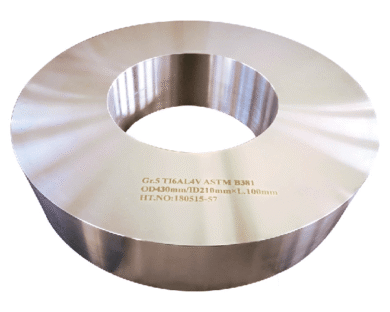
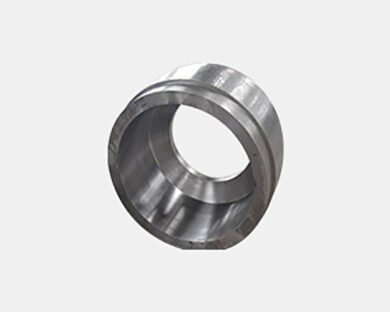
Titanium alloy seamless pipes are popular in marine engineering and offshore equipment due to their outstanding corrosion resistance and mechanical reliability. These pipes come from titanium alloy materials which are formed and heat treated at a high level to produce seamless titanium pipes.
Seamless titanium alloy pipes have superior corrosion resistance as compared to many metal pipes in the market. They are capable of serving for a longer time without any major breakdown thereby reducing downtime and maintenance costs. Thus, these pipes are best for marine pipelines, heat exchangers and other critical engineering components.
The current titanium pipes are mainly selected for marine environments since they allow the balance of corrosion resistance, high structural strength and lightness of material.
Definition of Titanium Alloy Seamless Pipes
Titanium alloy seamless pipes are tubular products formed from titanium alloys and which do not have any welding joint. Such a final product is able to operate under very high pressures, undergo thermal fluctuations and still maintain structural integrity.
Since the intrinsic density of titanium alloys is low, yet they are strong, the resultant pipes have a better strength-to-weight ratio than metals typically used in engineering.
Due to the fact that the surface chemistry of titanium leads to the formation of a very thin and firmly adherent oxide film, titanium materials possess superior corrosion resistance.
In fact, this property has led to broad use of titanium alloy seamless pipes in offshore equipment, shipbuilding, chemical plants and marine piping systems segments.
Different Categories of Titanium Alloys That Can Be Used for Seamless Pipes
Generally, the classification of titanium alloys used for seamless pipe production is based on their metallurgical structure. Briefly, these structures help decide the shape and size of the grains, the amount of phases present, the grain boundary type, etc. Different alloy compositions provide different combinations of strength, corrosion resistance, and fabrication performance.
Alpha (α) Titanium Alloys for Corrosion-Resistant Pipes
Alpha alloys of titanium typically have aluminum and tin as their main alloying elements. Due to these materials being less reactive, they also give very good resistance to corrosion.
Pipes made of alpha titanium alloys are used in a wide range of industrial applications, in environments where resistance to corrosion is almost always a deciding factor.
Beta (β) Titanium Alloys for High Strength Applications
Beta titanium alloys contain elements such as chromium, molybdenum, and vanadium. These elements not only lead to increased strength but also make the material distortion resistant.
Because of the combination of strength and corrosion resistance, pipes made of beta titanium alloys are chosen for structural applications, including pipelines in the chemical and petrochemical industries.
Alpha-Beta (α-β) Titanium Alloys for Balanced Performance
Alpha-beta titanium alloys are basically a combination of alpha and beta titanium alloys containing both stabilizing elements – aluminum and vanadium.
Released in the market a bit later, alpha-beta titanium alloys have increasingly replaced pure alpha or beta alloys.
Key Advantages of Titanium Alloy Seamless Pipes
Titanium alloy pipes offer several performance advantages compared with traditional stainless steel or nickel alloys.
Excellent Seawater Corrosion Resistance
Titanium demonstrates outstanding resistance to corrosion in seawater environments. Its corrosion resistance is often higher than aluminum alloys, stainless steels, and even some nickel-based alloys.
This makes titanium alloy seamless pipes particularly suitable for marine cooling systems, seawater intake pipelines, and offshore platform infrastructure.
High Strength with Low Density
Titanium alloys provide high mechanical strength while remaining significantly lighter than many structural metals. This property allows designers to reduce equipment weight without sacrificing structural integrity.
In marine and offshore engineering, this weight reduction can help improve operational efficiency and reduce structural loads.
Reliable Welding and Fabrication Performance
Titanium alloy pipes have good welding properties and can be fabricated using several welding methods. When welding is performed correctly, the strength of the welded joint can reach about 90% of the base metal strength.
This reliability allows titanium pipes to be integrated into complex piping systems without compromising structural safety.
Strong Resistance to Flow and Water Impact
Titanium also performs well under high-velocity fluid flow conditions. It has excellent resistance to water erosion and cavitation damage.
This characteristic is especially important for seawater transportation pipelines and high-flow marine circulation systems.
Typical Marine Engineering Applications of Titanium Alloy Pipes
Due to their corrosion resistance and mechanical strength, titanium alloy seamless pipes are widely used in many marine engineering systems.
Seawater Pipeline Systems
Titanium pipes are commonly used in seawater transport pipelines, including:
Seawater intake pipelines
Main seawater distribution pipelines
Cooling water circulation systems
These pipelines operate continuously in corrosive environments, making titanium a reliable long-term solution.
Heat Exchangers and Condensers
Titanium alloy tubing is a common component of heat exchangers and condensers installed in the marine environment, such as on ships or in offshore platforms.
Because seawater is often used as the cooling water, the materials used should be highly resistant to corrosion. Titanium alloys by nature are capable of keeping good performance for very long service intervals.
Diesel Engine Exhaust Systems
Marine diesel engines typically operate in very hot and corrosive environments. Titanium alloy pipes, because of their excellent heat tolerance and sturdiness, are ideal for exhaust systems.
Sonar Domes and Marine Equipment Housings
Besides sonar covers, titanium alloys are also employed in underwater equipment enclosures. Their strength combined with corrosion resistance and lightweight contributes significantly to improved equipment reliability.
Pressure-Resistant Structures for Deep-Sea Equipment
Titanium alloy is a popular choice when it comes to pressure-resistant containers of deep-sea submersibles or pressure spheres.
The parts should not only resist very high hydrostatic pressure, but also maintain a good balance of strength and corrosion resistance.
Marine Propellers and Pump Valve SystemsIn
addition to marine propeller elements and fluid-control devices, titanium materials also find use in such areas as:
Marine propeller
Pump casing
Valve body
High-grade marine mechanical components
Their excellent behavior even in harsh seawater conditions greatly increases the lifetime of the equipment.
Why Titanium Alloy Seamless Pipes Are Preferred in Offshore Engineering
Marine and offshore environments present a quite different set of challenges to engineering materials. Besides the high salinity and continuous exposure to water, the pressure variations also call for materials that can provide a consistently high level of performance even after prolonged service.
Titanium alloy seamless pipes possess an unparalleled combination of corrosion resistance, mechanical strength, and ease of fabrication compared to very few other metals. Their extreme resistance against chloride corrosion and the ability to stay intact even in flowing seawater environments make them a trusted material for critical pipeline systems.
While the initial cost of titanium alloys is higher than that of conventional steels, the long service life and low-maintenance feature of titanium make it usually a cost-effective solution during the entire lifecycle of the equipment.
Conclusion: Titanium Alloy Seamless Pipes for Reliable Marine Infrastructure
Over the last few years, titanium alloy seamless pipes have found themselves a prominent position in the material planning of modern marine engineering. Resistance to seawater corrosion, robust mechanical characteristics, and trustworthy fabrication performance allow them to deliver results in the harsh offshore environments.
Titanium pipes majorly contribute to the increased reliability and lessened maintenance of the system from seawater pipeline systems to deep-sea equipment structures. Going forward offshore engineering projects, their expansion, titanium alloy seamless pipes shall remain a pivotal material in high-performance marine infrastructure.