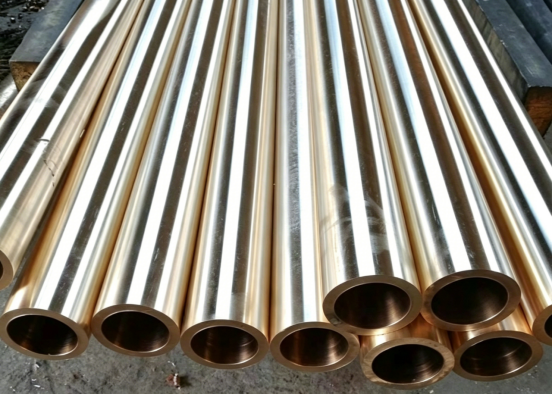
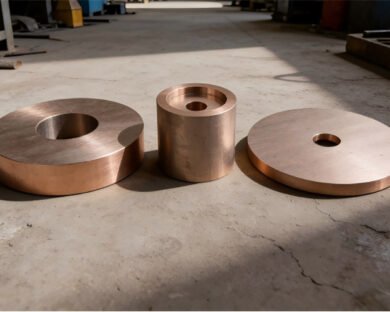
Product Overview of Beryllium Copper Alloy Seamless Tubes
Beryllium bronze is a copper-based alloy with beryllium as the main alloying element, and is hailed as the “elastic king among non-ferrous metals”. As a typical precipitation hardening alloy, beryllium bronze exhibits unparalleled comprehensive performance after solution aging treatment, which is incomparable to other copper alloys. This material delivers an exceptional combination of tensile strength, elasticity, and conductive efficiency, complemented by reliable corrosion resistance, non-magnetic qualities, and impact-safe, spark-free performance. Backed by over a decade of specialized manufacturing in beryllium copper precision tubes, we supply high-performance solutions tailored for advanced industries—ranging from aviation and petrochemical processing to marine defense, smart electronics, 5G infrastructure, and next-generation electric vehicles.
Core Technical Specifications for Beryllium-Copper Alloy Seamless Tubes
Common Grades
| Grade |
Material Type |
Typical Applications |
Typical Forms |
| C17200 / QBe2.0 |
High-strength wrought alloy |
Elastic components, connectors, sensors, and aerospace parts requiring high elasticity and strength |
Tube, rod, strip, wire |
| QBe1.9 |
High-strength titanium-bearing beryllium bronze |
Low elastic hysteresis, high fatigue strength, low sensitivity of properties to aging temperature variations; lower cost than QBe2 |
Rod, tube |
| C17300 |
High-strength wrought alloy |
Similar to C17200; used in applications requiring superior machinability |
Rod, tube |
| C17500 / QBe0.6-2.5 |
High-conductivity wrought alloy |
Welding electrodes, hot runner systems, and heat-dissipating substrates where electrical and thermal conductivity are prioritized |
Plate/strip, rod |
| C17000 |
High-strength wrought alloy |
General high-strength elastic components |
Strip, rod |
Delivery Condition
| Temper |
Code |
Characteristics |
Typical Applications |
| Soft (Solution Annealed) |
M / A |
Softest; easy to form/machine |
Parts requiring subsequent stamping and age hardening |
| Half-Hard |
1/2H |
Moderate hardness; balances formability and strength |
Precision mechanical components |
| Full-Hard |
H |
High hardness and high strength |
prings, elastic elements, high-strength structural parts |
| Aged |
T |
Age-hardened; ready for immediate use |
Finished parts, final products |
TIPTOP offers the following surface conditions: as-forged/extruded (raw surface), turned (machined surface), ground (precision-ground surface), and pickled (chemically cleaned surface). Custom surface finishes with varying degrees of smoothness can be provided upon request.
Chemical Composition and Mechanical Properties of Beryllium Copper Alloy Seamless Tubes
Chemical Composition
| Element (%) |
QBe2 (C17200) |
QBe1.9 |
QBe0.6-2.5 |
| Be |
1.8~2.1 |
1.85~2.1 |
0.4~0.7 |
| Ni |
0.2~0.5 |
0.2~0.4 |
— |
| Co |
— |
— |
2.4~2.7 |
| Ti |
— |
0.10~0.25 |
— |
| Al ≤ |
0.15 |
0.15 |
0.20 |
| Fe ≤ |
0.15 |
0.15 |
0.10 |
| Si ≤ |
0.15 |
0.15 |
0.20 |
| Pb ≤ |
0.005 |
0.005 |
— |
| Cu |
Balance |
Balance |
Balance |
| Total impurities ≤ |
0.5 |
0.5 |
— |
Mechanical Properties (After Age Hardening)
| Property Specifications |
QBe2 (C17200) |
QBe1.9 |
| Tensile Strength (MPa) |
≥1000 (up to 1200-1400) |
590-830 |
| Yield Strength (MPa) |
≥800 |
— |
| Elongation (%) |
≥1 |
≥2 |
| Hardness (HRC) |
36-46 |
38-44 |
| Density (g/cm³) |
8.3 |
8.3 |
| Modulus of Elasticity (GPa) |
Approx.128 |
Approx.128 |
Physical Properties
| Property Parameter |
C17200/QBe2 |
| Electrical Conductivity (IACS%) |
18~28 |
| Thermal Conductivity (W/m·k @20℃) |
105~160 |
| Softening Temperature (℃) |
>600 |
| Melting Temperature (℃) |
865~980 |
| Coefficient of Thermal Expansion (10⁻⁶/℃) |
17.8 |
| Magnetic Permeability μ |
1.000042(Non-magnetic) |
Applicable Operating Conditions and Industries for Beryllium-Copper Alloy Seamless Tubes
| Industries |
Typical Applications |
Product Forms |
Key Selection Criteria |
| Aerospace |
Engine capsules, satellite torsion bars, precision instrument components, aircraft bearings and bushings, missile components, fasteners, guide mechanisms, bellows, diaphragms |
Precision capillary tubes (OD 0.3–5 mm), thin-walled tubes (wall thickness 0.1–2 mm), high-strength shaped tubes |
Ultra-high strength, high-temperature resistance, fatigue resistance, non-magnetic properties, corrosion resistance |
| Petrochemical and Marine Engineering |
Downhole drilling tools, H₂S-resistant spring components, valves, pump bodies, pipe fittings, structural components for marine environments, subsea cable repeater housings, explosion-proof tools. |
Thick-walled tubes (wall thickness 3–50 mm), large-diameter tubes (OD 50–530 mm), high-strength structural tubes. |
Resistance to H₂S and seawater corrosion (service life exceeding 40 years), high strength, non-sparking upon impact (explosion-proof safety). |
| Electronics, Electrical Appliances, and 5G Communications |
High-load connectors, switch contacts, relay contact springs, micromotor brushes, computer interconnects, precision mobile phone components, 5G micro-connector pins, heat dissipation substrates, battery terminals. |
Micro-capillary tubes (OD 0.3–3 mm), ultra-thin-walled tubes (wall thickness 0.03–0.3 mm), precision shaped tubes. |
High electrical conductivity (≥18% IACS), high elastic fatigue life (50,000 mating cycles), suitability for miniaturized and lightweight designs. |
| Mold Manufacturing |
Injection mold inserts, hot runner nozzles and cooling systems, die-casting machine plungers, mold cores, drawing dies, casting cores |
Thick-walled tubes, seamless tubes, rods/bars, blocks |
Thermal conductivity 2.3 times higher than steel; reduces cooling time by 40%; shortens molding cycles; ensures uniform mold wall temperature. |
| Precision Instruments and Gauges |
Various pressure gauges, temperature controllers, capsules, diaphragms, Bourdon tubes, elastic elements, optical instrument components, and watch/clock parts. |
Precision capillary tubes, thin-walled tubes, and shaped tubes. |
Minimal elastic hysteresis, high elastic stability, stable elasticity across temperature fluctuations, and non-magnetic properties. |
| Welding Components and Explosion-Proof Tools |
Conductive tips for various welding processes, resistance welding electrode tips, explosion-proof tools, non-sparking switches |
Thick-walled tubing, cut rod segments |
Non-sparking upon impact (explosion safety), high electrical conductivity (welding efficiency), high wear resistance (long electrode service life) |
Key Advantages of Beryllium Copper Alloy Seamless Tubes
- Superior Mechanical Properties: Following solution and aging treatment, the alloy achieves a tensile strength of 1200–1400 MPa and a hardness of 38–46 HRC; these strength levels rival those of specialty steels and far exceed those of any other copper alloy.
- erfect Integration of Multiple Properties: While maintaining ultra-high strength, the material offers an electrical conductivity of ≥18% IACS, a thermal conductivity of 105 W/(m·K), and excellent corrosion resistance—exhibiting an annual corrosion depth of only 0.011–0.014 mm in seawater and capable of stable service in marine environments for over 40 years.
- Capability for Miniaturization and Lightweight Design: Thanks to its excellent elastic modulus and yield strength-to-Young’s modulus ratio (YS/E), beryllium copper allows for significant component size reduction while meeting the same elastic force requirements. This enables product miniaturization and weight reduction, ultimately proving more economical when considering total costs.
- Application Versatility:Beryllium copper tubing is highly adaptable, suitable for operating temperatures ranging from cryogenic levels (-250°C) to high temperatures (400°C). It withstands various corrosive media (including seawater, sulfuric acid, and alkaline environments). Available dimensions cover a wide range—outer diameters from 0.3 mm to 530 mm and wall thicknesses from 0.03 mm to 50 mm—and can be fully customized to meet specific user requirements.
Comparison with Phosphor Bronze
| |
Phosphor Bronze |
Beryllium Copper (C17200) |
| Unit Material Cost |
1x |
8–10x (High initial investment) |
| Design Volume/Weight |
~2x volume needed for equivalent spring force |
~1/8 volume achieves equivalent spring force |
| Elastic Modulus/Resilience |
Low elasticity; prone to permanent set |
High elasticity; strong recovery after deformation |
| Contact Pressure Retention |
Gradually decays with use |
Stable over the long term |
| Fatigue Resistance |
Average; prone to fatigue failure |
Excellent; lifespan several times that of phosphor bronze |
| Replacement Frequency |
Maintenance/replacement needed ~every year |
Stable performance maintained for ~10 years |
| Downtime Losses |
Production interruptions due to frequent replacement |
Zero downtime losses |
| High-Frequency Stability |
Prone to fluctuation |
Highly stable |
| Total 10-Year Cost |
High (maintenance + replacement + downtime + redesign) |
Actually lower |
Total Lifecycle Cost Analysis:
- Material savings through miniaturization and lightweighting: For identical functional requirements, a phosphor bronze part weighs 1.14g, whereas a beryllium copper part requires only 0.14g—meaning the beryllium copper part is just 12% of the weight of the phosphor bronze version. Miniaturized design significantly reduces material consumption, partially offsetting the difference in unit price.
- Significant reduction in maintenance costs due to extended service life: Phosphor bronze contact springs are prone to “loosening” and a drop in contact pressure after several hundred mating cycles; in contrast, beryllium copper springs remain stable even after thousands of cycles, offering a service life that is an order of magnitude longer. This advantage is particularly pronounced in applications where frequent replacement is difficult, such as in oil drilling and aerospace.
- Cost of downtime far exceeds the material price difference: Losses incurred from production line shutdowns due to material failure often surpass the price difference of the materials themselves within just a few hours. The superior reliability of beryllium copper translates to a near-zero risk of unplanned downtime.
- Mold Industry: 40% Improved Thermal Conductivity: Beryllium bronze has 2.3 times higher thermal conductivity than steel. When used in injection molds, it can reduce cooling time by 40%, significantly shortening the molding cycle and improving production efficiency.
Manufacturing Process and Fabrication Techniques for Beryllium-Copper Alloy Seamless Tubes
Beryllium Copper Tubing: Manufacturing Evolution
The fabrication sequence initiates with primary material melting and subsequent ingot casting. This is followed by hot deformation via extrusion or rolling to shape the initial stock. To achieve the final dimensions, multiple passes of cold drawing are performed, interspersed with intermediate solution annealing. The tubing then undergoes specialized precision cold processing before transitioning to final precipitation treatment. The cycle concludes with final surface finishing, comprehensive quality inspection, and protective warehousing.
Core Thermal & Mechanical Specifications
- Phase Optimization (Solutionizing): Maintained within a thermal window of 760–830°C, the soaking duration requires a minimum of one hour for every 25 mm of material wall thickness. This specific exposure forces beryllium atoms back into the copper matrix, yielding a homogenized α-phase supersaturated solid solution.
- Dispersion Strengthening (Aging): For high-strength formulations containing over 1.7% Be, the precipitation kinetics are optimized at 300–330°C for 1 to 3 hours. Conversely, high-conductivity variants (Be under 0.5%) are treated at 450–480°C for 2 to 4 hours. This sequence triggers the precipitation of γ′ phase particles, which provide the critical dispersion hardening.
- Cold Deformation Dynamics: Post-solution annealing leaves the matrix in its most ductile state (Condition A), maximizing formability. The cumulative strain from cold drawing—typically capped at a 37% reduction rate—interacts synergistically with subsequent aging to elevate mechanical properties.
- Subsequent Fabrication: The resulting material demonstrates outstanding response to standard machining setups, including turning, milling, drilling, and grinding. Furthermore, its excellent surface adaptability allows for high-precision polishing to obtain mirror-like finishes.
TIPTOP Quality Assurance and Company Advantages
Products are manufactured and tested in strict accordance with the following national and international standards:
GB/T 26313-2010 (Beryllium bronze seamless tubes);
GB/T 5231-2001 (Designations and chemical composition of wrought copper and copper alloys);
ASTM B643 (Copper-beryllium alloy seamless tubes);
GJB (Chinese Military Standards – applicable upon special request);
JIS / DIN (Other international standards applicable upon customer request).
Factory inspection items are as follows:
| Testing Category |
Test Item |
Test Standard/Method |
| Chemical Composition Analysis |
Full elemental composition verification (Be, Ni, Co, etc.) |
Spectroscopic analysis |
| Mechanical Property Testing |
Tensile strength, yield strength, elongation |
Universal testing machine |
| Hardness Testing |
Brinell/Rockwell hardness |
GB/T standards |
| Dimensional Accuracy Inspection |
OD, ID, wall thickness, length, straightness |
recision measuring instruments |
| Internal Quality |
Ultrasonic testing (5MHz probe; resolution equivalent to a φ0.5mm flat-bottom hole) |
GB/T 3310-2010 |
| Surface Quality |
Appearance, cracks, porosity, peeling, etc. |
Visual inspection + Eddy current testing |
| Electrical Conductivity Testing |
Conductivity(IACS%) |
GB/T 351 |
| Fracture Inspection |
Internal metallurgical defects |
YS/T 336 |
Company Advantages
- Comprehensive Product Manufacturing Capabilities
We specialize in producing two main product lines—precision beryllium copper tubes and beryllium copper capillary tubes—with over a decade of deep expertise in the field. Our product range spans from ultra-fine capillaries (0.3–3mm) to large-scale tubing (φ530mm × 50mm), meeting diverse requirements ranging from precision aerospace instruments to large-scale petrochemical equipment.
- Custom Manufacturing Capabilities
We offer fully customized production tailored to specific customer needs:
Dimensional Customization: Outer diameter, inner diameter, wall thickness, and length can all be manufactured according to drawing specifications.
Tolerance Customization: Tolerances for diameters and wall thickness can be controlled to a precision level of ±0.005mm.
Performance Customization: Heat treatment processes and delivery conditions are adjusted based on specific operating environments.
Shape Customization: We produce a wide variety of cross-sectional shapes, including round, square, rectangular, D-shaped, eccentric, and capillary tubes, as well as other specialized profiles.
- Advanced Technical Standards
Our products comply with the US ASTM B643 standard, meeting advanced international benchmarks.
- Rigorous Quality Management
We adhere to dual international and domestic standard systems. Before leaving the factory, products undergo multiple inspections—including chemical composition analysis, mechanical property testing, ultrasonic testing, eddy current testing, and dimensional accuracy checks—to ensure consistent and reliable quality for every batch.
- Comprehensive Technical Support and Service System
We provide one-stop solutions covering everything from material selection advice and processing guidance to after-sales technical support. Whether you require standard specifications or complex, non-standard custom profiles, we can provide a tailored solution.
Frequently Asked Questions
Q1: Why is the price of beryllium bronze pipe much higher than that of ordinary copper pipe?
A: Beryllium is a strategic metal with limited global reserves and complex smelting processes, so the cost of beryllium bronze alloy itself is relatively high. However, it should be noted that there is a reason for its high price – beryllium bronze, with its outstanding mechanical properties and micro-lightweight design capabilities, actually requires only about 12% of the material used in phosphor bronze when meeting the same functional requirements; and its service life can reach several times or even more than that of phosphor bronze, with a total cost that is actually lower when considering a 10-year full life cycle. It is recommended that users evaluate from a comprehensive benefit perspective rather than simply comparing the initial purchase price.
Q2: Can beryllium bronze pipe be welded?
A: Yes. Beryllium bronze has good weldability and can be welded using various methods such as argon arc welding, resistance welding, and brazing, and is easy to connect with other metal materials.
Q3: Is beryllium bronze toxic? What precautions should be taken during processing?
A: The beryllium element in beryllium bronze generates dust or smoke at high temperatures (such as during smelting and welding), which may have certain hazards to the human body. However, when used at room temperature in a solid state and under normal mechanical processing (turning, milling, grinding), as long as good ventilation and dust removal measures are taken and protective masks are worn, safe operation can be ensured. During the processing, dust accumulation should be avoided, and cleaning should be done after contact.
Q4: Can ultra-fine pipes with an outer diameter of 0.3mm or less be produced?
A: Our company can produce precision capillary tubes with an outer diameter of 0.3-3mm and a wall thickness of 0.03-0.3mm. The tolerance accuracy can reach ±0.005mm, meeting the high precision requirements of aerospace and 5G communication for micro-tubular materials.
Q5: What delivery states are available? What is the difference between solution annealed state and aging state?
A: There are mainly two types of delivery states: solution annealed state (A/M state, the softest, suitable for forming and shaping by users themselves and then aging treatment to obtain the final performance) and aging state (T state, completed strengthening, directly delivered for use). In addition, semi-hard state (1/2H) and full hard state (H) cold processing states can also be provided.
Q6: What information needs to be provided when purchasing beryllium bronze pipe?
A: To ensure accurate supply, it is recommended to provide the following information: the required grade (such as QBe2/C17200); outer diameter, inner diameter (or wall thickness), length dimensions and tolerance requirements; the required delivery state (solution annealed state/aging state); expected operating conditions and performance requirements (such as whether specific heat treatment is required); whether third-party testing and certification are needed.
Q7: How long is the delivery cycle for beryllium bronze pipes?
A: Standard-sized pipe materials usually can be delivered within 1-3 days. Non-standard customized products depend on the complexity of the specifications and quantity, and the delivery time is generally 7-30 days. Specific details can be confirmed by contacting our sales team.
Q8: Can samples be provided for testing?
A: Yes. Our company can provide small batches of samples for customers to conduct performance verification and process trial production. Welcome to call for consultation.