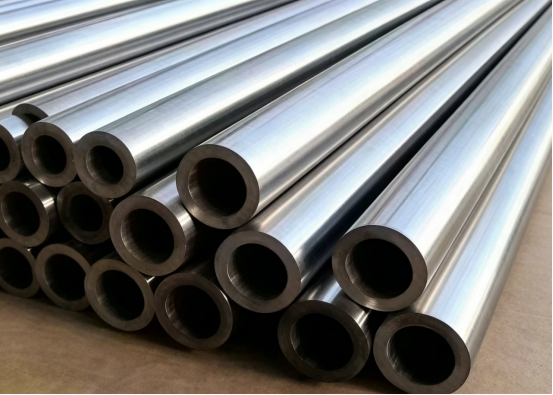
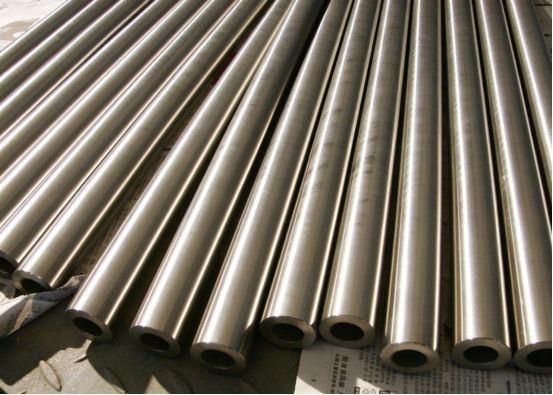
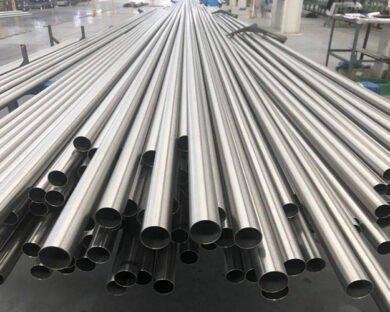
ASTM B353 Zircaloy-2 UNS R60802 Zirconium Alloy Seamless Tubing
Core Positioning and Overview of Zircaloy-2 Alloy Tubes
Zircaloy-2 (UNS R60802) is a strategic alloy material recognized worldwide in the nuclear industry and high-end corrosion-resistant engineering sectors. Developed as a second-generation zirconium alloy by adding alloying elements—such as tin, iron, chromium, and nickel—to pure zirconium, it has remained the “mainstay” structural material for water-cooled nuclear reactor cores since its introduction in the 1950s.
Operating Conditions and Industries Suitable for Zircaloy-2 Alloy Tubes
The core value of Zircaloy-2 lies in addressing the material failure issues under the dual extreme environments of “high temperature, high pressure, and strong corrosive media” and “neutron radiation field”.
Zircaloy-2 exhibits excellent corrosion resistance in water and steam at temperatures ranging from 300 to 400 degrees Celsius. It also has moderate mechanical properties and an extremely low atomic thermal neutron absorption cross-section (zirconium is 0.18 target neutron), making it highly compatible with nuclear fuel. Therefore, it is widely used as the core structural material for water-cooled nuclear reactors.
- Nuclear industry: fuel cladding tubes, guide tubes, pressure tubes, instrument tubes, core structural rods/forgings.
- Chemical equipment: inner liner tubes of reactors, U-shaped tubes of heat exchangers, support components of tower fillers, shafts of mixers.
- Ocean engineering: deep-sea pipelines, seawater heat exchange bundles, corrosion-resistant fasteners.
- Special industries: acid-resistant pump and valve components, heat treatment furnace components.
Product features of Zircaloy-2 Alloy Tubes
The thermal neutron absorption cross-section of Zr is only 0.18 target units, which is much lower than that of stainless steel (~1.8 target units) and nickel-based alloys (~4.5 target units). This ensures the neutron economy of nuclear reactors and is a key characteristic indispensable for nuclear fuel cladding.
Zircaloy-2 forms a dense and stable ZrO₂ oxide film in high-temperature and high-pressure water and steam at 300-400°C, with self-repairing ability and extremely low corrosion rate, ensuring no cladding perforation failure during the life of the nuclear reactor.
It exhibits excellent corrosion resistance to various corrosive media such as hydrochloric acid, sulfuric acid, nitric acid, acetic acid, strong alkalis, and molten salts. It is particularly adept at dealing with non-oxidizing acids and chloride ion corrosion environments, and is a key material for extending the lifespan of chemical corrosion equipment.
Comparison of Zircaloy-2 Alloy Tubes with Monel 400 and 316L:
Zircaloy-2 (Zr-2): Standard material for boiling water reactors (BWR), containing nickel, with excellent comprehensive performance and balanced performance under boiling water reactor conditions.
316L stainless steel: Low-cost conventional material, with excellent machinability, but its corrosion resistance in high-temperature, high-pressure water and strong corrosive acid media is far inferior to zirconium alloys, and it is not suitable for use in nuclear reactor cores.
Monel 400: Advantageous material for seawater/hydrofluoric acid environments, with excellent corrosion resistance to seawater and hydrofluoric acid, but not suitable for high-temperature, high-pressure water nuclear environments, and the cost is also higher.
Physical and mechanical properties of Zircaloy-2 alloy:
Physical properties
| Density (20°C) |
6.51 g/cm³ |
| Melting point |
≥1800 ℃ |
| Thermal neutron absorption cross-section |
0.18 barn |
| Thermal conductivity (20°C) |
~22 W/(m·K) |
| Resistivity (20°C) |
~40 μΩ·cm |
| Coefficient of thermal expansion (20–300°C) |
5.6×10⁻⁶ /K |
| Modulus of elasticity (20°C) |
95-100 GPa |
Mechanical properties(typical annealed state)
| Tensile strength (Rm) |
380-450 MPa |
| Yield strength (Rp0.2) |
200-280 MPa |
| Elongation after fracture (A) |
≥16 % |
| Reduction of area (Z) |
≥35 % |
| Hardness (HV) |
150-200 |
Overview of Zirconium Alloy Products Supplied by TIPTOP
| Grade |
Characteristics |
Application Areas |
| Zircaloy-2 |
Contains Sn, Fe, Cr, and Ni; excellent resistance to hydrogenation; stable under irradiation |
BWR fuel cladding, guide tubes, pressure tubes |
| Zircaloy-4 |
Nickel-free; superior resistance to hydrogen absorption; good workability |
PWR fuel cladding, spacer grid strips, structural components |
| Zr-2.5Nb |
Contains 2.5% Nb; highest strength (nearly double that of Zr-3) |
CANDU heavy-water reactor pressure tubes, high-strength structural components |
| R60702 (Commercially Pure Zirconium) |
No alloying elements; excellent corrosion resistance; lower strength |
Chemical equipment linings, heat exchangers, reaction vessels |
| R60705 (Zr-5 Alloy) |
Contains Nb and Ta; strength is nearly double that of R60702 |
High-strength chemical equipment, high-temperature structural components |
TIPTOP Zirconium Alloy Product Specifications and Forms of Supply
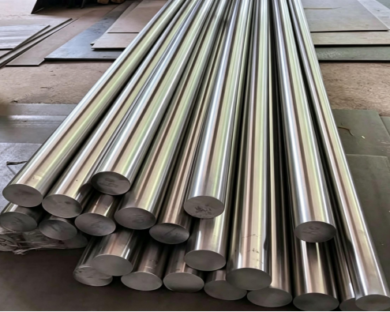
Bar Products:
| Form |
Diameter Range |
Length |
Condition |
| Round Bar |
φ6–150 mm |
500–4000 mm |
Hot-rolled / Cold-drawn / Precision-ground |
| Hexagonal Bar |
Width Across Flats: 6–80 mm |
500–3000 mm |
Cold-drawn / Precision-ground |
| Square/Flat Bar |
Custom dimensions |
Custom lengths |
Forged / Hot-rolled |
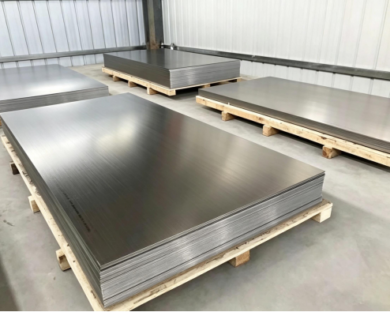
Plate/Sheet Products:
| Form |
Thickness Range |
Width Range |
Length Range |
| Medium-Thick Plate |
4–50 mm |
300–1500 mm |
500–4000 mm |
| Thin Sheet/Strip |
0.5–4 mm |
200–800 mm |
500–3000 mm |
Manufacturing Process and Inspection Procedures for Zircaloy-2 Zirconium Alloy Tubes
Manufacturing Process:
Order review and process design → Vacuum Induction Melting (VIM) → Electroslag Remelting (ESR) → Hot forming (forging/hot extrusion) — tube/bar blanks → Cold working (cold rolling/cold drawing) — ensuring dimensional accuracy → Heat treatment — critical step for meeting mechanical property requirements → Non-destructive testing and third-party certification → Precision finishing — delivery of finished products per drawings → Final inspection → Warehousing → Shipment
Inspection Procedures
| Test Item |
Test Content |
Test Method Standard |
| Chemical Analysis |
Major elements (Sn, Fe, Cr, Ni) and impurities (O, N, H, C) |
Spectroscopic analysis / Inert gas fusion method |
| Mechanical Properties |
Tensile strength, yield strength, elongation, reduction of area |
ASTM E8 / E21 |
| Hardness Testing |
ickers hardness / Rockwell hardness |
ASTM E92 / E18 |
| Metallographic Examination |
Grain size, phase composition, microstructure |
ASTM E112 |
| Non-destructive Testing |
Ultrasonic testing (UT), eddy current testing (ET), liquid penetrant testing (PT) |
ASTM E213 / E426 / E165 |
| Corrosion Testing |
High-temperature, high-pressure autoclave corrosion performance verification |
ASTM G2 / Customer agreement |
| Dimensional Inspection |
Outer diameter, wall thickness, length, ovality, straightness |
Micrometer / Laser diameter measurement / Plug gauge |
TIPTOP Zircaloy-2 Zirconium Alloy Tubes: Product Quality Assurance and Company Advantages
The TIPTOPZircaloy-2 Zirconium Alloy Tubes strictly follow the following international standard systems to ensure that the products meet the requirements of nuclear grade and high-end industrial applications:
- Nuclear grade tube standards:
ASTM B353: Forged zirconium and zirconium alloy seamless and welded tubes for nuclear applications (except for nuclear fuel cladding).
ASTM B811: Standard specification for zirconium and zirconium alloy seamless tubes for nuclear fuel cladding.
- Bar/Plate/Wire standards:
ASTM B351: Hot rolled and cold finished zirconium and zirconium alloy rods and wires for nuclear applications, standard specifications.
- General zirconium material standards:
ASTM B658: Standard specifications for zirconium and zirconium alloy seamless and welded tubes.
ASME SB series – ASME Boiler and Pressure Vessel Code (applicable to nuclear grade and pressure equipment)
Mastering the entire process manufacturing technology of zirconium alloy pipes is the core strength for achieving high-quality delivery.
We strictly control the quality at the source, adopting the VIM + ESR dual-melting process to ensure the high purity and uniformity of the materials. Subsequently, through a series of core processes such as hot forming, cold processing and heat treatment, the final precision processing is completed. Our company has fully mastered the entire process technology from melting to finished products of Zircaloy-2 zirconium alloy tubes, truly achieving dual independent control of product quality and delivery cycle.
The products can be supplied strictly in accordance with mainstream international standards such as ASTM B353, ASTM B811, ASTM B351, ASME SB, etc. At the same time, we can provide EN 10204 3.1/3.2 certification certificates and third-party test reports, which fully meet the strict certification requirements for materials in domestic nuclear power plant construction and overseas export projects, providing a solid guarantee for the security of your supply chain.
Frequently Asked Questions
Q1: Can Zircaloy-2 be welded? What are the strict requirements during the welding process?
A: It can be welded, and its actual welding performance is quite good. However, the problem is that the zirconium alloy is a “gas absorber” at high temperatures, and it is extremely prone to absorbing oxygen, nitrogen, and hydrogen from the air, thereby causing embrittlement. Therefore, the core of the welding process lies in absolute gas isolation.
The preferred method is TIG welding (tungsten inert gas arc welding) with high-purity argon gas protection, or directly using electron beam welding (EBW) and vacuum laser welding.
During the welding process, not only the molten pool, but also the backside and the still red area after the welding must be protected by a full-flow of high-purity inert gas (argon or helium) in all directions. Even the slightest air leakage is not allowed.
Preparation before welding is crucial. The oxide films and oil stains on both sides of the groove must be thoroughly removed using mechanical or chemical methods, as if performing a thorough detoxification. Under normal circumstances, no heat treatment is required after welding, but if the workpiece structure is complex and the stress is high, an additional stress-relieving annealing process can be added.
Q2: What is the heat treatment process for Zircaloy-2?
A: The main heat treatment steps for Zircaloy-2 include the following key aspects:
Annealing: This is used to eliminate cold work stress, restore material ductility, and control grain size. It is typically carried out at 580-650℃.
Recrystallization Annealing: This converts the deformed structure into equiaxed recrystallized grains to achieve uniform microstructure and stable mechanical properties.
Cooling rate control: Research shows that the cooling rate of Zircaloy-2 has a significant impact on its corrosion resistance – cooling at a rate greater than 90℉/min can achieve satisfactory corrosion resistance, while a cooling rate lower than this value will result in a decrease in corrosion resistance.
Q3: How is the surface quality of Zircaloy-2 tubing guaranteed?
A: Our company implements full-process control over the surface quality of Zircaloy-2 tubing:
Remove the oxide scale on the inner and outer surfaces of the tubing using acid washing or alkaline washing
Perform peeling and polishing on the inner and outer surfaces of the tubing through precise cold drawing, with the surface roughness controlled to Ra ≤ 0.8μm
100% conduct eddy current testing (ET) and ultrasonic testing (UT) to ensure no surface and near-surface defects
All tubing is subject to visual inspection and cleanliness testing of the inner and outer surfaces before leaving the factory