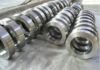
Stellite is a type of cobalt alloy. Cobalt technology includes significant deposits of nickel, chromium and tungsten, as well as smaller deposits of molybdenum, niobium, tantalum, titanium and lanthanum. Outside of the nickel alloy, the steel does not lose its ductility as a function of residual elements in the matrix, but rather as a structure surrounded by a single, dense, semi-cubic austenitic matrix with few carbides in the matrix. These alloys have very high mechanical strength, high thermal stability, high thermal stability in excess of 980 °C, and consequently excellent thermal stability.
Stellite forgings are positioned as key wear-resistant/erosion-resistant/high-temperature components under extreme working conditions. They replace conventional stainless steel and tool steel in high-end manufacturing fields such as high-temperature and high-pressure valves, aerospace engines, nuclear power plants, and petrochemical plants, significantly extending equipment lifespan and reducing maintenance costs.
Stellite is a type of cobalt alloy. Cobalt technology includes significant deposits of nickel, chromium and tungsten, as well as smaller deposits of molybdenum, niobium, tantalum, titanium and lanthanum. Outside of the nickel alloy, the steel does not lose its ductility as a function of residual elements in the matrix, but rather as a structure surrounded by a single, dense, semi-cubic austenitic matrix with few carbides in the matrix. These alloys have very high mechanical strength, high thermal stability, high thermal stability in excess of 980 °C, and consequently excellent thermal stability.
Stellite forgings are positioned as key wear-resistant/erosion-resistant/high-temperature components under extreme working conditions. They replace conventional stainless steel and tool steel in high-end manufacturing fields such as high-temperature and high-pressure valves, aerospace engines, nuclear power plants, and petrochemical plants, significantly extending equipment lifespan and reducing maintenance costs.
Applicable Industries
| Industry | Typical Operating Conditions | Product Forms |
| Aerospace | Jet Engine Combustion Chambers, High-Temperature Gas Passages, Bearings, Valve Seats | Turbine Blades, Combustion Chamber Liners, Nozzle Guide Vanes, Fasteners, Exhaust Valve Seats |
| Oil & Gas | High-Temperature/High-Pressure Valves, Drilling Equipment, Cutters, Wear-Resistant Components | Valve Balls, Valve Seats, Pump Bodies, Drill Bits, Flow Control Components |
| Chemical/Petrochemical | Highly Corrosive Media, Acidic/Alkaline Environments, High-Temperature/High-Pressure Reactions | Reactors, Pump Bodies, Valves, Pipe Wear Liners, Flue Gas Desulfurization (FGD) Scrubber Towers |
| Power Generation/Nuclear Power | Nuclear Valves, Steam Turbines, High-Temperature Gas Turbine Components | Steam Valves, Guide Vanes, High-Temperature Fasteners, Bearings, Bushings |
| Steel & Heavy Industry | Molten Metal Contact, Hot Working Tooling | Guide Rollers, Hot Forging Dies, Stamping Dies, Extrusion Dies, Thermocouple Protection Tubes |
| Automotive Industry | Exhaust Systems, Turbochargers | Exhaust System Components, Turbochargers, Fuel Injectors |
Stellite 6B (Typical Forging Alloy)
| Property | Typical Value | Test Standard |
| Density | 8.42 g/cm³ | ASTM B311 |
| Melting Range | 1320–1395℃ | ASTM E1268 |
| Thermal Conductivity(100℃) | 13.0 W/m·K | ASTM E1225 |
| Coefficient of Thermal Expansion(20-400℃) | 13.2 µm/m·℃ | ASTM E228 |
| Modulus of Elasticity(20℃) | 205 GPa | ASTM E111 |
| Hardness | 33–43 HRC (Annealed) / 45 HRC (Aged) | ASTM E18 |
| Tensile Strength | 1050–1200 MPa | ASTM E8 |
| Yield Strength(0.2%) | 550–700 MPa | ASTM E8 |
| Elongation | 10–20% | ASTM E8 |
Stellite 25 (High-Temperature Structural Forgings)
| Property | Typical Value |
| Density | 9.13 g/cm³ |
| Melting Range | 1330–1410℃ |
| Thermal Conductivity(100℃) | 12.6 W/m·K |
| Coefficient of Thermal Expansion(20-400℃) | 13.1 µm/m·℃ |
| Modulus of Elasticity(20℃) | 210 GPa |
| Hardness | 25–32 HRC (Annealed) / 33–40 HRC (Aged) |
| Tensile Strength | 930–1100 MPa |
| Yield Strength(0.2%) | 430–550 MPa |
| Elongation | 25–35% |
| Grade | Hardness(HRC) | Typical Applications |
| Stellite 1 | 47–53 (As-cast) | Valve seating surfaces, cutting tools, drill bits, pump bushings, bearings |
| Stellite 3 | 55–60 | High carbon content and high hardness; seals, valve seats |
| Stellite 6/6B | 38–44 | Most widely used grade: valve seating surfaces, pump components, turbine blades, bearings |
| Stellite 12 | 44–49 | Higher carbon and tungsten content; superior wear resistance compared to Grade 6; suitable for high-wear conditions such as mining machinery, extrusion dies, choke valves, and control valves |
| Stellite 190 | 60+ | Boron-containing, ultra-high wear resistance; concrete cutting tools, crusher rollers |
| Grade | Hardness
(HRC) |
Typical Applications |
| Stellite 21 | 25–30 | Low-Carbon, High-Molybdenum: Medical Implants, Chemical Pump Seals, Nuclear Valves, High-Temperature/High-Impact Components |
| Stellite 31(X-40) | 35–40 | High-Nickel, Heat- and Corrosion-Resistant: Gas Turbine Blades, Marine Environment Components |
| Stellite 712 | 45–50 | Resistant to Sulfuric and Nitric Acids: Petrochemical Reactors, Acid Pumps |
| Grade | Maximum Service Temperature | Typical Applications |
| Stellite 4 | 1000℃ | Aero-engine blades and combustion chamber liners |
| Stellite 25(L-605) | 1100℃ | Nuclear power valves, high-temperature fasteners, and bearings; offering balanced mechanical properties combined with exceptional creep resistance and fatigue life |
| Stellite 156 | 1150℃ | Ta/Nb-bearing alloys; rocket nozzles and turbine guide vanes |
| Grade | characteristic | Applications |
| Stellite 21 | Low Carbon, High Molybdenum | Biocompatible Artificial Joints, Dental Implants |
| Stellite 27 | Optimized Ni/Cr Ratio | Orthopedic Screws, Cardiovascular Devices |
| Stellite F | Low Co (30%); Cost-Optimized | Parts (Alternative to Grade 6) |
| Stellite 306 | High Silicon (2.5%) | Glass Molds, Molten Metal Contact Components |
| Product Form | Typical Size Range | Description |
| Bars | Φ8mm–Φ355mm | Includes round bars and hexagonal bars; Cold-drawn round bars: Φ4–20mm; Hot-rolled round bars: Φ20–50mm |
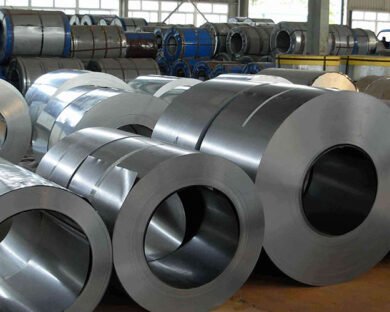
| Plates | Thickness: 0.5–60mm; Width: 650–2000mm | Hot-rolled heavy plates (4.5–36mm); Cold-rolled sheets/strips (0.8–4.5mm) |
| Tubes | Seamless tubes: Φ3×0.5mm–Φ114×6mm; Large-diameter welded pipes: up to Φ830–2500mm | Customizable upon request |
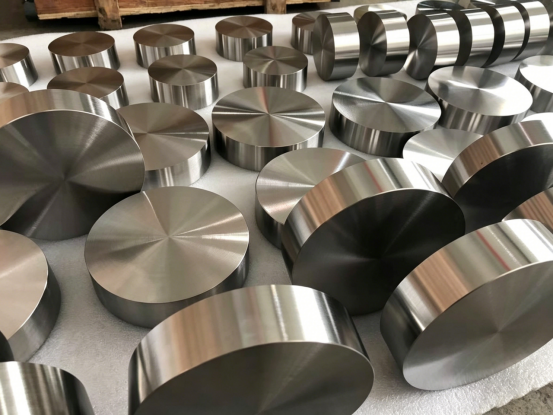
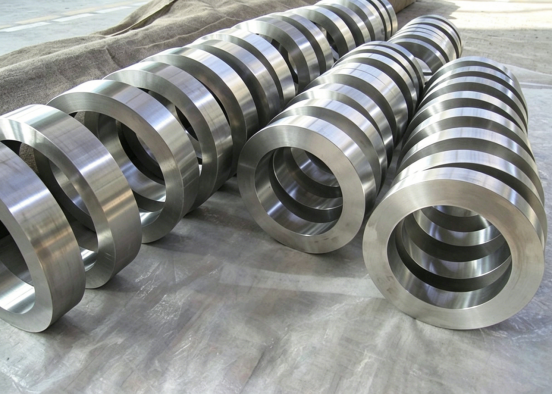
| Forgings | Forged bars: Φ45–200mm; Rings, discs, flanges, bushings | | Customizable according to customer drawings |
Supply Condition & Surface Finish
Step 1: Vacuum Induction Melting (VIM)
The initial melting is carried out in a vacuum environment, effectively removing gases and low-melting-point impurities, ensuring the purity of the alloy.
Step 2: Electroslag Remelting (ESR) (optional, for high-end products)
Further purify the alloy, eliminate segregation, and refine the grains to make the structure more uniform and dense.
Step 3: Forging/Hot Working Forming
The hot working temperature range is 1200 – 980℃, with an appropriate forging temperature of about 1170℃, to reduce the formation of intergranular carbides and control the grain size. Through radial forging, free forging or rolling, form rods/plates/blanking pieces. The forged products have better toughness and more uniform and consistent properties compared to the cast state.
Step 4: Solution Treatment + Aging Heat Treatment
Solution treatment: at a high temperature of about 1150℃, allowing the primary carbides and some MC-type carbides to dissolve into the solution. Aging treatment: carried out at 870 – 980℃, promoting the uniform re-crystallization of carbides and optimizing hardness and wear resistance. Some low-carbon alloys (such as Stellite 25) mainly achieve strengthening through solution treatment rather than aging carbide precipitation strengthening.
Step 5: Precision Machining
Using hard alloy or ceramic tools, with low cutting speed and high feed rate for machining.
Step 6: Quality Control and Third-Party Testing
Ultrasonic testing (UT), penetrant testing (PT), hardness testing, mechanical property testing, chemical composition analysis; support third-party authoritative institutions for testing and issuing reports.
Step 7: Packaging and Shipping
Cut to the required lengths, surface treatment (grinding/finishing/acid washing) after packaging and shipping.
| Standard Type | Applicable Standard | Corresponding Grade |
| ASTM | ASTM F75 (Cast CoCrMo) | Stellite 21 |
| AMS | AMS 5385、AMS 5387、AMS 5894、AMS 5537 | Stellite 1/21/6B/25 |
| UNS | R30001(Stellite 1)、R30006(Stellite 6)、R30016(Stellite 6B)、R30605(Stellite 25) | Respective Corresponding Grades |
| SAE | SAE J775、SAE J467B | Stellite 6、Stellite 6B |
Factory inspection items:
Chemical composition analysis (spectroscopy / wet analysis)
Mechanical property tests at room temperature / high temperature
Hardness tests (Rockwell / Brinell / Vickers)
Metallographic structure examination
Ultrasonic flaw detection (internal defect detection)
Dimensional accuracy inspection
Verification by third-party testing institutions (such as SGS, BV, etc.)
Material certification: We can provide EN 10204 3.1 (factory certification) or 3.2 (third-party certification) certificates, depending on customer requirements.
Company Advantages
A: They can be welded, but the process parameters need to be strictly controlled. Typically, TIG, plasma transfer arc (PTA), or oxyacetylene welding is used. Preheat at 200–400°C, strictly control the interlayer temperature, and cool slowly after welding to prevent cracking.
Regarding heat treatment:
Strain relief annealing: For grades that are not suitable for solution aging (such as Stellite 1), stress relief can be achieved by holding at 600–650°C for 2–4 hours, cooling to below 300°C in the furnace, and then removing from the furnace to avoid heating above 750°C.
Solution + aging treatment (cast alloys): 1150°C solution to dissolve carbides, 870–980°C aging to re-uniformly precipitate carbides and optimize the performance distribution.
Aging hardening alloys (such as Stellite 25): Hardness can be increased to 33–40 HRC through aging treatment.
A: Select based on the working conditions:
High impact/hardness priority: Choose Stellite 6 (38–44 HRC), with a moderate hardness and good toughness, good weldability, and suitable for welding onto carbon steel, alloy steel and stainless steel substrates, suitable for most general valve applications.
High wear resistance without severe impact: Choose Stellite 1 (47–53 HRC) or Stellite 12 (44–49 HRC). Higher carbon and tungsten content produce more carbides and higher hardness. The 1st grade has the highest hardness but is relatively brittle, while the 12th grade is second. Suitable for high wear throttle valves, frequently cycled control valves, and severe erosion conditions.
High-temperature nuclear valves/strong impact/medical: Choose Stellite 21 (25–30 HRC), low-molybdenum substitution for tungsten, providing better ductility and anti-thermal shock performance, reducing the sensitivity to intermetallic compound precipitation.
High-temperature (>1000°C) structural components: Choose Stellite 25, excellent creep resistance and oxidation resistance, maximum use temperature 1100°C.
A: We can provide EN 10204 3.1 (factory certification) or 3.2 (third-party certification) certificates, as well as test reports from third-party authoritative testing institutions (such as SGS, BV, etc.). The certification content includes chemical composition analysis, mechanical property tests, and non-destructive testing reports, etc. Specific content can be customized according to customer requirements.
A: Cast parts have complex shapes and strong adaptability, carbides naturally precipitate, and the cost is relatively low, but there may be casting defects such as pores and segregation, and lower toughness. Forged parts (such as Stellite 6B) are densified through hot processing, with a more uniform structure, eliminating casting defects, and having higher mechanical integrity and ductility (10–20% elongation), especially suitable for parts subjected to impact loads and cyclic conditions. However, some high-carbon grades (such as Stellite 3) are extremely difficult to hot process and are usually not processed by the forging method.
A: The processing is difficult. The cutting machining index is approximately 0.4 (forged 45 steel is 1). The main challenges include: high hardness causing rapid tool wear, carbides causing abrasive wear, strong tendency of processing hardening, and accumulation of cutting heat. Countermeasures: Use hard alloy or ceramic tools; adopt low cutting speed and high feed rate strategies; maintain the rigidity of the process system; fully use cutting fluid; grinding as the main finishing method. It is recommended to perform rough processing in the solution state (softened state), and only perform fine grinding after aging hardening.